 РУ
РУ EN
EN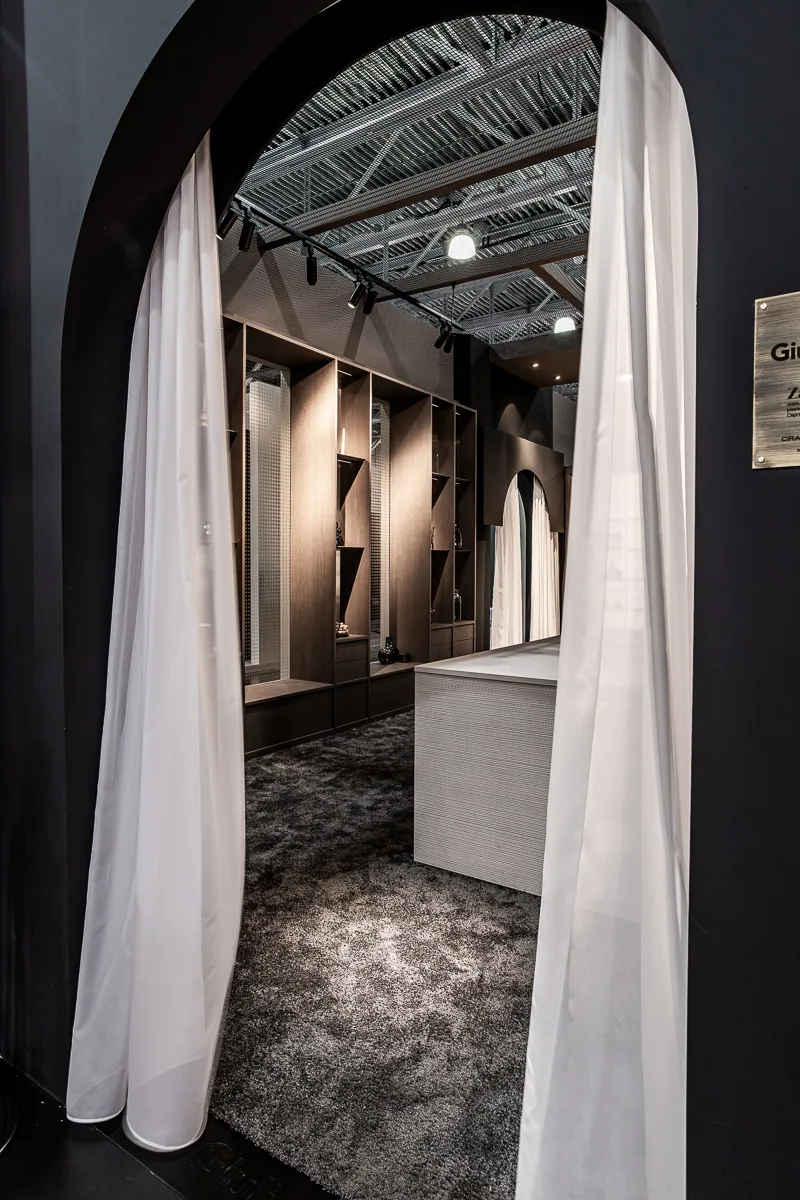
Name of the project
“The Inner Code of Giulia Novars”, the brand’s exhibition stand at ARTDOM 2026.
Main character
Giulia Novars is a premium interior solutions brand with Italian roots and a Russian engineering tradition.
Setting
ARTDOM 2026, Moscow, Crocus Expo, Pavilion 2, Hall 7, Stand 7/C4308 — an international exhibition of furniture, interior solutions, and art. 19–21 February 2026.
Giulia Novars at ARTDOM 2026
Objective
To translate Giulia Novars’ “inner code” — its engineering precision and production culture — into the stand’s architecture and the language of immersive media.
The brief was intentionally open, allowing us to work from a cohesive concept and narrative logic rather than a set of ready-made solutions. Some furniture and elements were designed specifically for this stand, co-created with the client’s engineers, production team, marketing, and product team.
Conceptual scenario
At the core was the idea of dialogue: the brand’s Italian origins meet Russian engineering and production maturity. This contrast shaped the architecture: a monumental central volume set against a darker outer perimeter. Within it, display, privacy, and communication operate in different modes, yet in a single visual language.
Media were integrated as a tool for explanation, not decoration. Mapping in Cabinet of Shadows unfolds the dramaturgy of the object’s four states, while DUAL SURFACE projection on the Silent Slab island makes the hidden function—and the shift between use scenarios—tangible.
A dedicated outdoor line became part of the overall architecture. The atmosphere was completed by ambient audio and scent accents that set the rhythm. Materials and finishes at the level of the brand itself delivered a sense of premium quality without overt display.
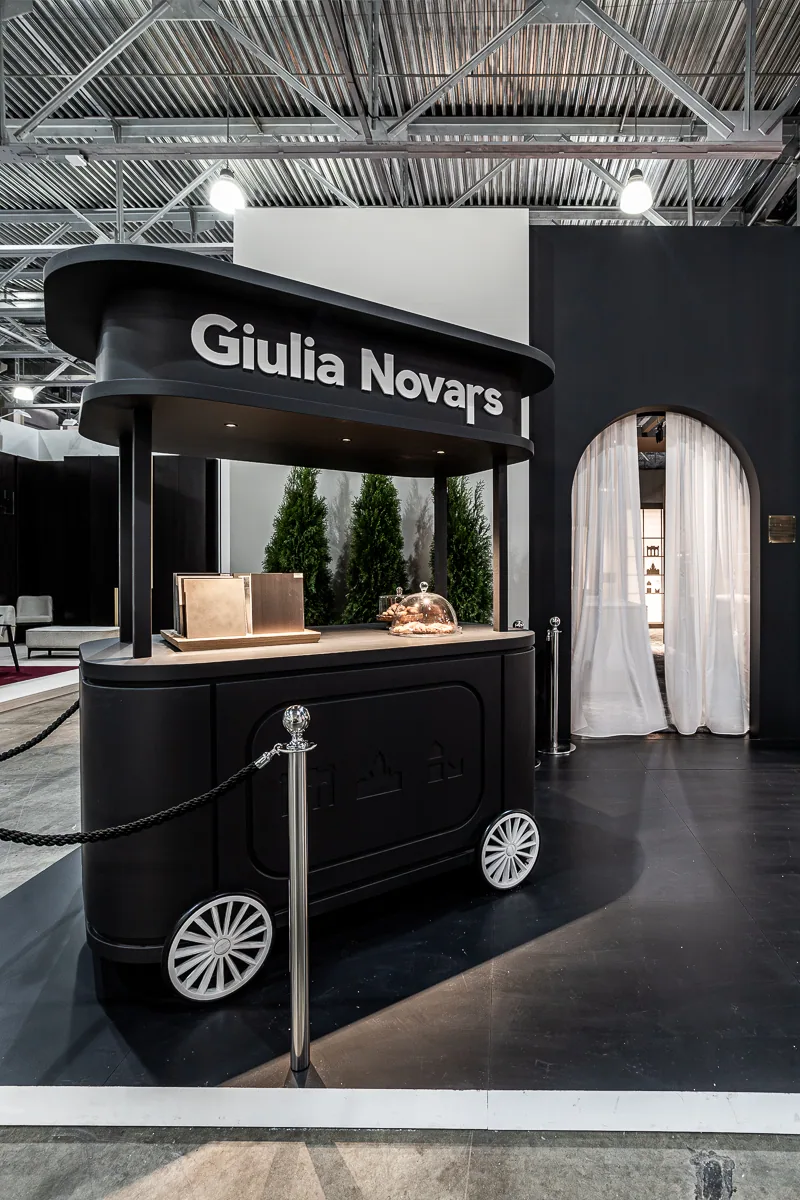
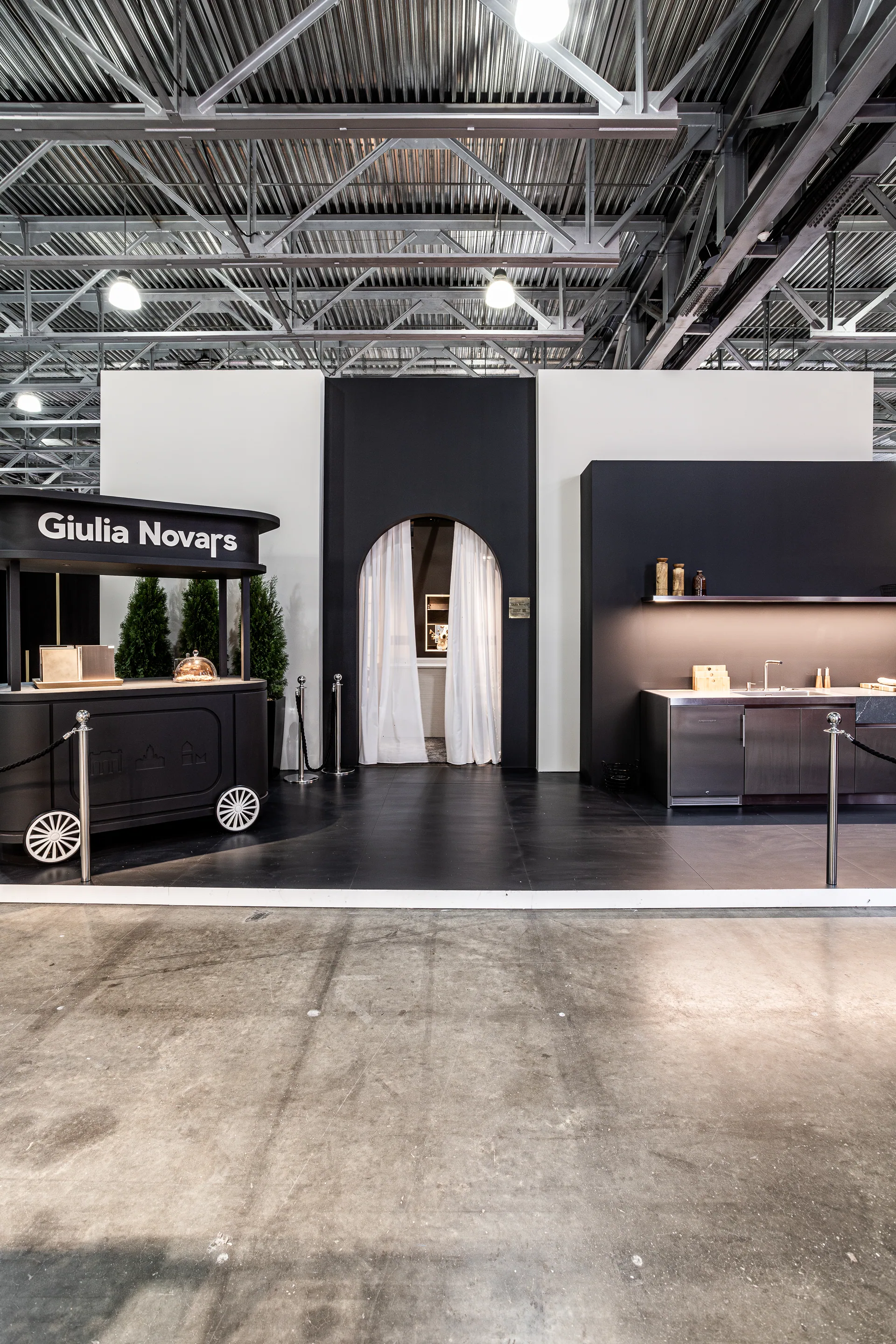
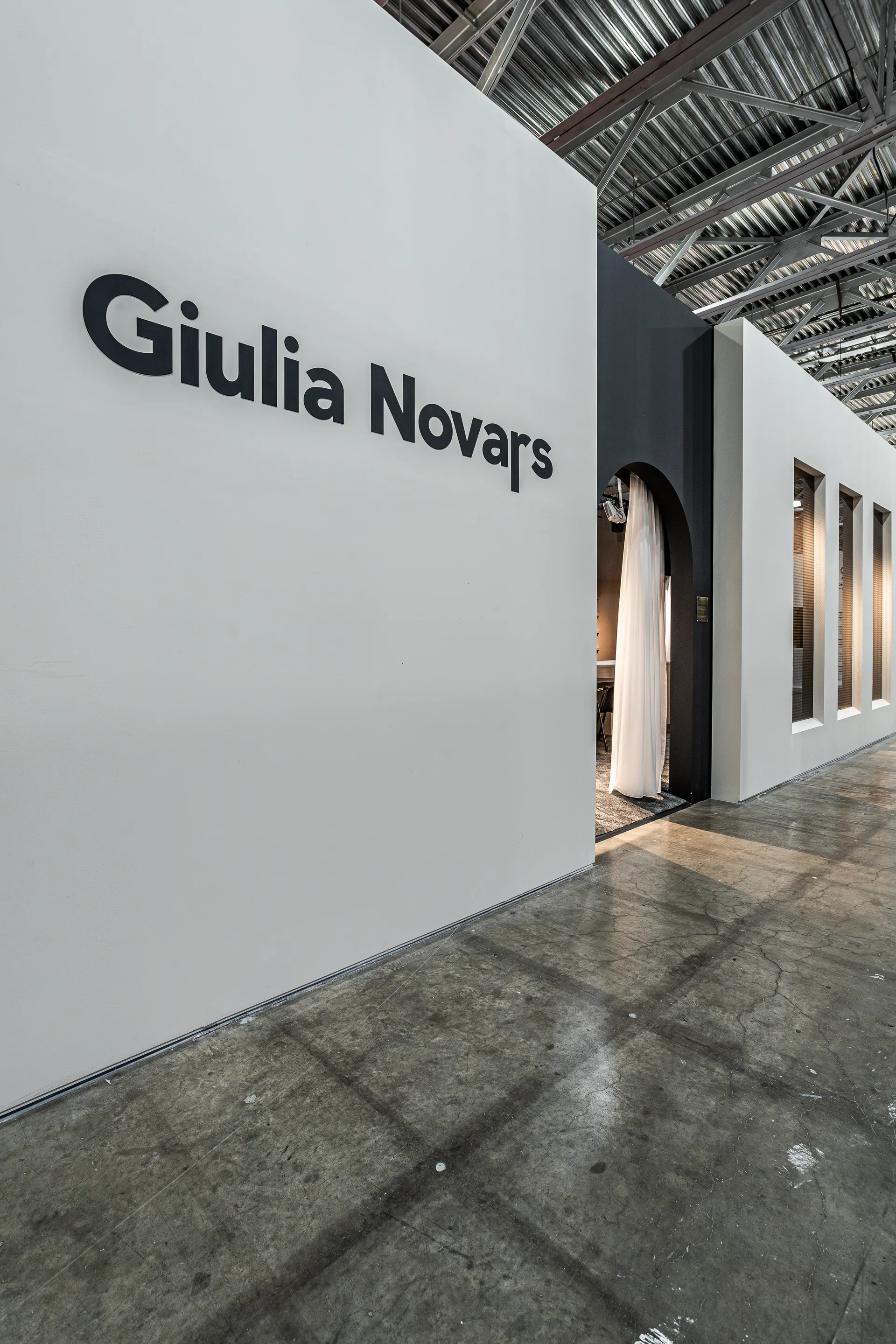
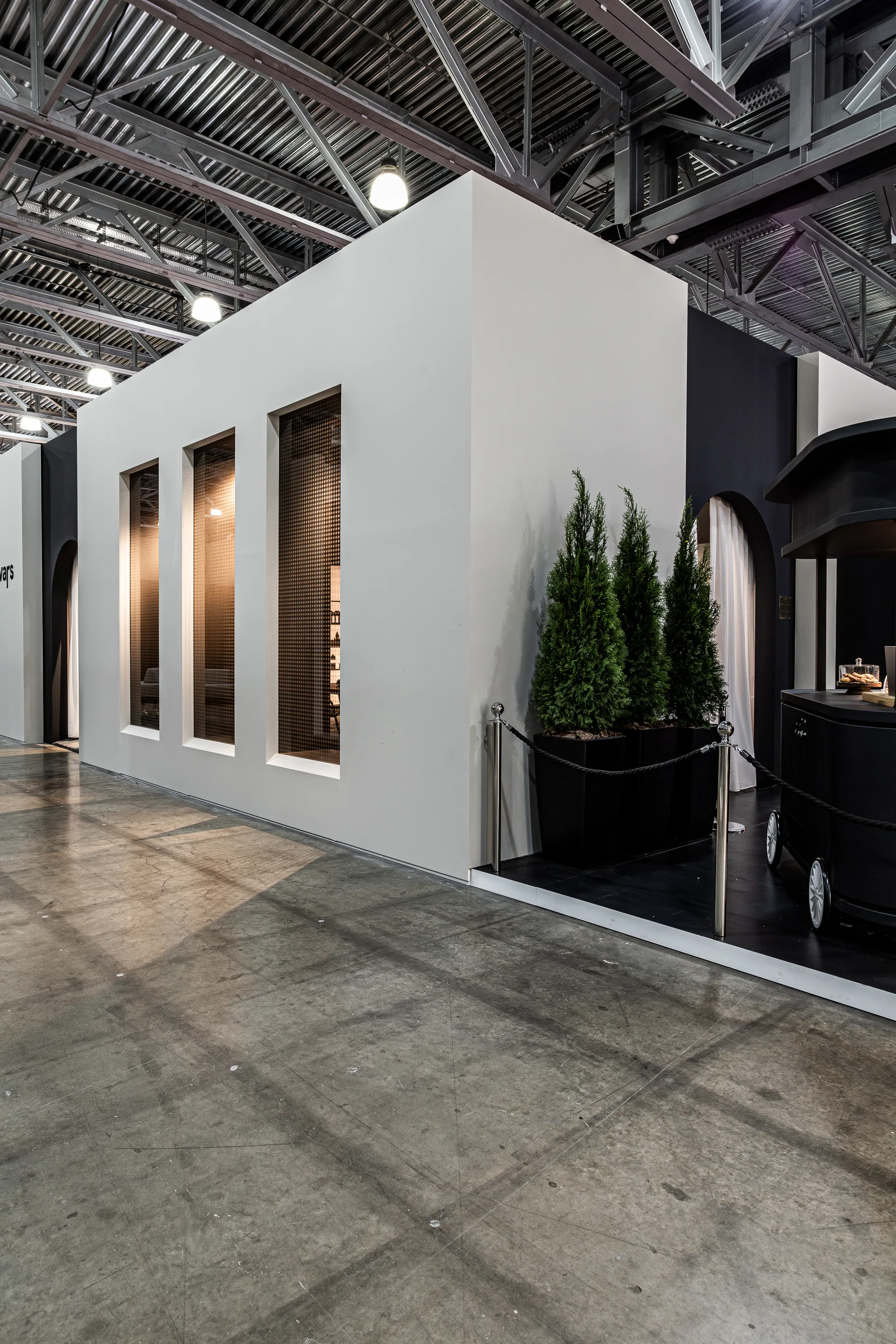
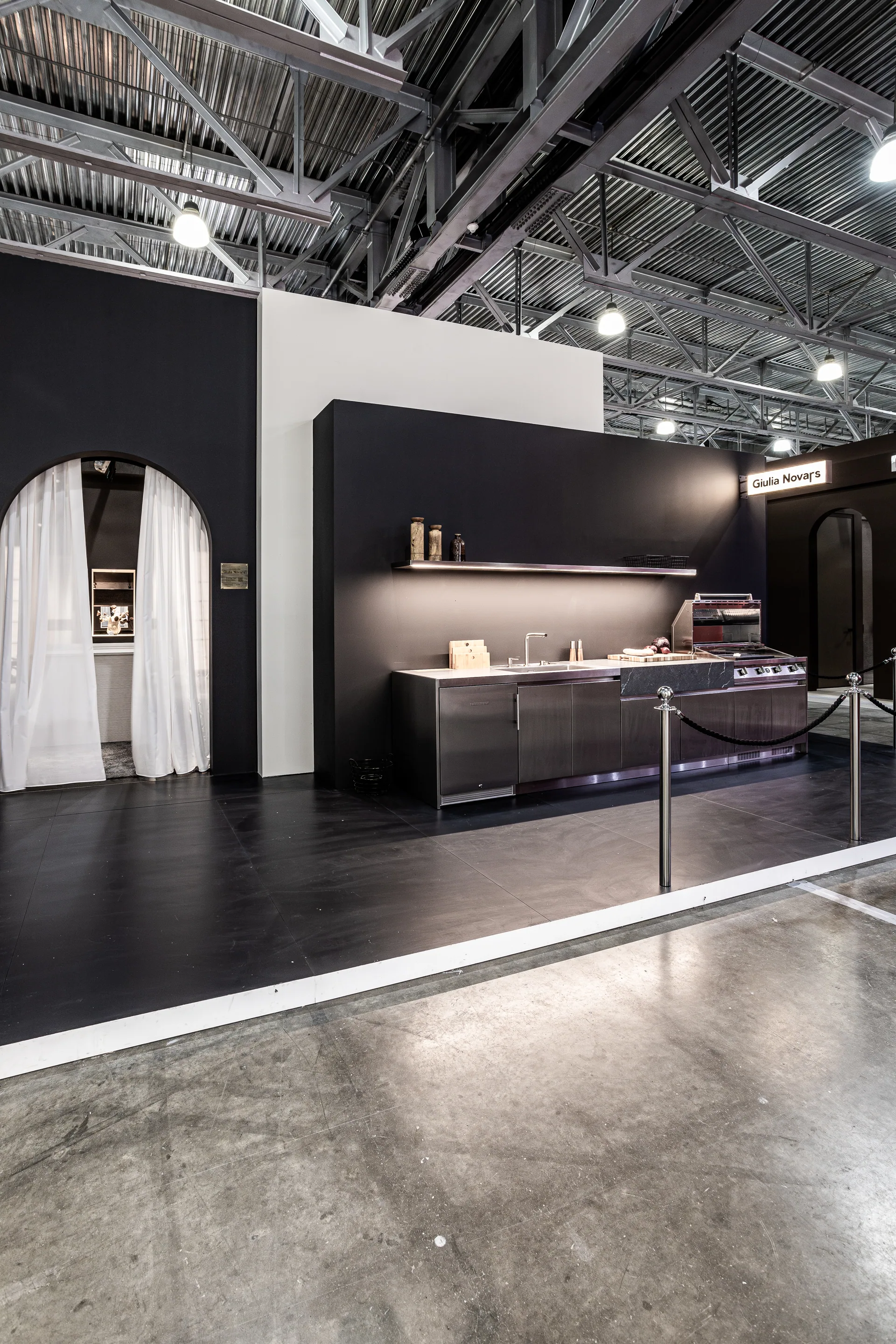
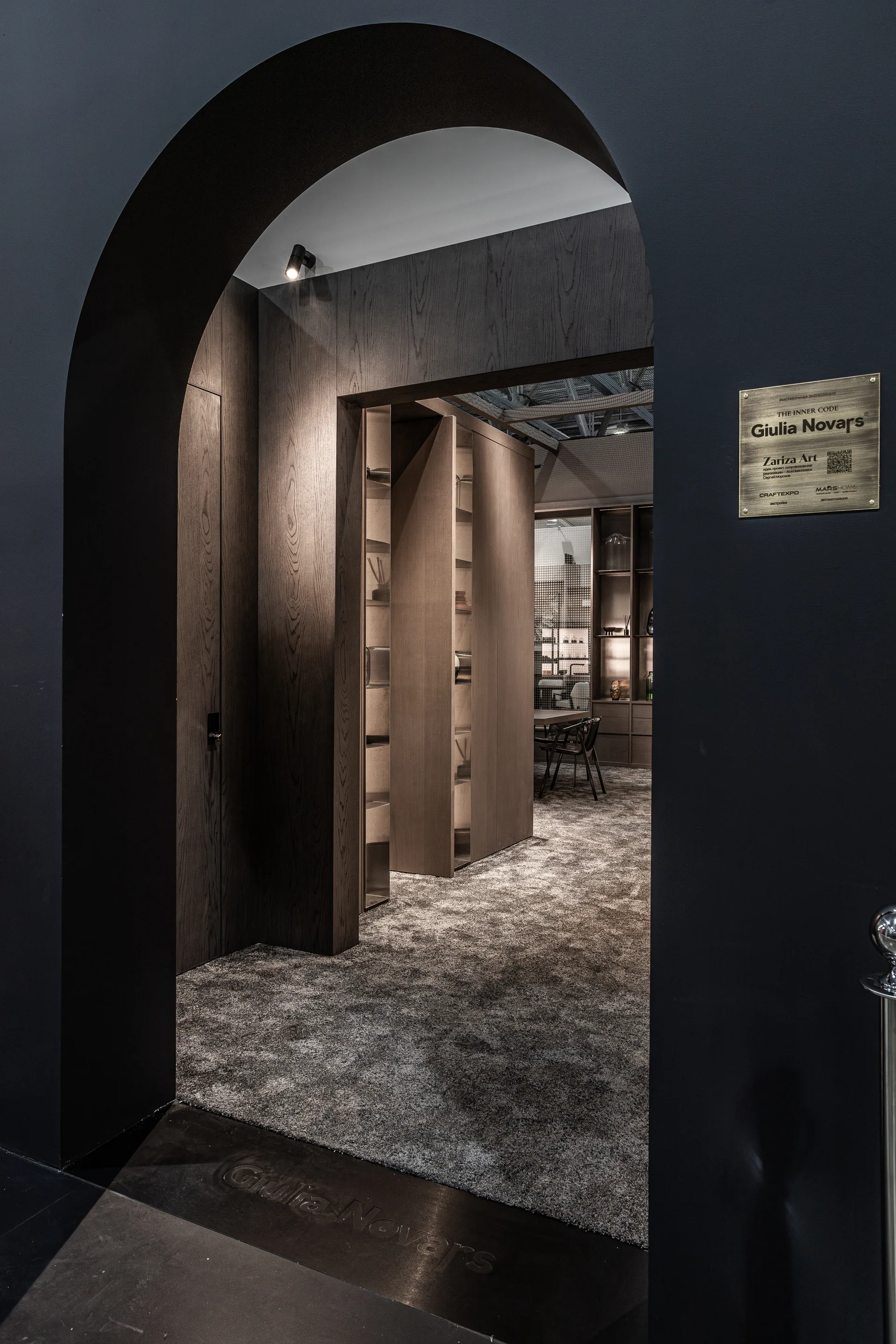
Image 1 of 7
Client’s role in the project
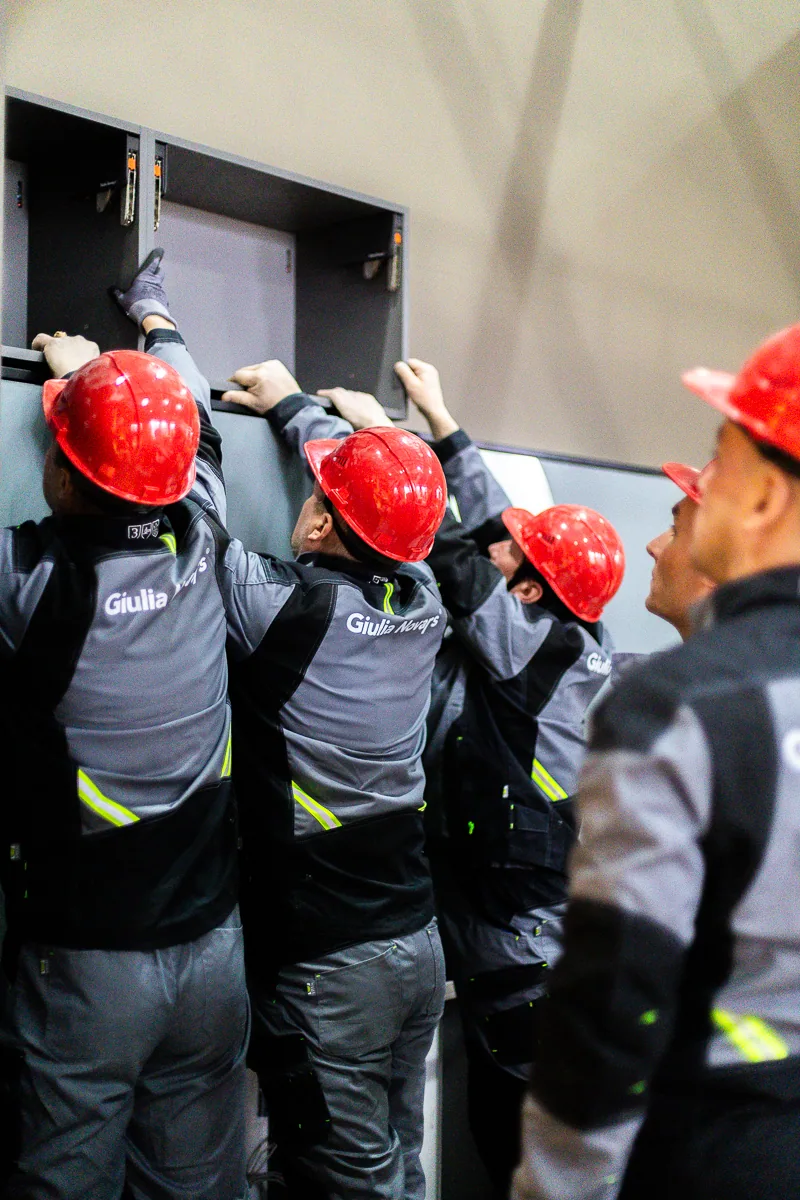
The Giulia Novars factory and partner showrooms worked as one team throughout the project. Their key role included full-scale development, production, and logistics of the furniture display and specially designed elements.
The Giulia Novars team also handled a wide range of organisational tasks and took an active role in introducing innovative solutions during preparation. This approach kept the bar exceptionally high at every stage—from concept to on-site build.
This deep involvement ensured precision in execution and fast decision-making. It allowed the project to be delivered with uncompromising quality under tight timelines, fully preserving a unified authorial vision.
Role of the authors in the project
We developed the architectural concept and spatial composition of the stand, and coordinated and supervised its delivery—controlling alignment with the intent and the quality of execution.
Within the project, we designed the furniture display and a number of bespoke pieces for the stand. The solutions were developed in close collaboration with Giulia Novars’ factory specialists and partner showrooms—engineers, the production team, marketing, and product leads.
As a dedicated track, we created Giulia Novars’ signature graphic patterns and adapted them to the stand’s media: glass, ceramic surfaces, light panels, and display planes.
We delivered the styling: selection, procurement, and on-site placement of display objects, aligned with the overall spatial direction.
We developed the project’s media layer, including the concept, dramaturgy, and video content for projection mapping. The key piece was implemented in Cabinet of Shadows, with an additional story—DUAL SURFACE—projected onto the surface of the Silent Slab island.
We carried out photo and video production at every stage, including the on-site build. The materials were prepared for project documentation, a press kit, and ongoing use in the brand’s communications.
In parallel, we updated the previously developed stand microsite: all texts, photos, and video materials were compiled and published in an accelerated workflow. The site went live in sync with the exhibition opening and served as a single access point for the project’s materials.
Architecture of the idea
THE INNER CODE is built as a translation of the Giulia Novars brand into architectural language.
The foundation is the brand’s dual origin: an Italian cultural base and Russian engineering practice, brought together in one space.
The idea is realised through a strict stand structure and a unified set of tools: high-end materials, signature graphics as a system of navigation and optics, and a media layer that works not as an attraction, but as an explanation of the product’s essence.
In execution, we maintained a balance between visual clarity and technological depth.
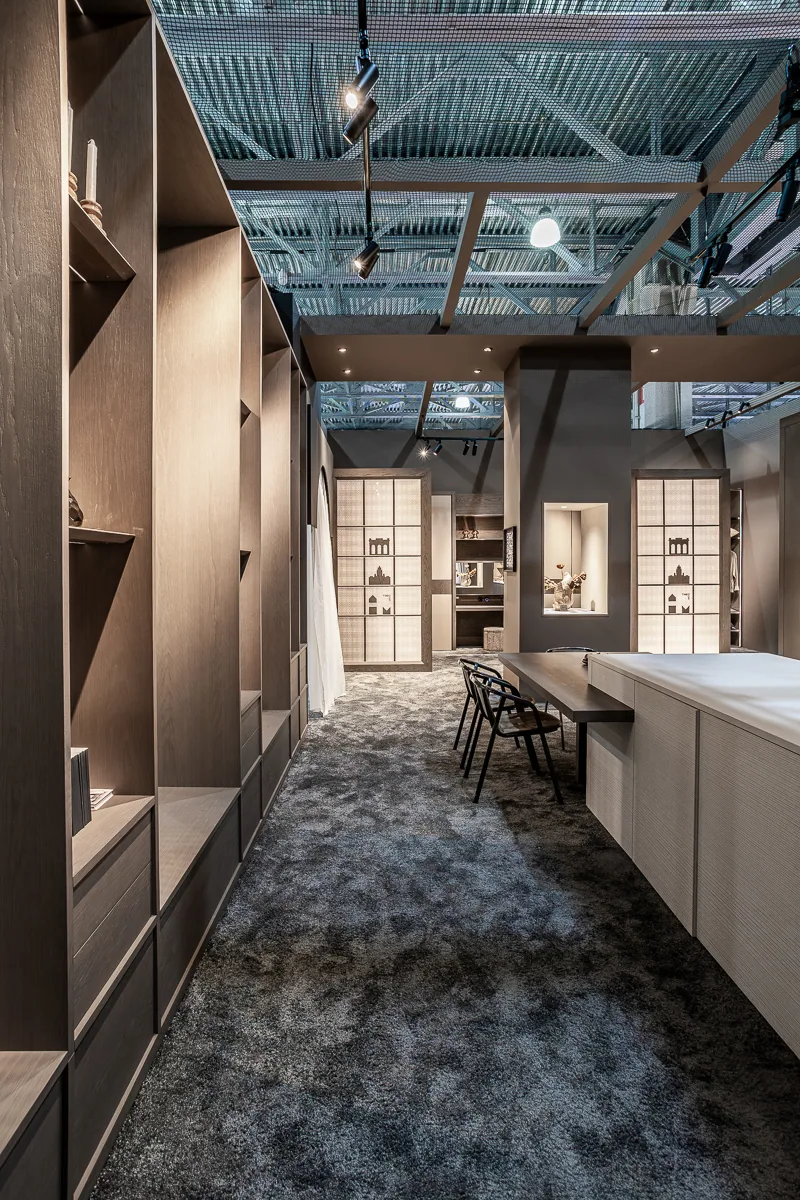
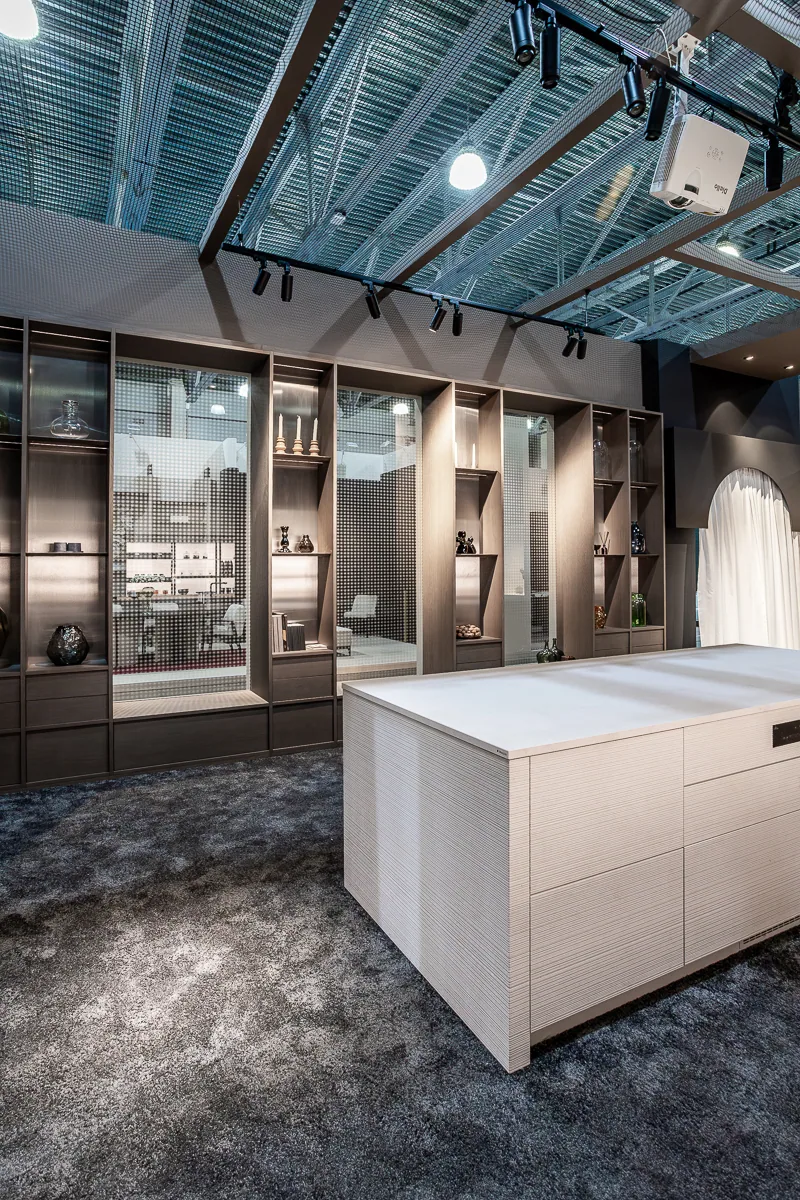
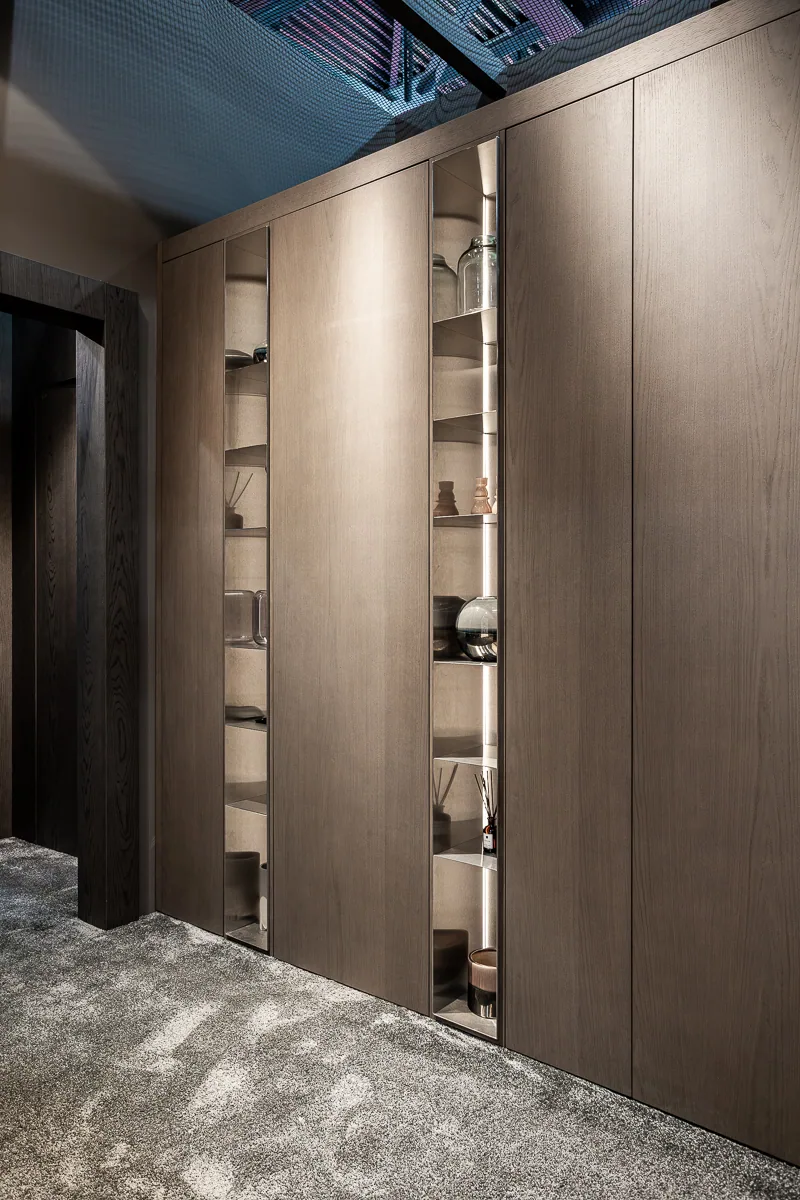
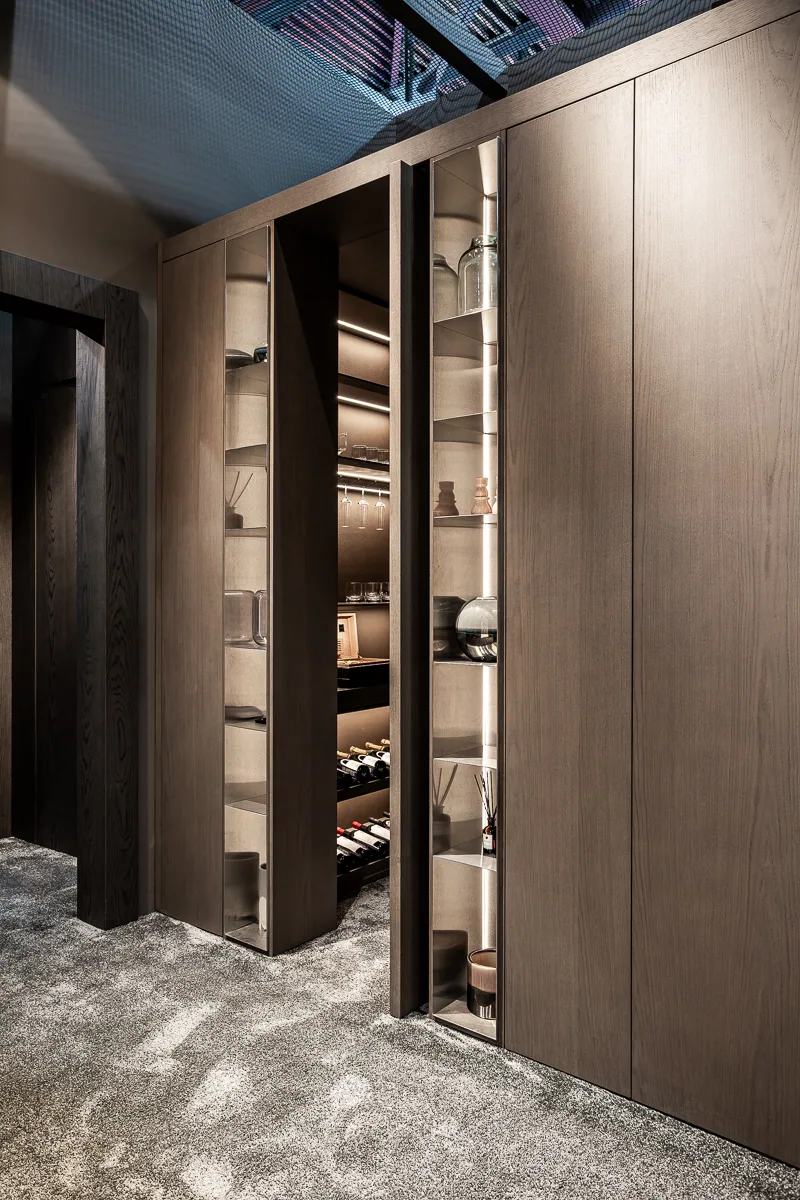
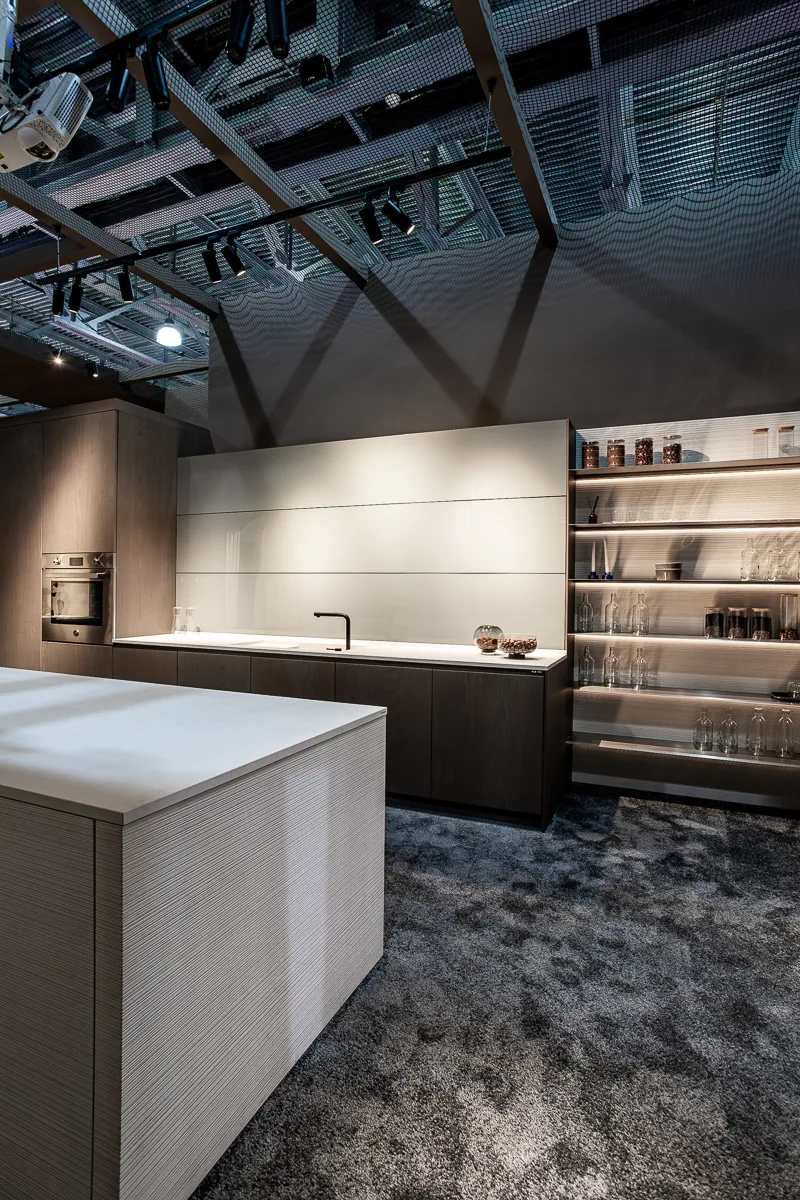
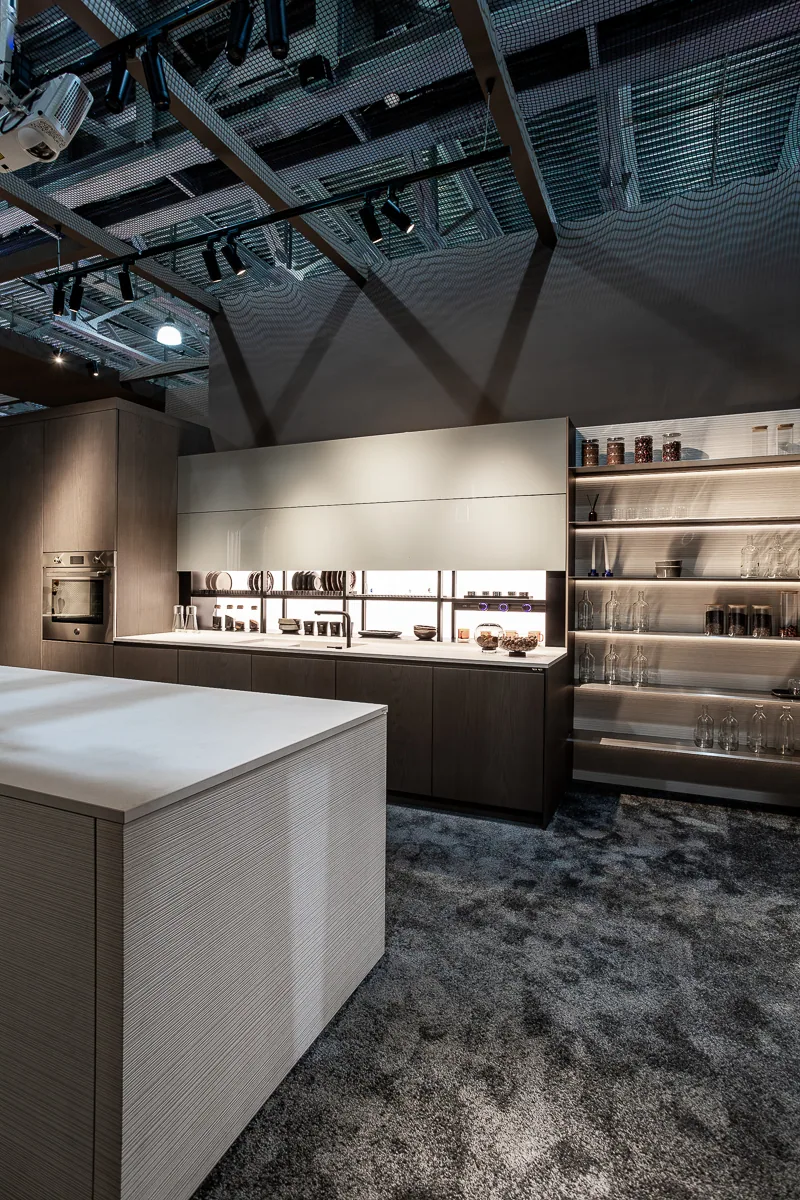
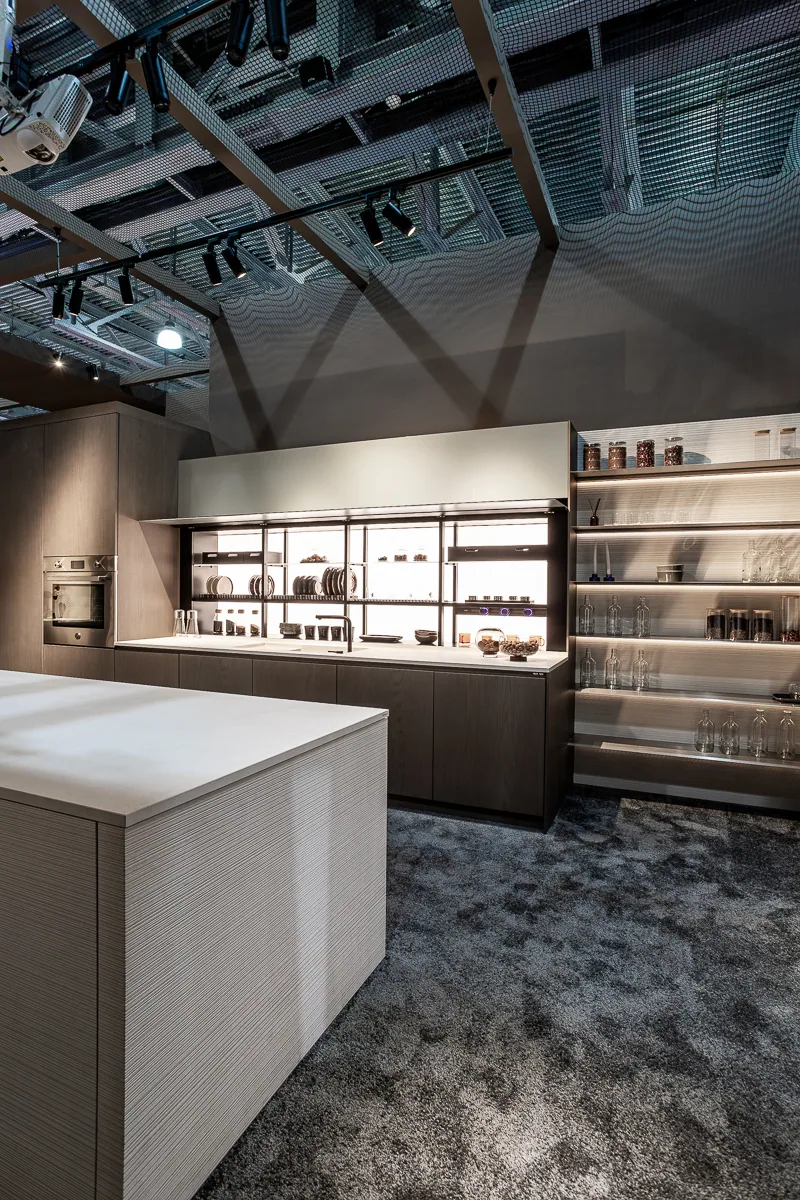
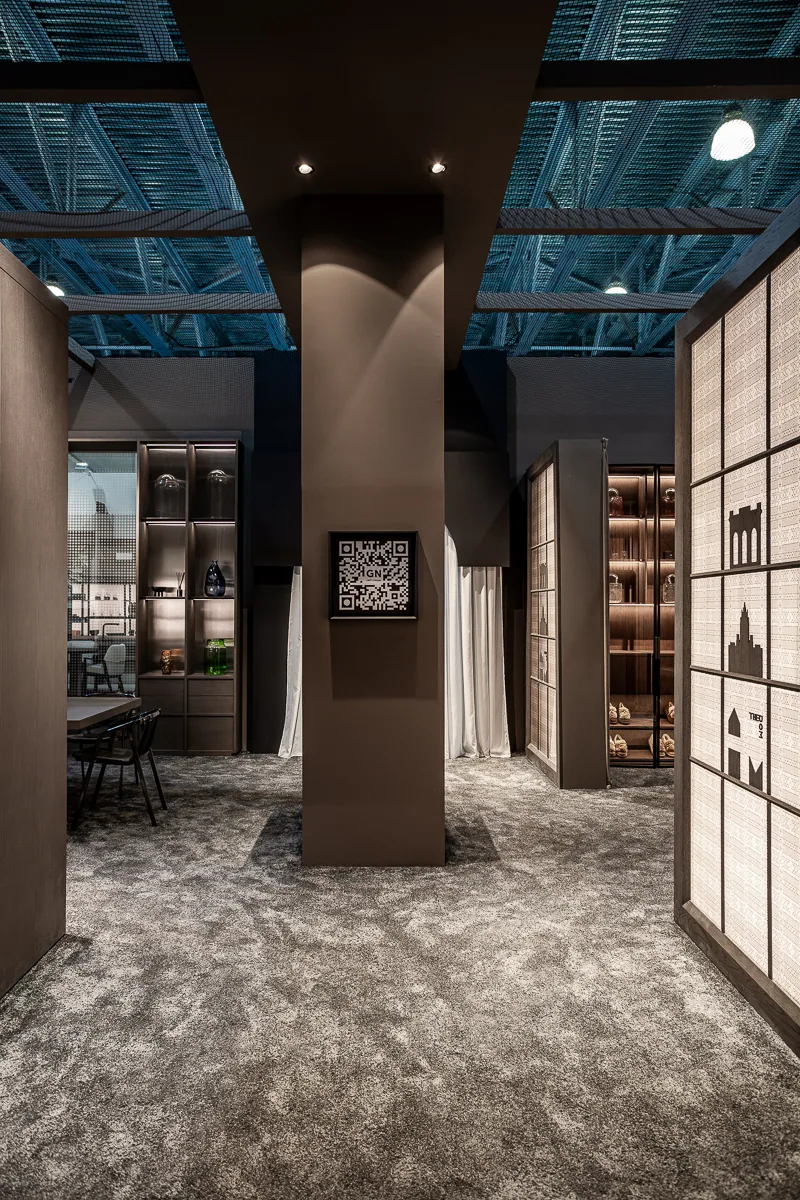
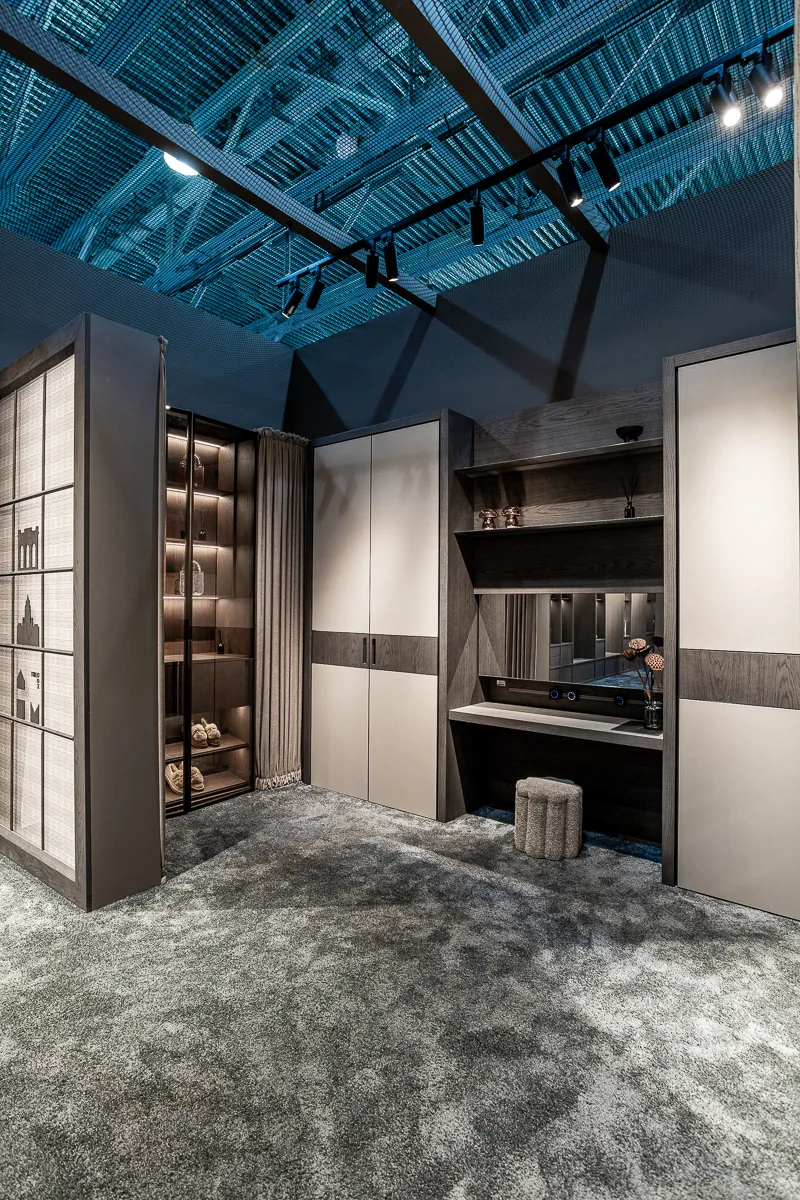
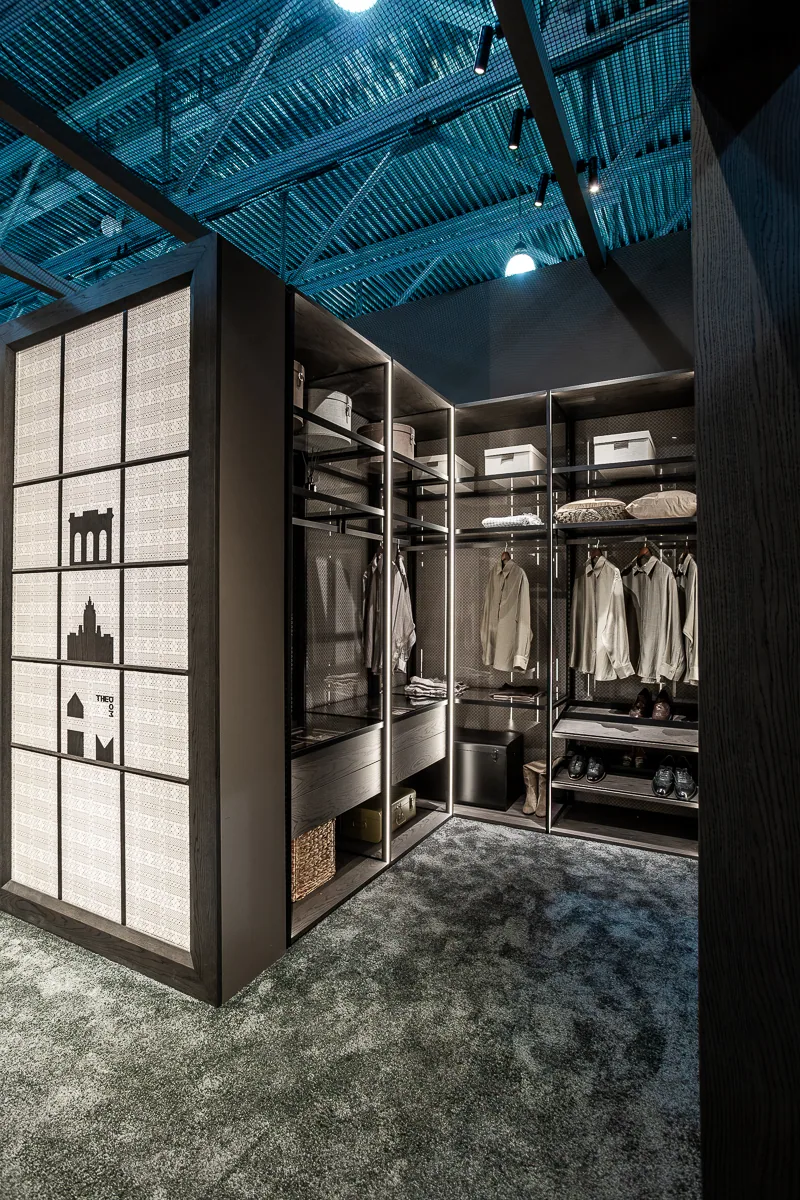
Image 1 of 10
On site
The stand was built in an intensive build-up mode: 4.5 days—from an empty site to the launch of the media scenarios. The chain involved many links: construction, finishing, automation, furniture, glass, and media.
The construction scope was delivered by our long-term build partners.
In parallel, teams from the Giulia Novars factory and partner showrooms assembled the furniture display. A separate engineering track ran alongside, including automation.
For the kinetic kitchen and the show in Cabinet of Shadows, control scenarios were developed for actuators, lighting, and synchronisation with projection; this also covered humidification, the scent system, and overall lighting control.
The mapping team was responsible for calibration and stable projection playback.
We provided design supervision, coordination, and final styling—assembling a cohesive interior and façade within tight timelines, comparable in complexity to a contemporary home.
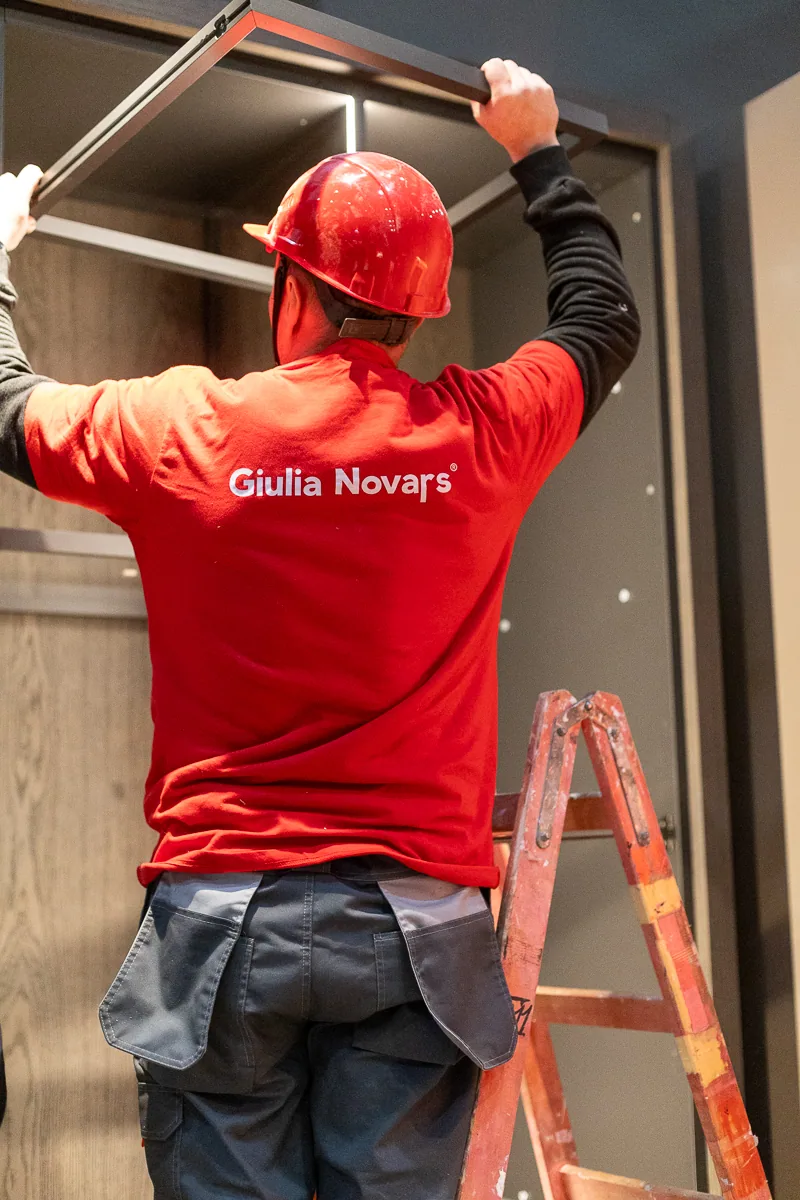
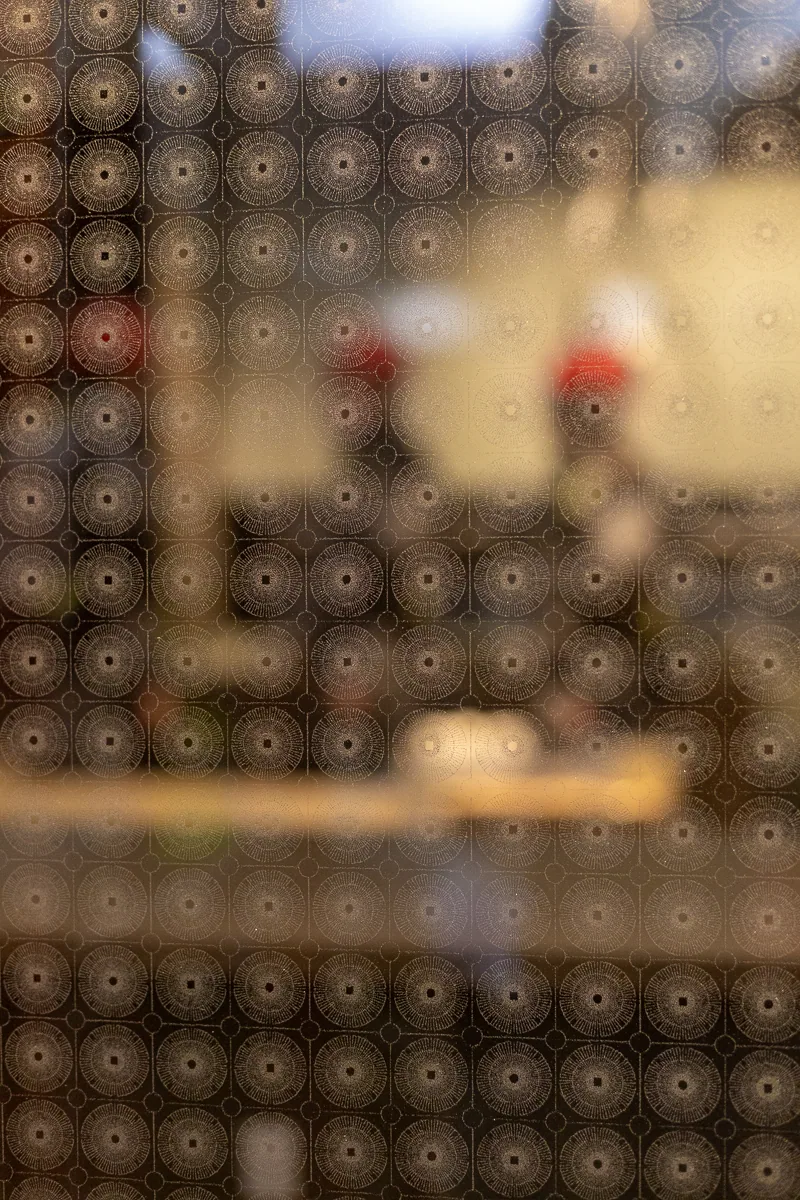
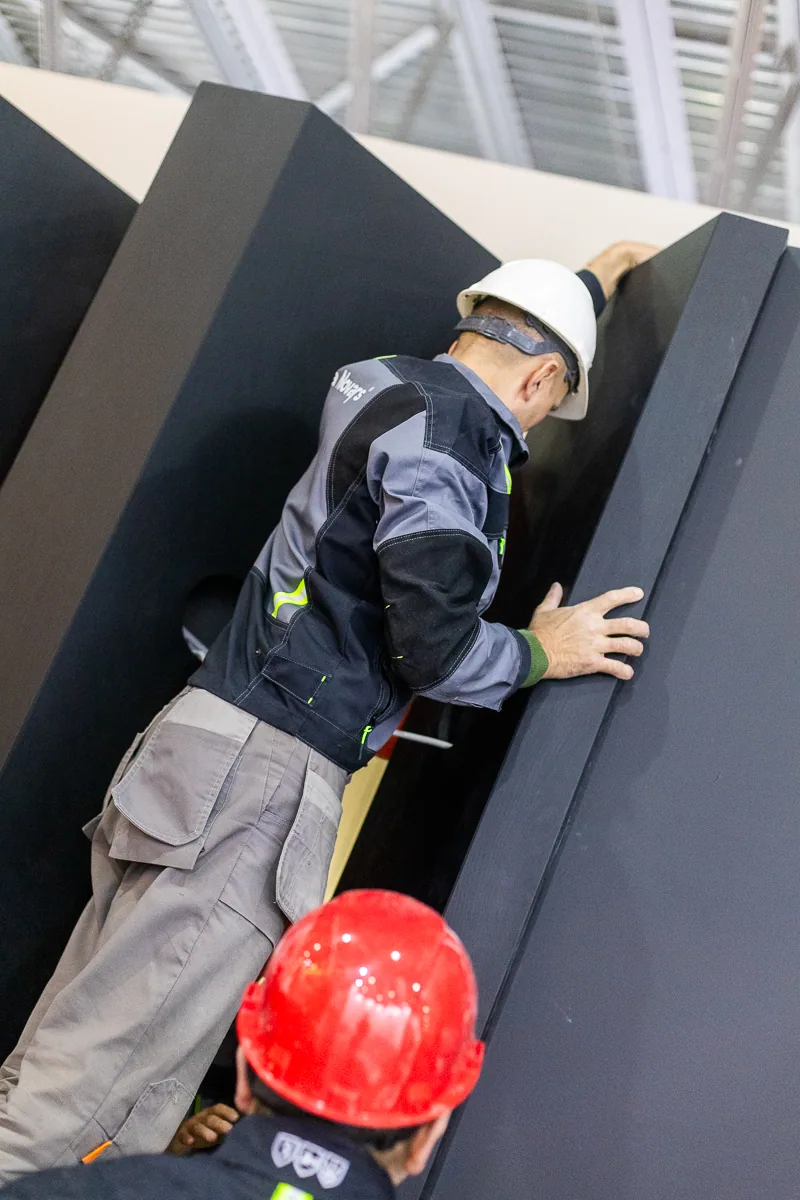
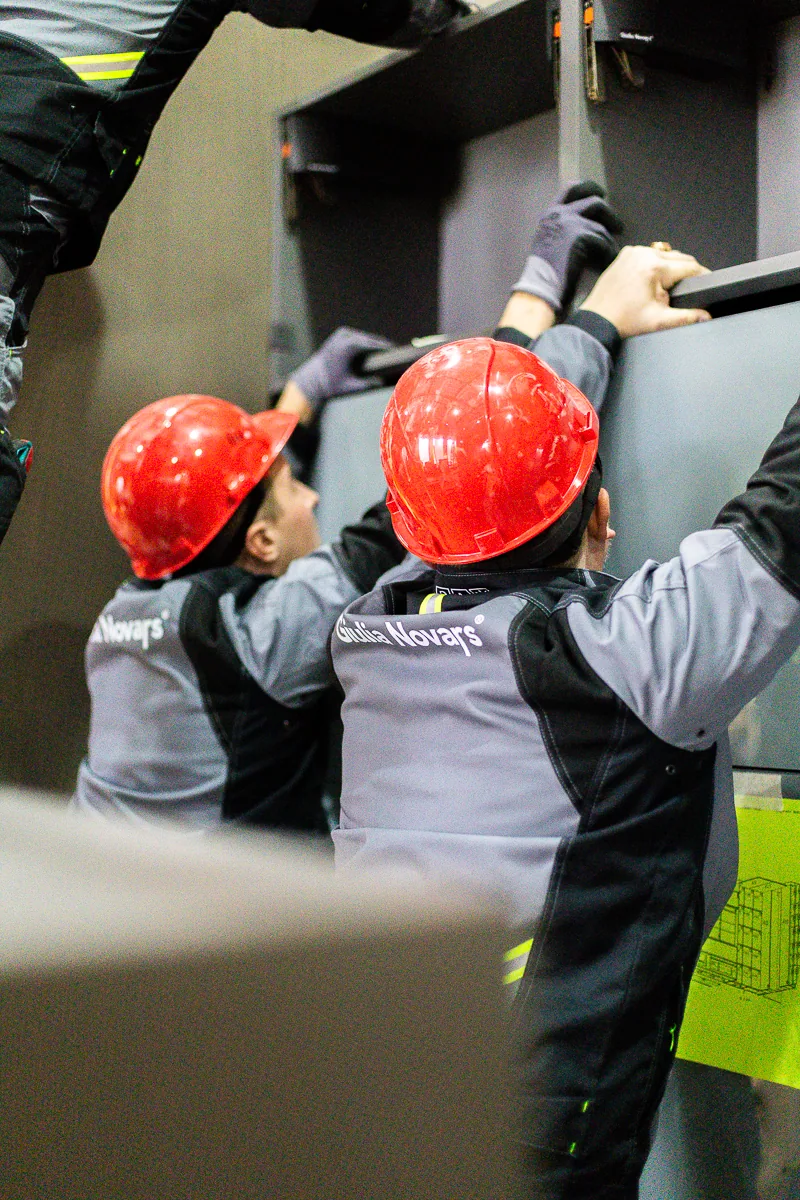
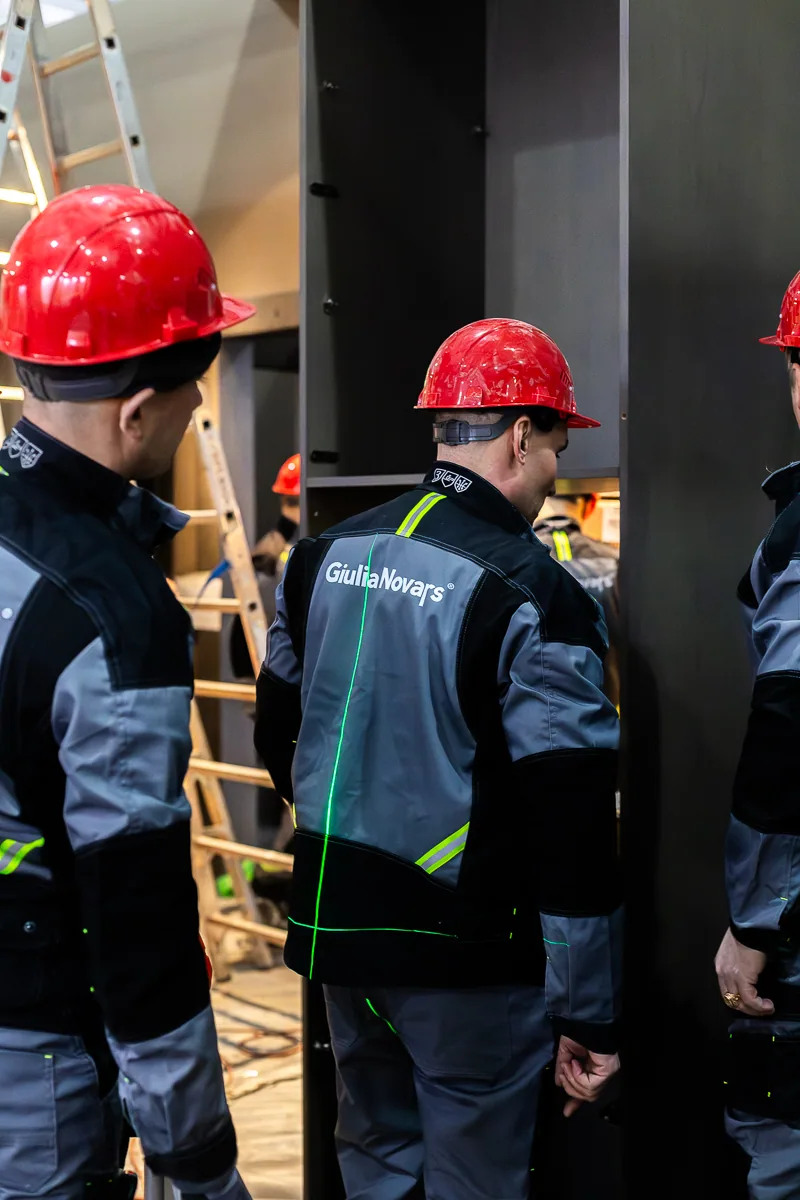
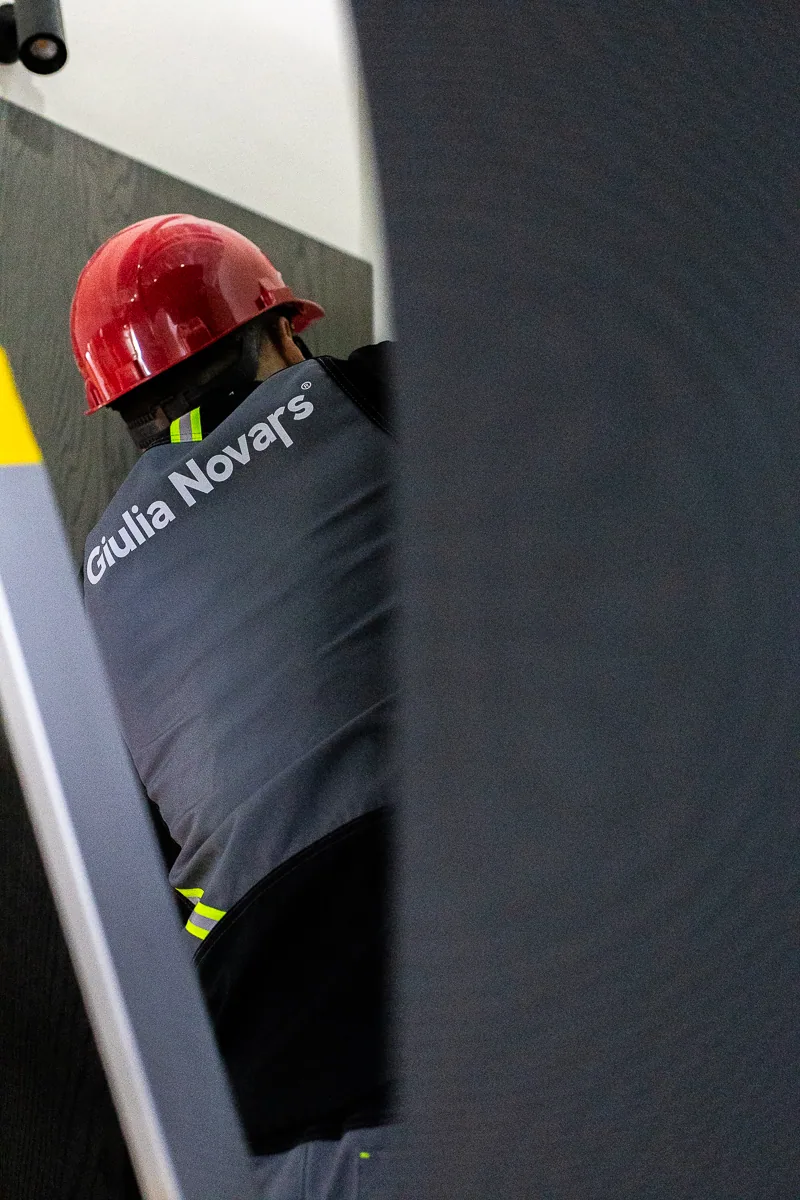
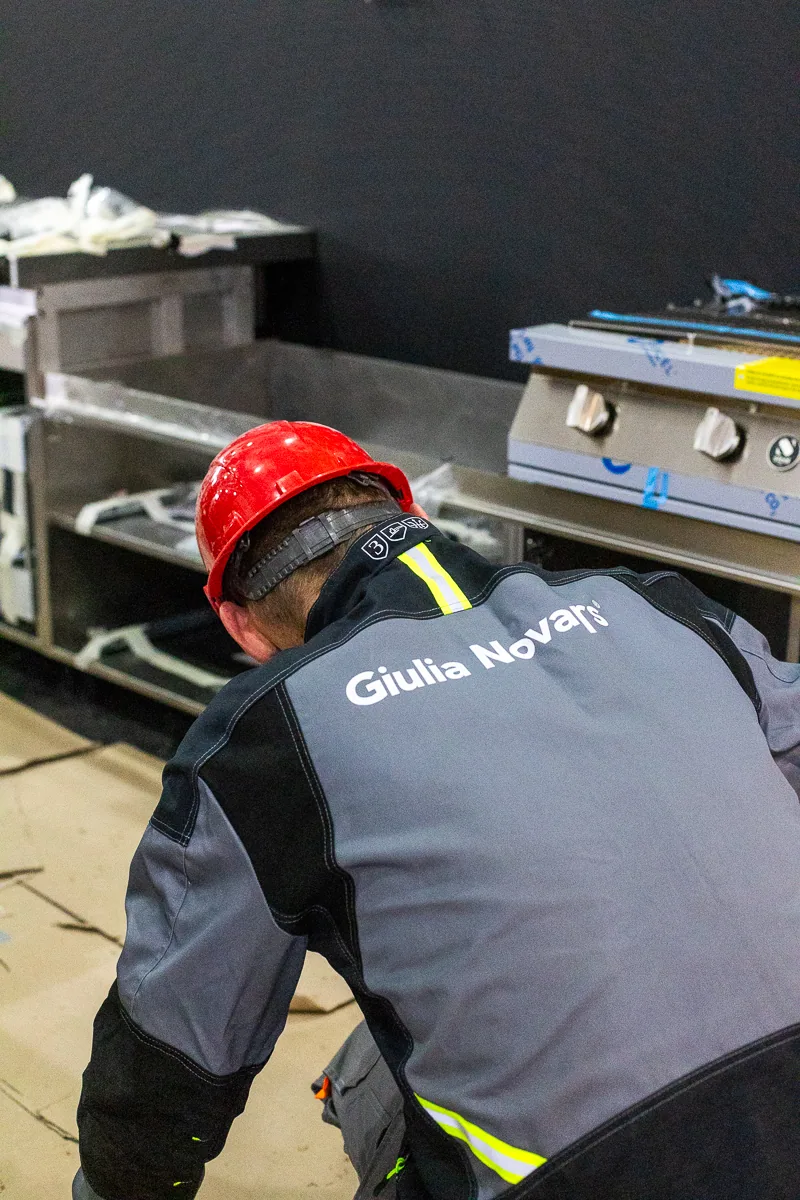
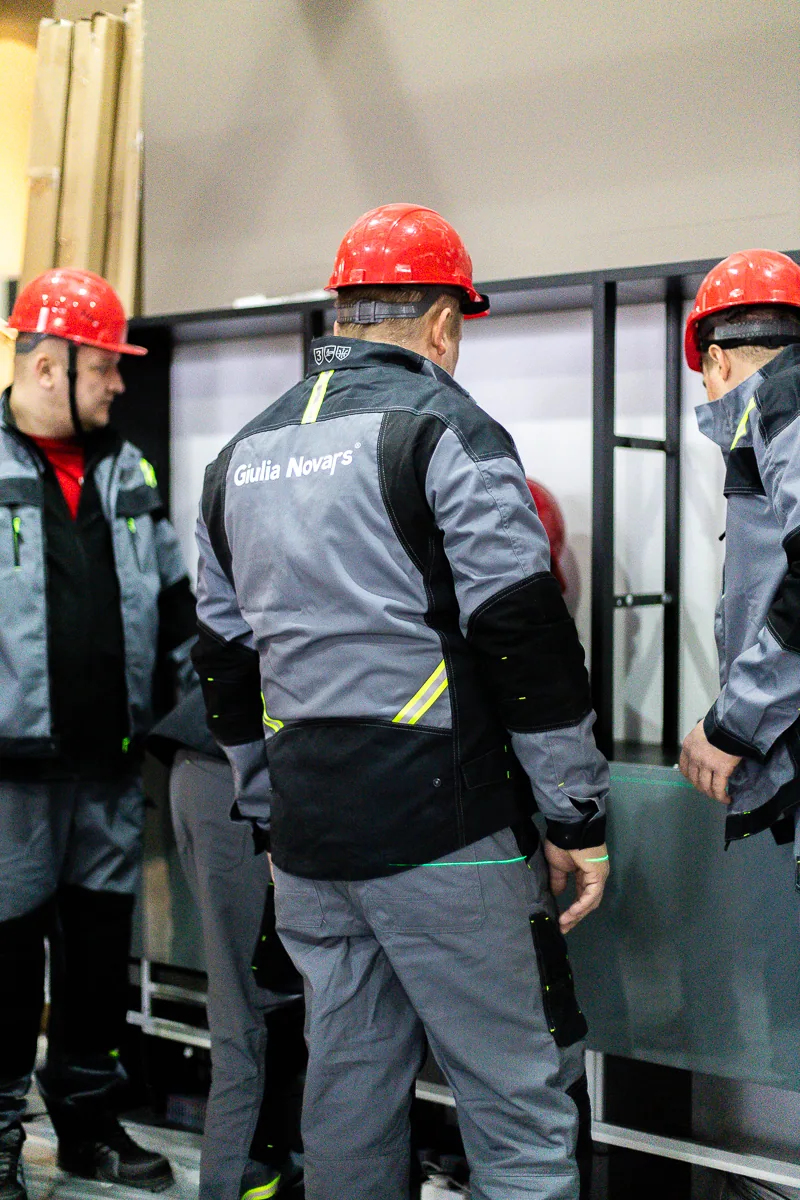
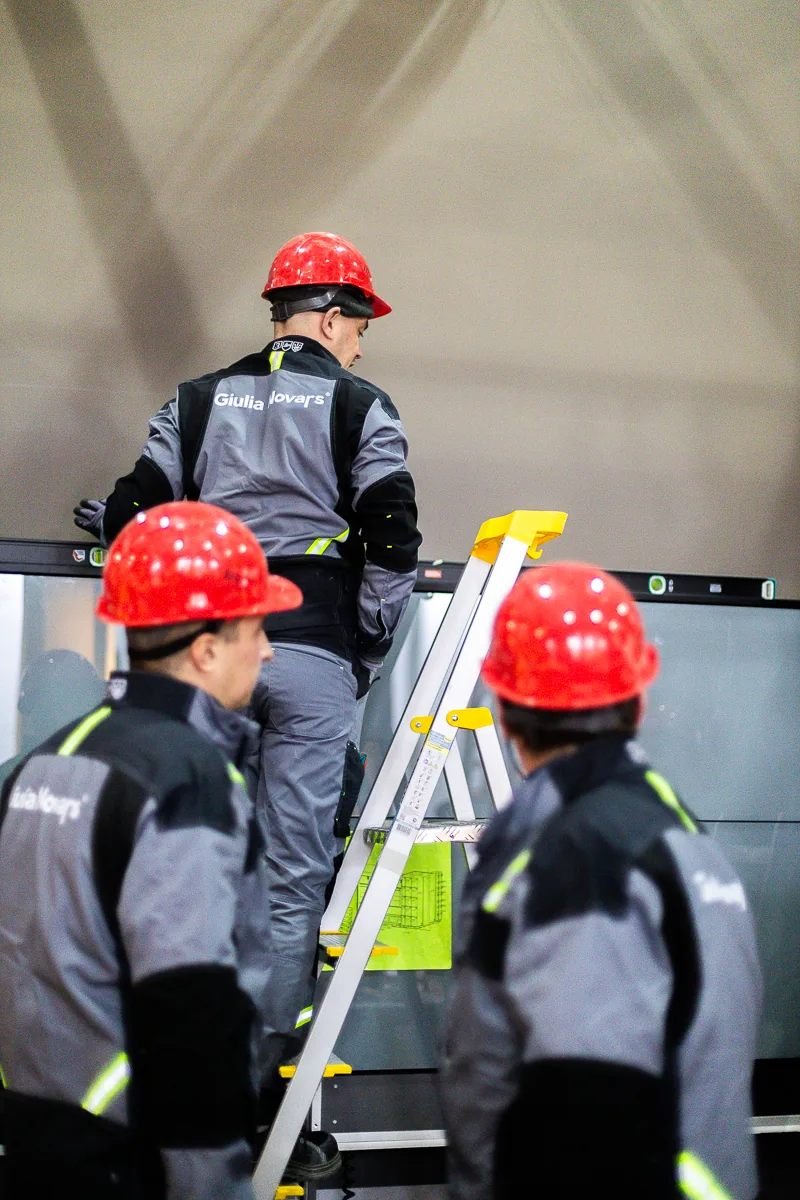
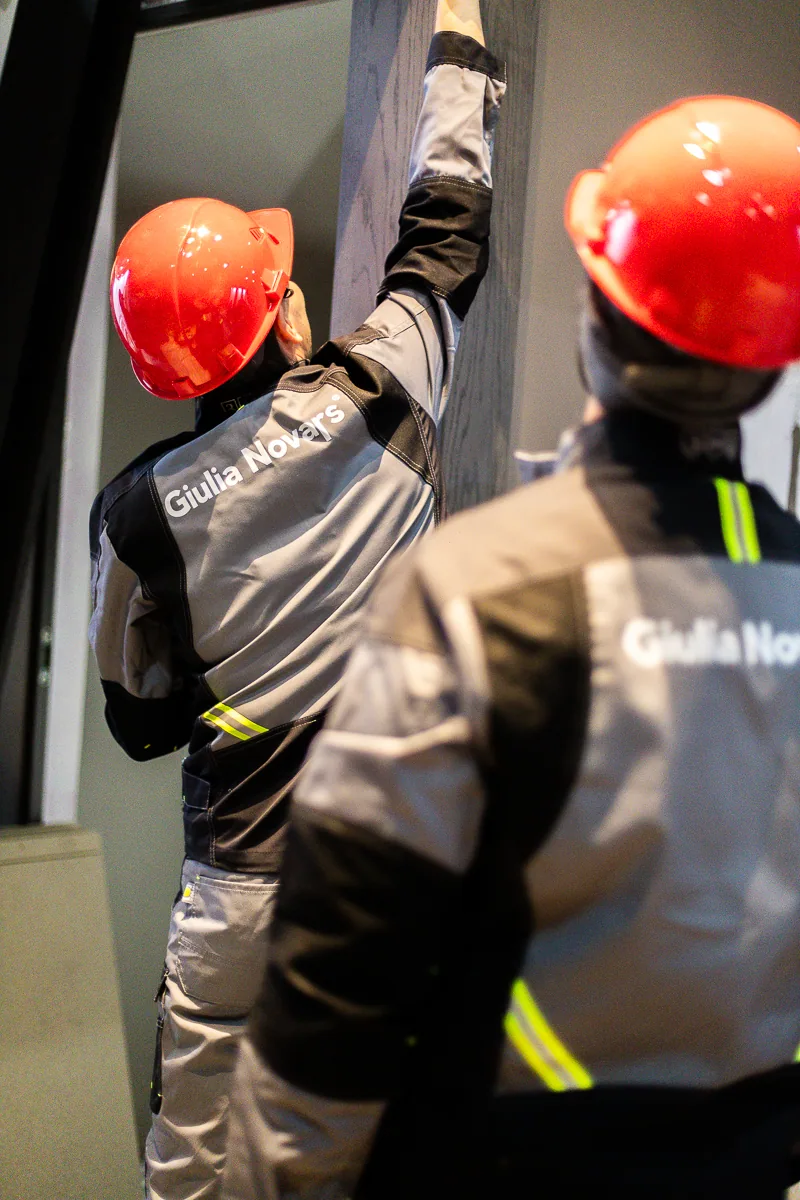
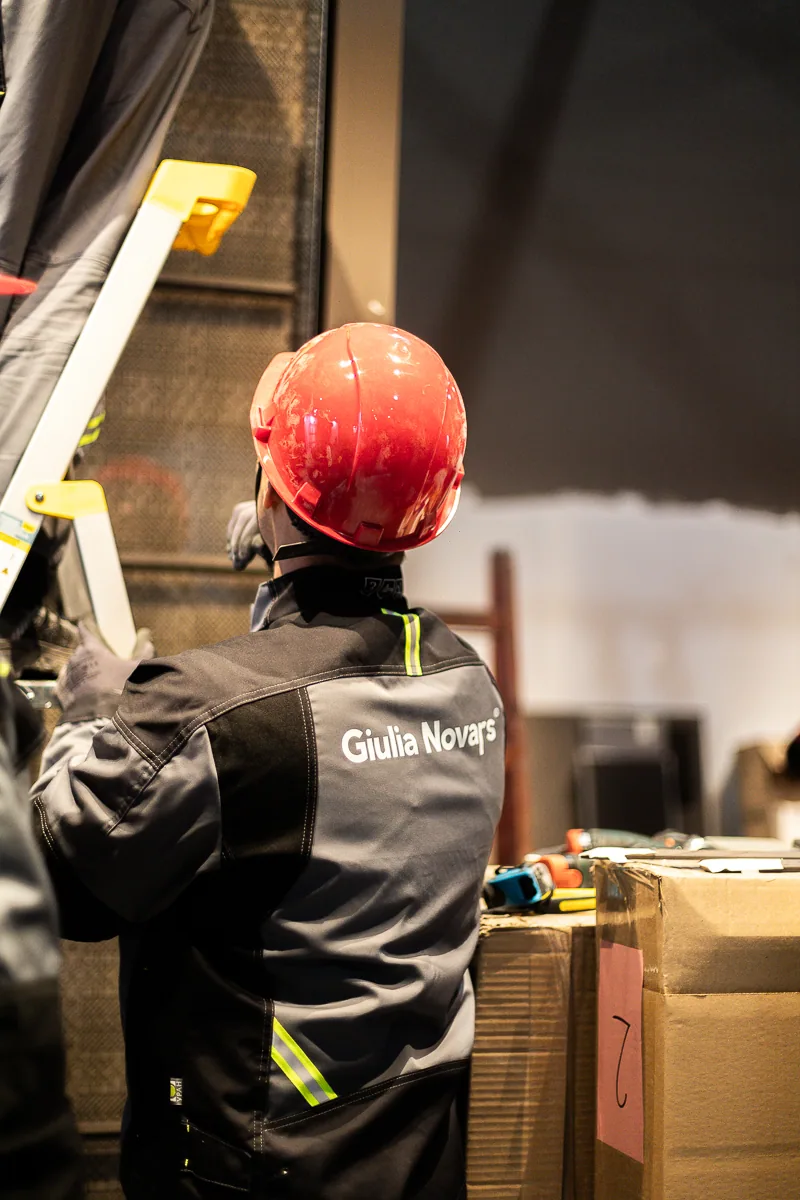
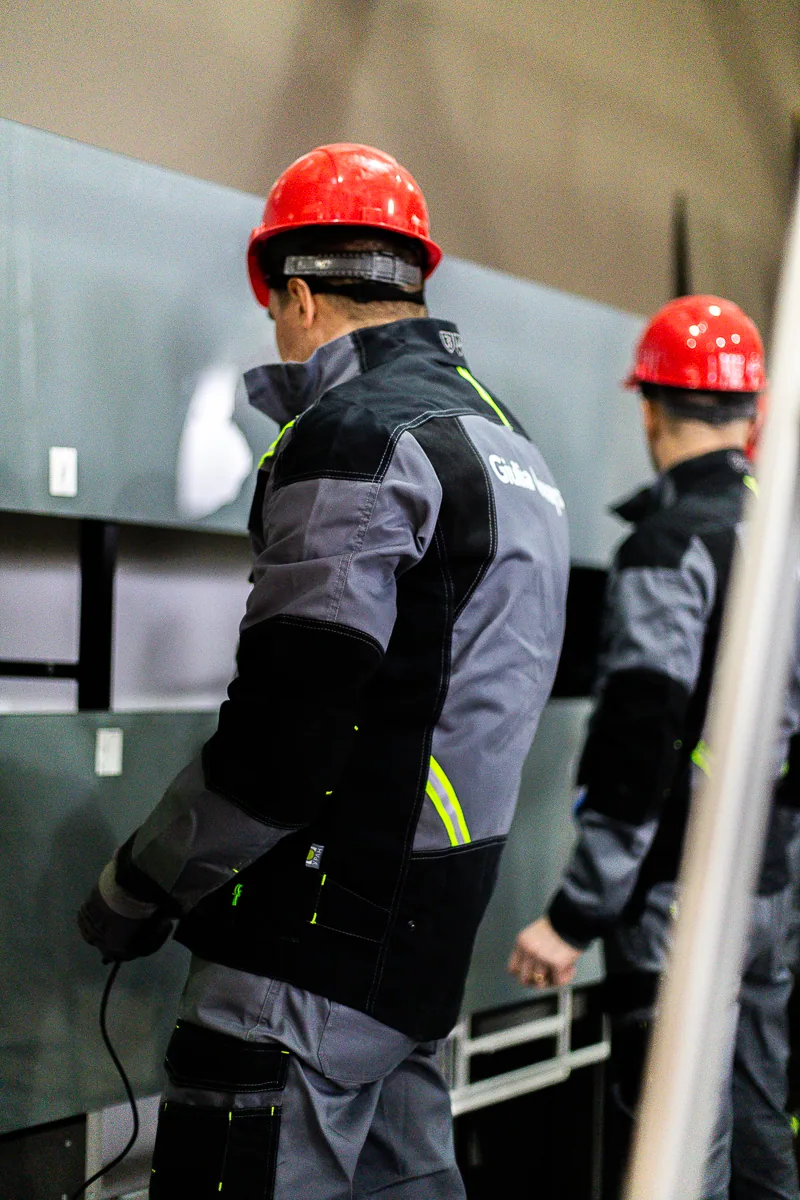
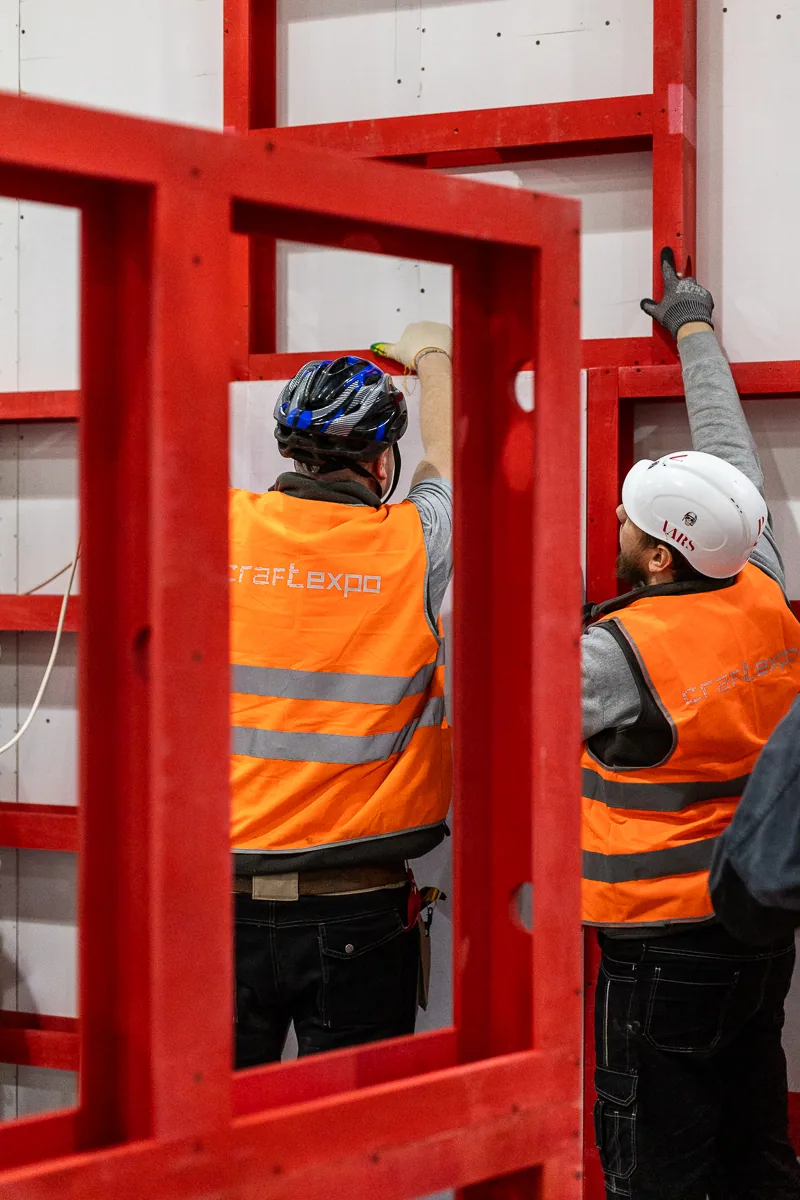
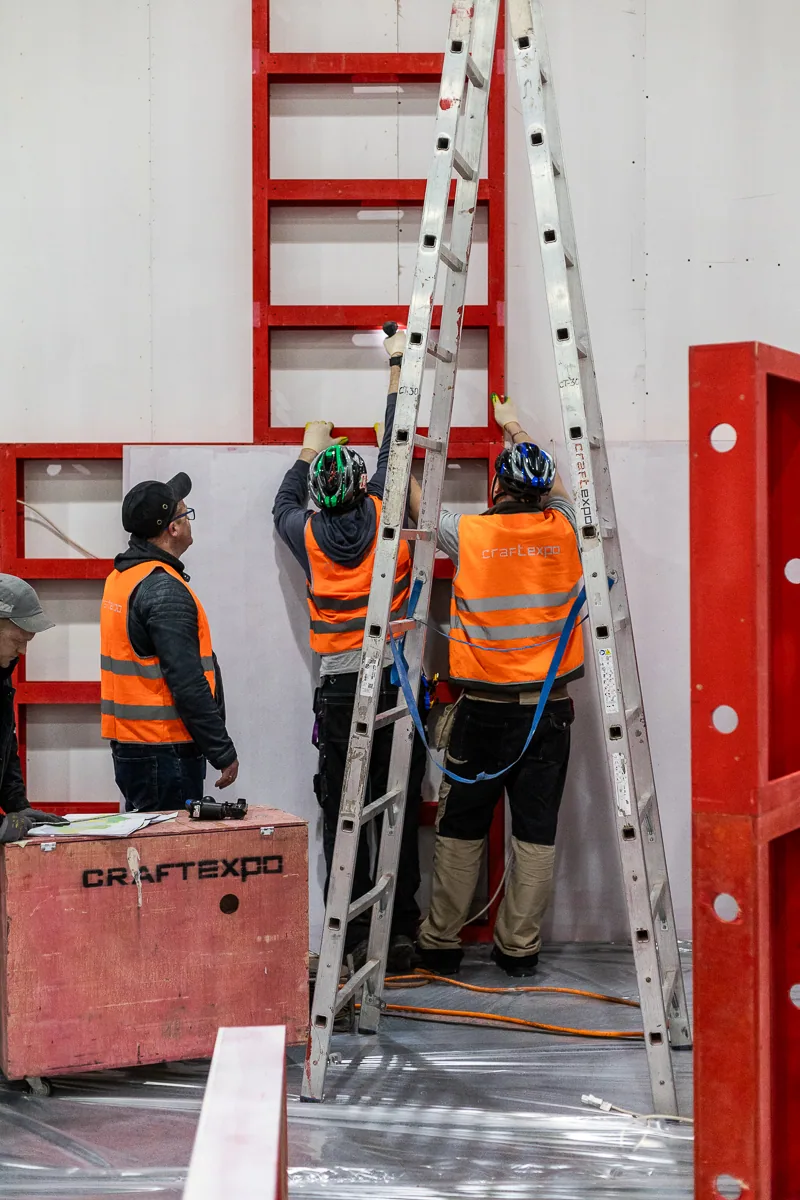
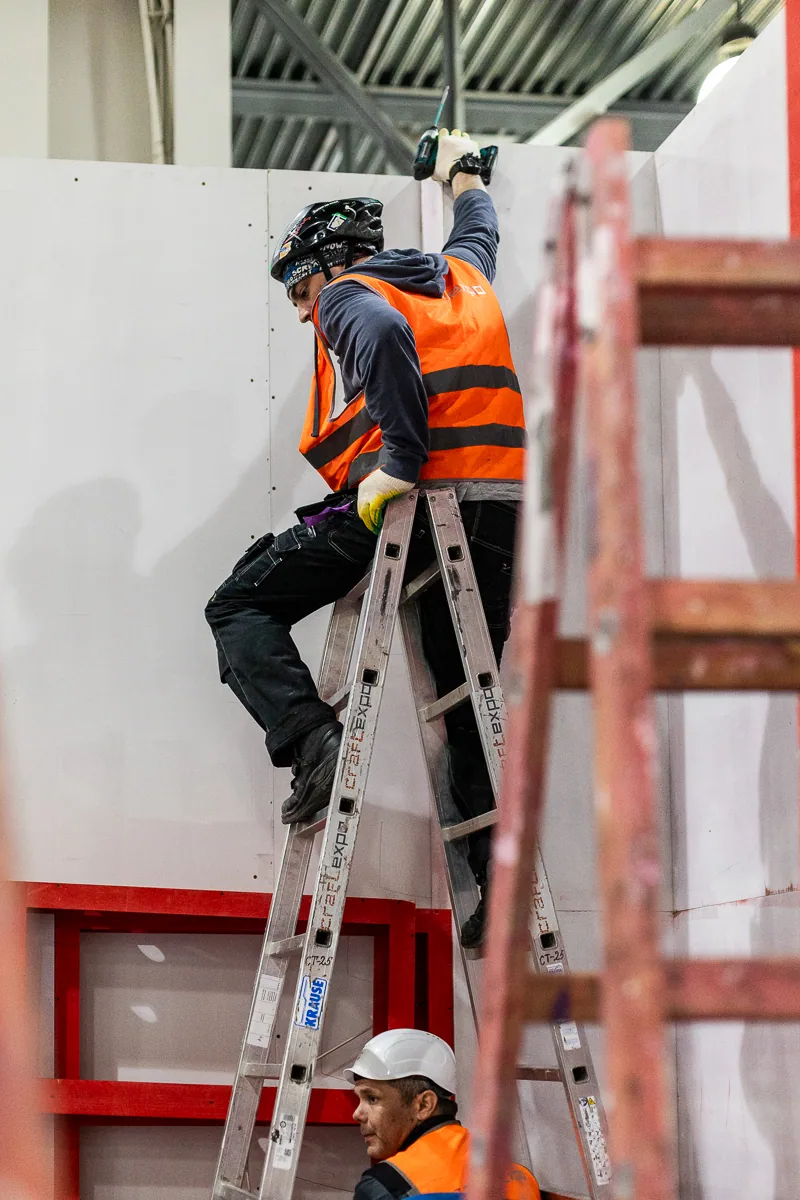
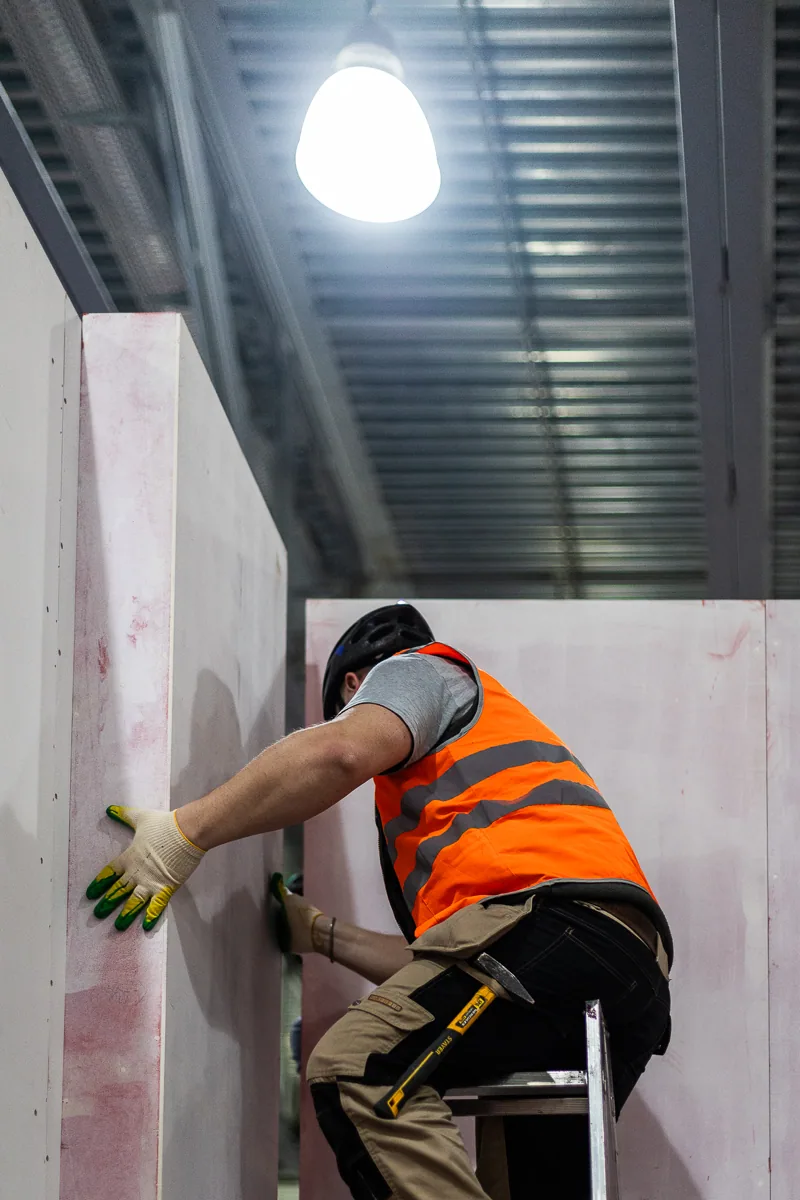
Image 1 of 18
MAPPING IN TWO STORIES
We developed the project’s narrative and media foundation—creating the concept, script, and video content. Technical delivery was provided by specialist partners, synchronising complex systems.
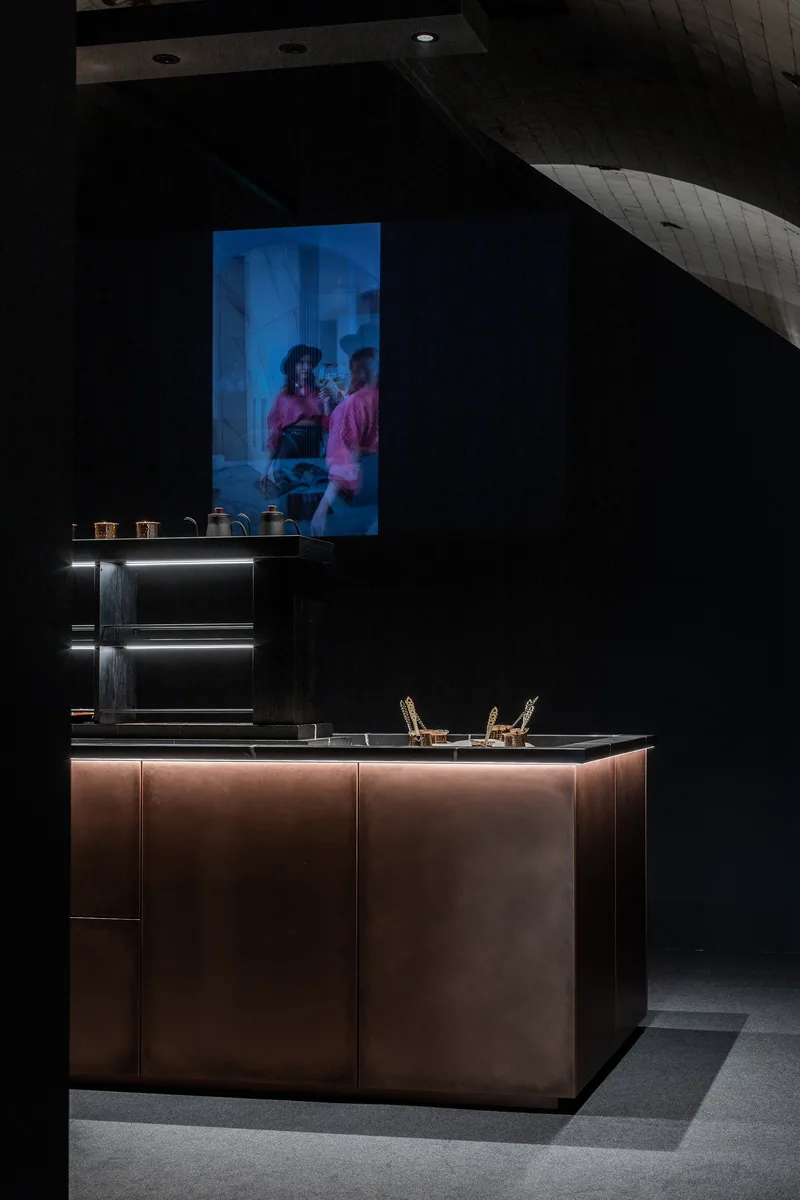
CULINA TRANSITUS is a story of four states of a single kitchen—from an engineering concept to a lived-in space with a personal history. The narrative unfolds behind display panes: what changes is not the setting, but the object’s inner state, expressed through graphics and sound.
Learn more
CULINA TRANSITUS shows how the same kitchen composition moves through four states—from engineering clarity and precision to lived human experience.
It is a story about the moment when design axes become everyday routine, and an object ceases to be merely an object, beginning instead to hold the biography of a home.
The narrative unfolds inside Cabinet of Shadows—a sealed room with no entrance, accessible only to the eye through the vertical Time Windows on the façade of Atrium Novum.
Inside, one element remains constant: silence, the kitchen on the far wall, and a table filled with wax.
The wax is not decorative, but a steady “anchor of time”: it fixes the presence of duration and makes the changes especially perceptible. What shifts is not the space itself, but the state of the kitchen—layer by layer, as an evolution.
Visually, the story is built on monochrome, frontal composition, and architectural graphics. The presentation is intentionally restrained: without “noisy” effects, closer to drafting precision and sketch-like clarity.
Each act has its own graphic language and its own sound motif, yet together they are perceived as four states of a single material.
Dramaturgy:
- Act I — AXIS / Coordinates. It begins with the foundation: axes, grid, proportions, modular logic. The solution appears first—and only then the form. This is a state of “pure intent”, where beauty is not yet in texture, but in precision.
- Act II — FACTO / Formation. The project becomes an object. On screen: assembly and production—material, joint accuracy, repeatable operations. Calm and to the point, like a workshop rhythm that makes the complex inevitable.
- Act III — INFRASTRUCTURE / Infrastructure. An unseen layer of work appears “inside”: mechanics, engineering systems, storage, light—everything that isn’t usually shown, yet it sustains comfort and the quality of experience. This is the layer of hidden functionality.
- Act IV — USUS / Way of Life. The finale is warmer and quieter: the kitchen becomes a place for everyday actions and conversations. What matters here is not an event, but habit. In this state, the space gains a personal story—the kind of memory that cannot be designed directly, yet inevitably emerges.
DUAL SURFACE reveals the potential of a monolithic stone surface. Hidden induction and projection softly mark heating zones, turning a single-piece island into a smart interface that appears only when needed. Both works explore the dialogue between form and function.
Learn more
Silent Slab is a stone monoblock that, in “silence”, reads as a pure architectural plane. An invisible induction system is hidden beneath the worktop, so the surface can become warmth while remaining outwardly monolithic and strict.
DUAL SURFACE works as a discreet interface that appears only when it is truly needed. Projection softly marks the heating zones and their logic, without turning the surface into a “gadget” or competing with the material. When the need passes, the image fades—and the island returns to what it is at rest: a monolithic plane with no extra signals.
The dramaturgy here is built on a shift in function within the same surface, without a change of scene. First, it is a working plane—prepping, slicing, rolling. Then, at the right moment, the same zone becomes a place for cooking and serving. Everything happens on one “sheet”, which is why it feels honest: the form does not change—the purpose does.
Silent Slab remains an architectural plane, and projection is a subtle proof that function lives inside the silence of form.
CULINA TRANSITUS is the evolution of an object over time, while DUAL SURFACE is the instant transformation of a single surface.
For us, this became a distinct and important practice: to connect—through narrative—what usually exists “on its own”: architecture, object, function.
As a result, a small media fragment became a focal point: people paused, came back, filmed, discussed.
The projection didn’t expand the stand physically—but it noticeably amplified its presence in communications, because it gave viewers not just an image, but a clear story.
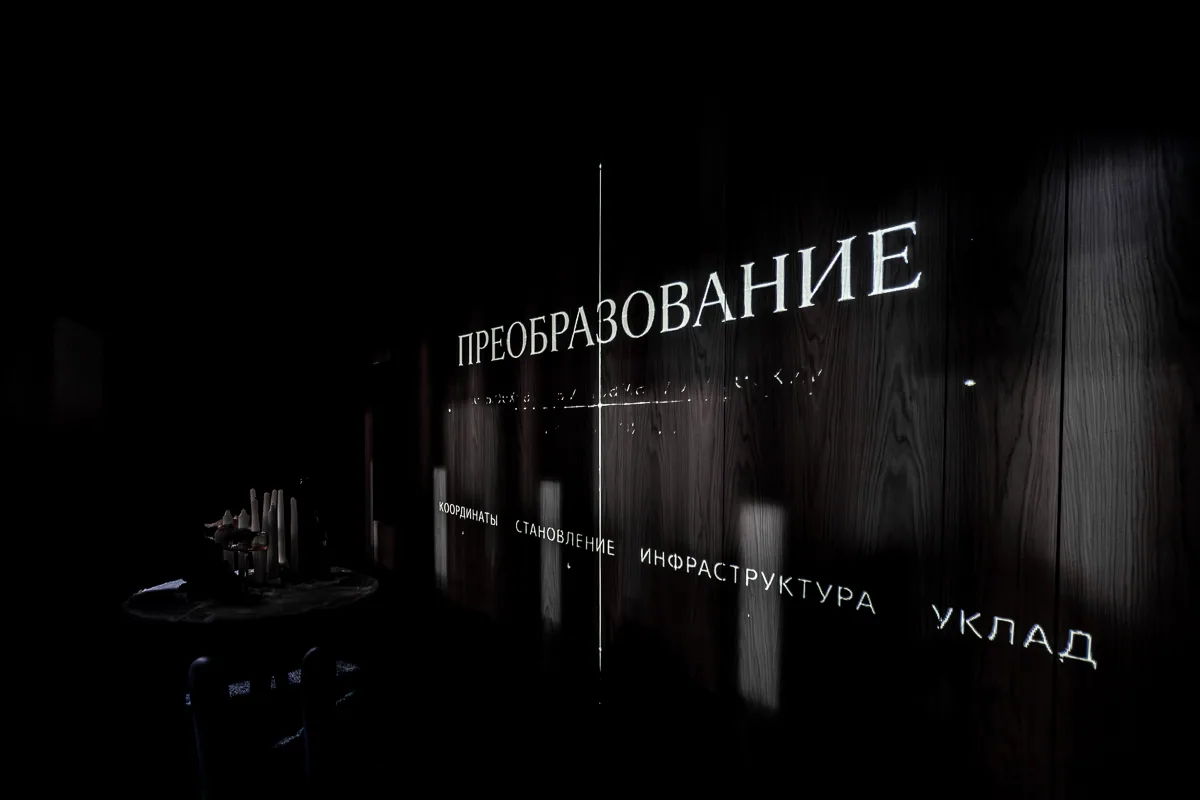
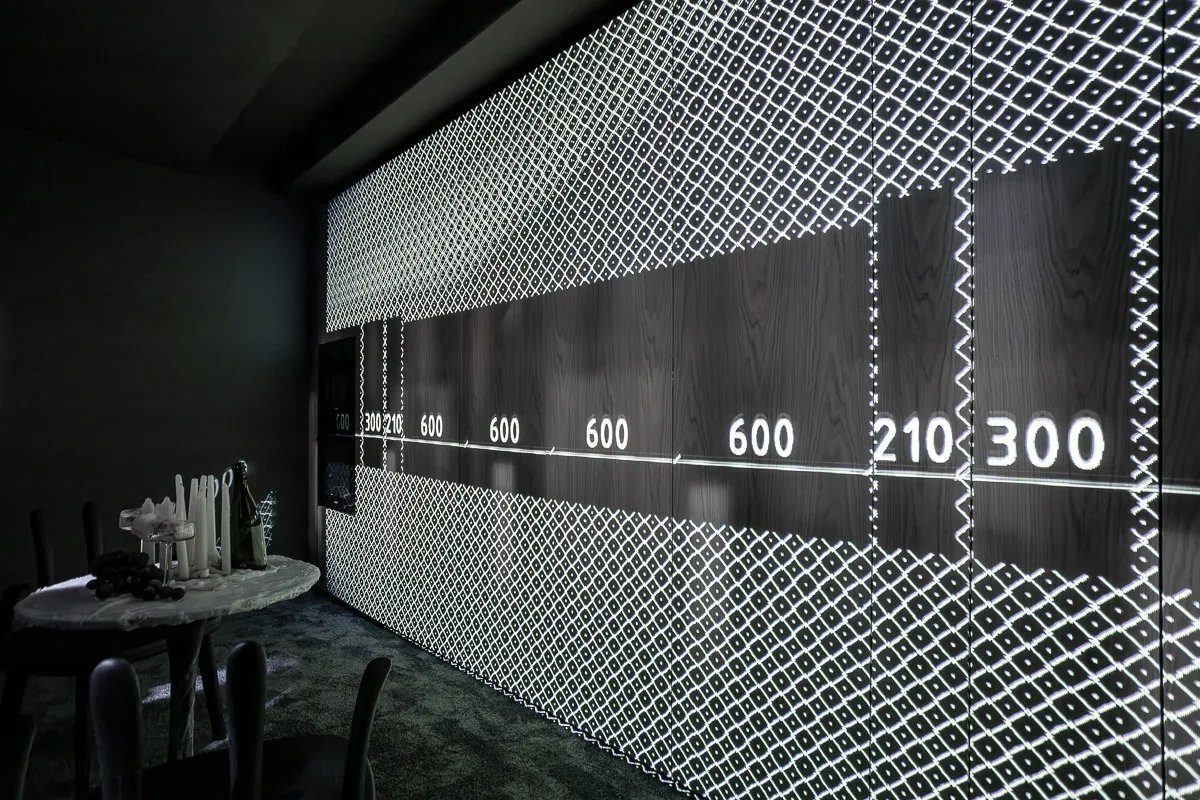
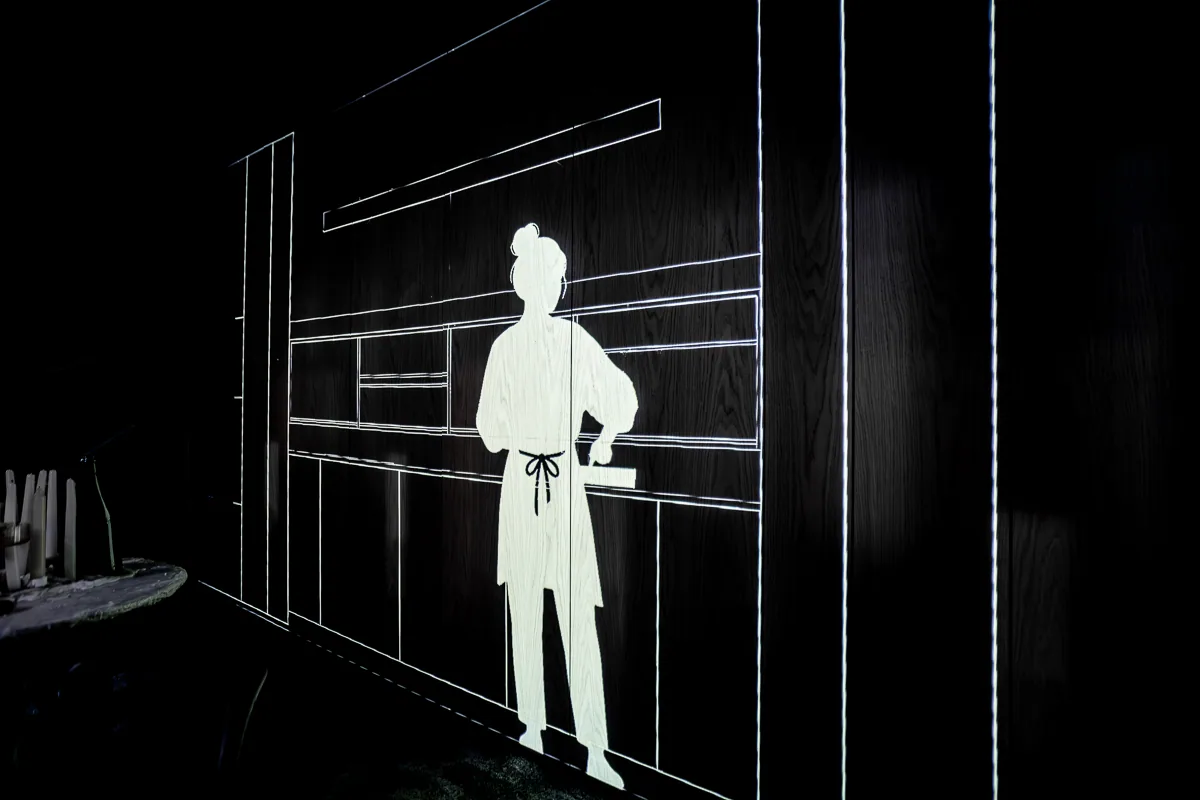
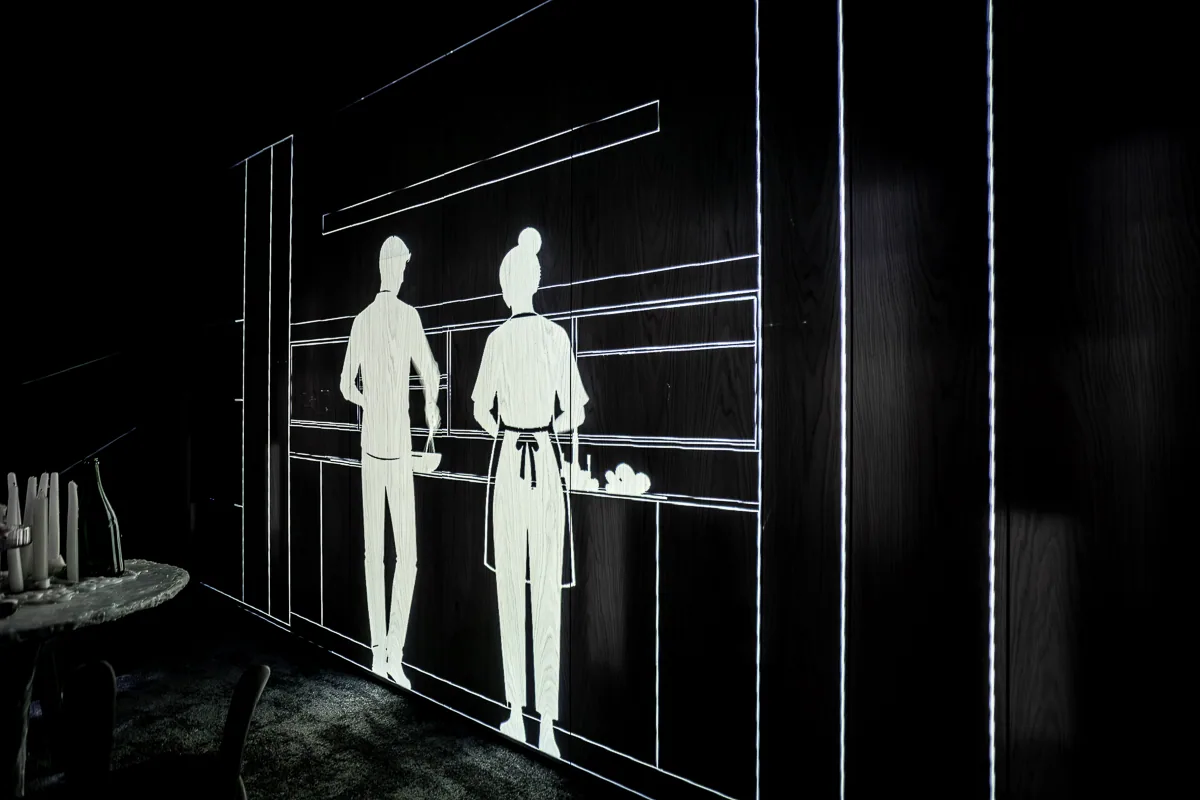
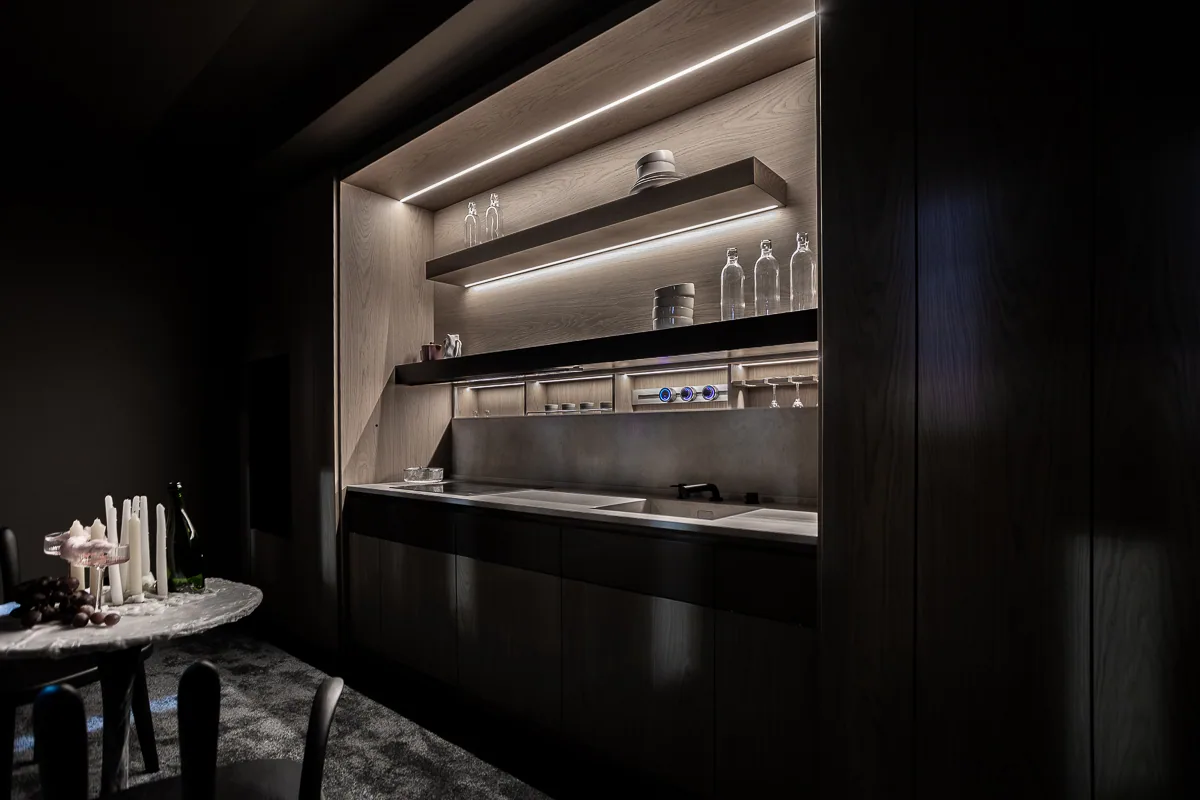
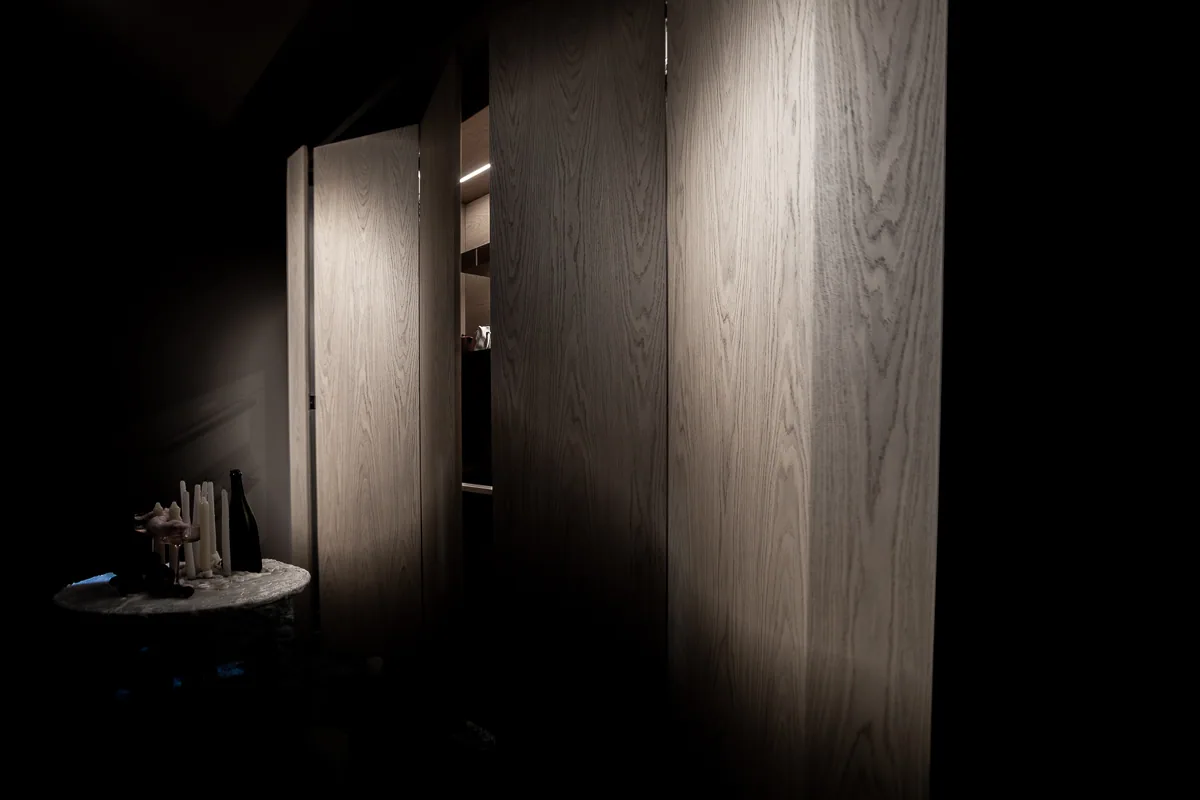
Image 1 of 6
Objects and Details
A number of sets and elements were designed specifically for the stand. We worked together with the Giulia Novars factory, designers and process engineers, as well as partner showroom teams—from the first sketches to on-site delivery.
Not only the form mattered, but also the object’s “behaviour”: kinetic fronts, hidden engineering and lighting, the tactility of finishes, integration of partner materials, and NOVARS signature patterns on glass and ceramic surfaces.
Here, furniture is treated as architecture: portals, diaphragms, and “filters” of visibility and depth guide the route and the gaze.
Below are the key zones and details of THE INNER CODE: brief descriptions of the main exhibition nodes. This shows how individual solutions come together into a single brand scene.
Giulia Novars × INALCO: custom patterns on a high-tech surface
For the Giulia Novars factory, we developed a series of bespoke patterns implemented on high-performance INALCO surfaces. This collaboration demonstrates how a brand’s digital identity can be translated into architectural graphics that operate within space.
MDi is a high-performance surface where clean graphics, light transmission, and optical depth come first. Its key advantage is its digital nature: the design is integrated into the material’s structure, enabling complex optical effects—translucency, backlit glow, and deep reflections.
MDi supports Digital Texture digital textures, metallic decors, and a range of optical modes, making it a strong platform for bespoke projects.
NOVARS MATRIX is the visual code of the brand’s “inner algorithm”. It grows out of classical Italian ornament, but passes through digital logic: a diamond with a pixel-edged border sits on the boundary between craft and matrix. The pattern lives through scale—at a distance it reads almost like fabric; up close it reveals itself as a strict geometric system. It works both as a background structure and as an architectural rhythm that holds the space together.
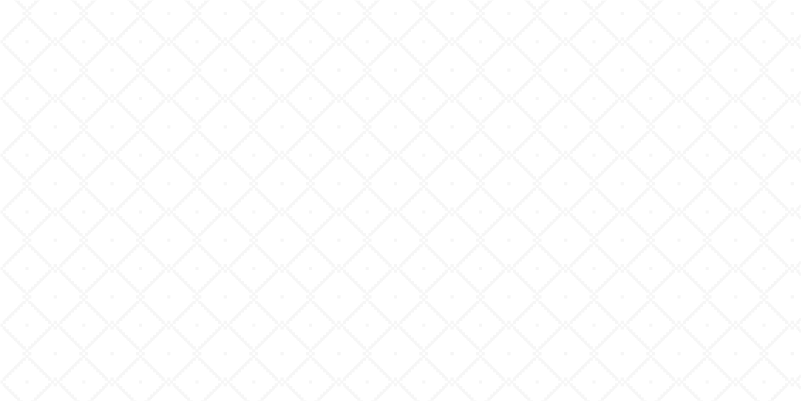
NOVARS NODES is a pattern about connections and nodes, not decoration. A strict grid of triangles, squares, and diamonds sets an engineering rhythm, while points at the intersections mark the system’s “contacts”. In feel, it is closer to a diagram and spatial thinking than to ornament. On light panels, this code turns light into navigation.
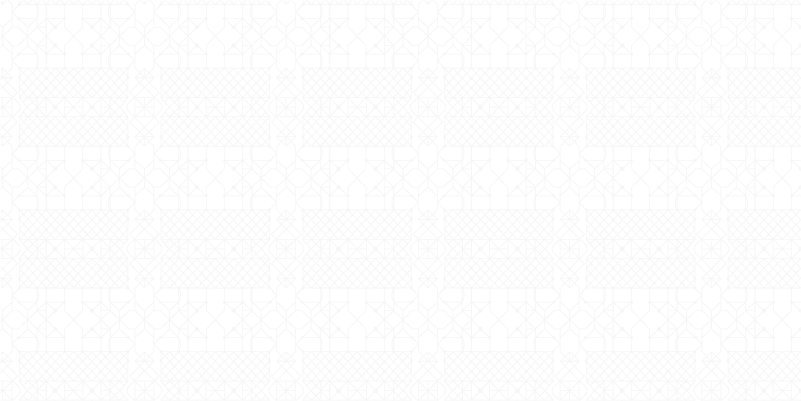
NOVARS CORE unfolds from the centre outward: a core and concentric links. It is an image of the factory as a source and, at the same time, a metaphor for the dealer network built around it. At large scale, the centre and radial structure are clearly legible; at dense scale, a “fabric” emerges, yet the system remains intact. On glass, the pattern acts as an optical filter—adding depth and bringing the composition together.
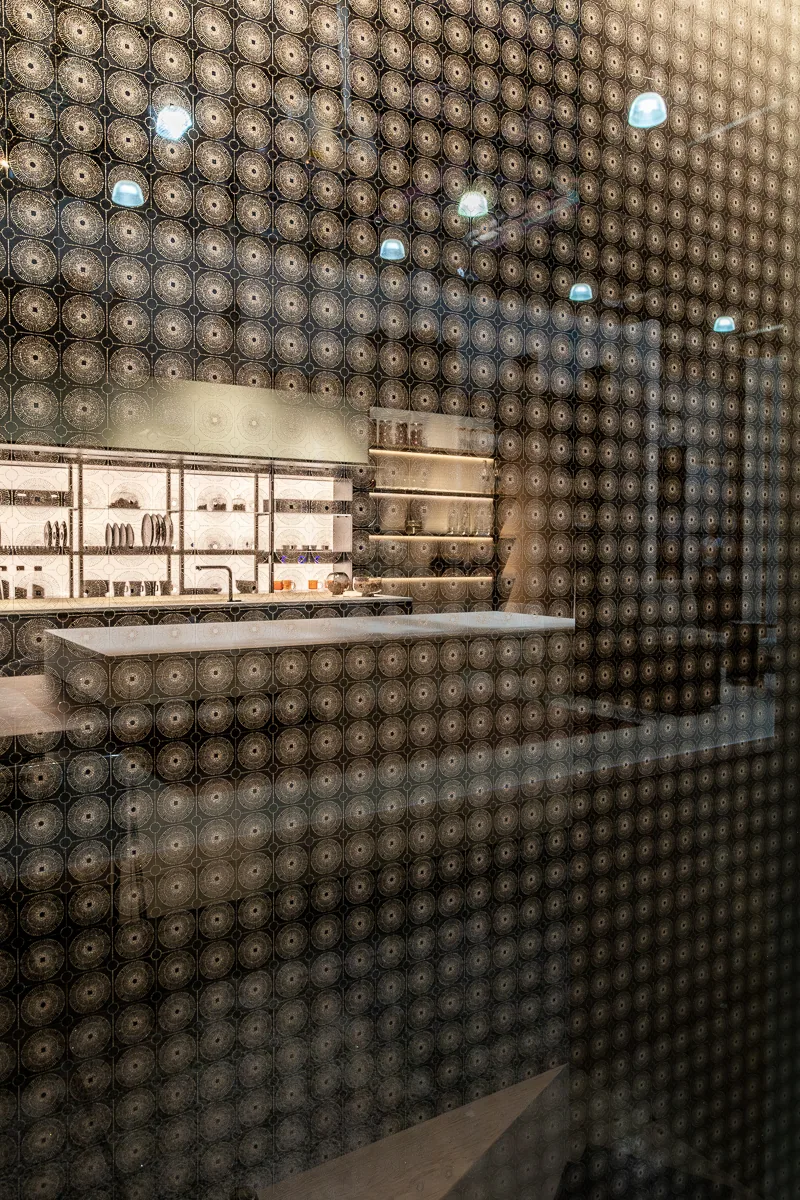
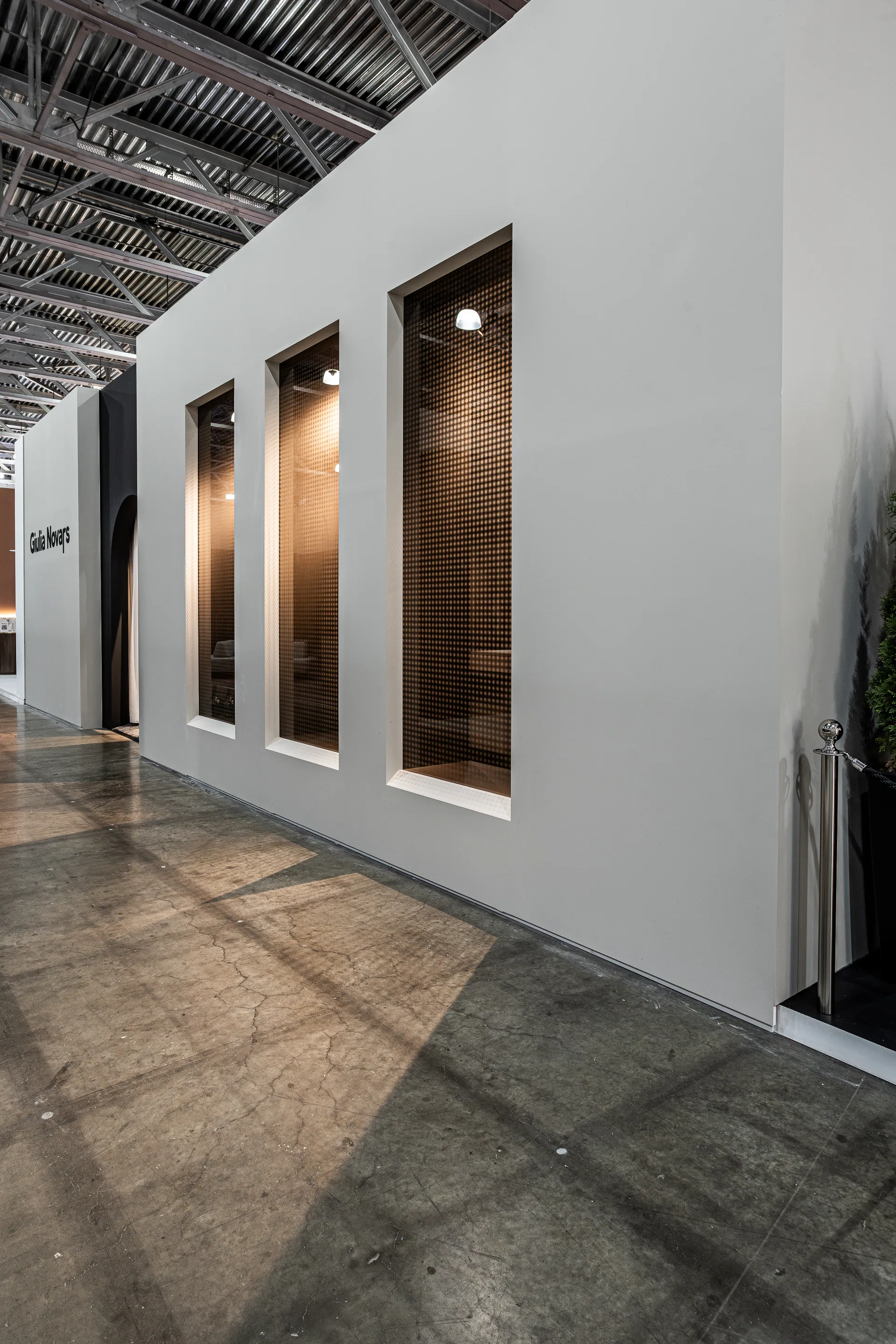
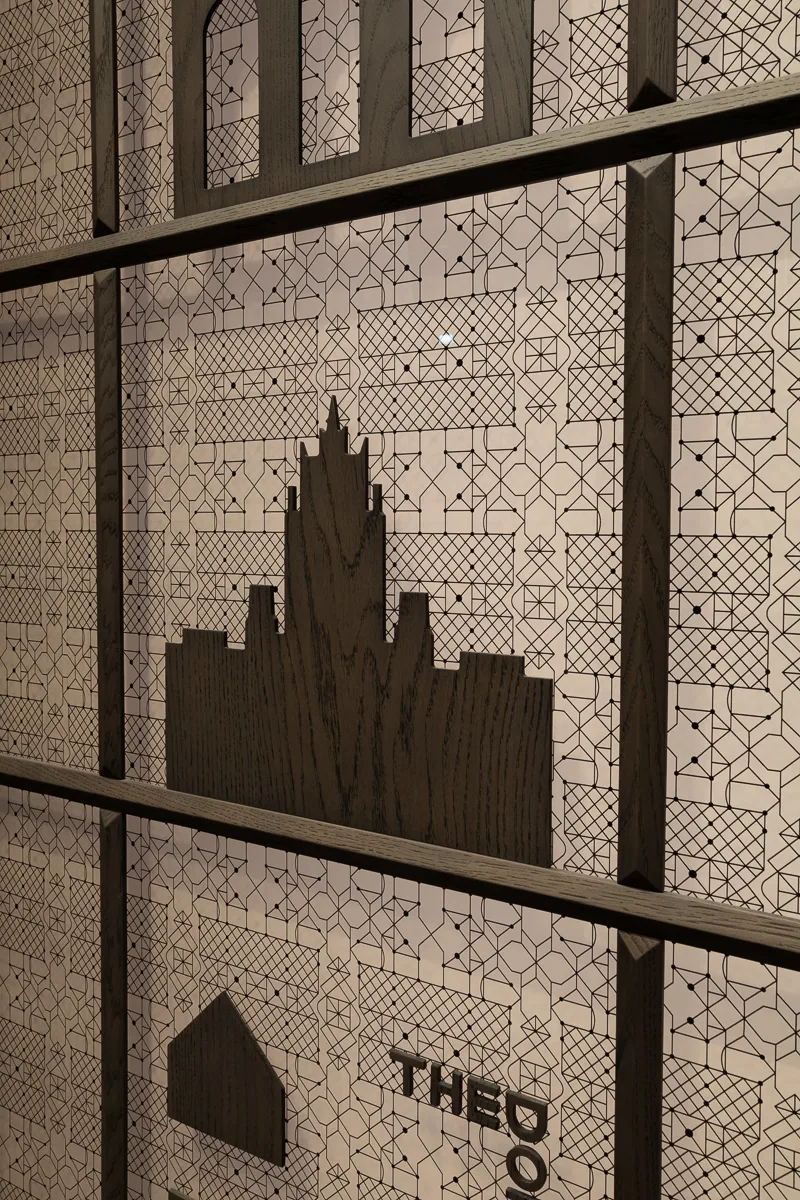
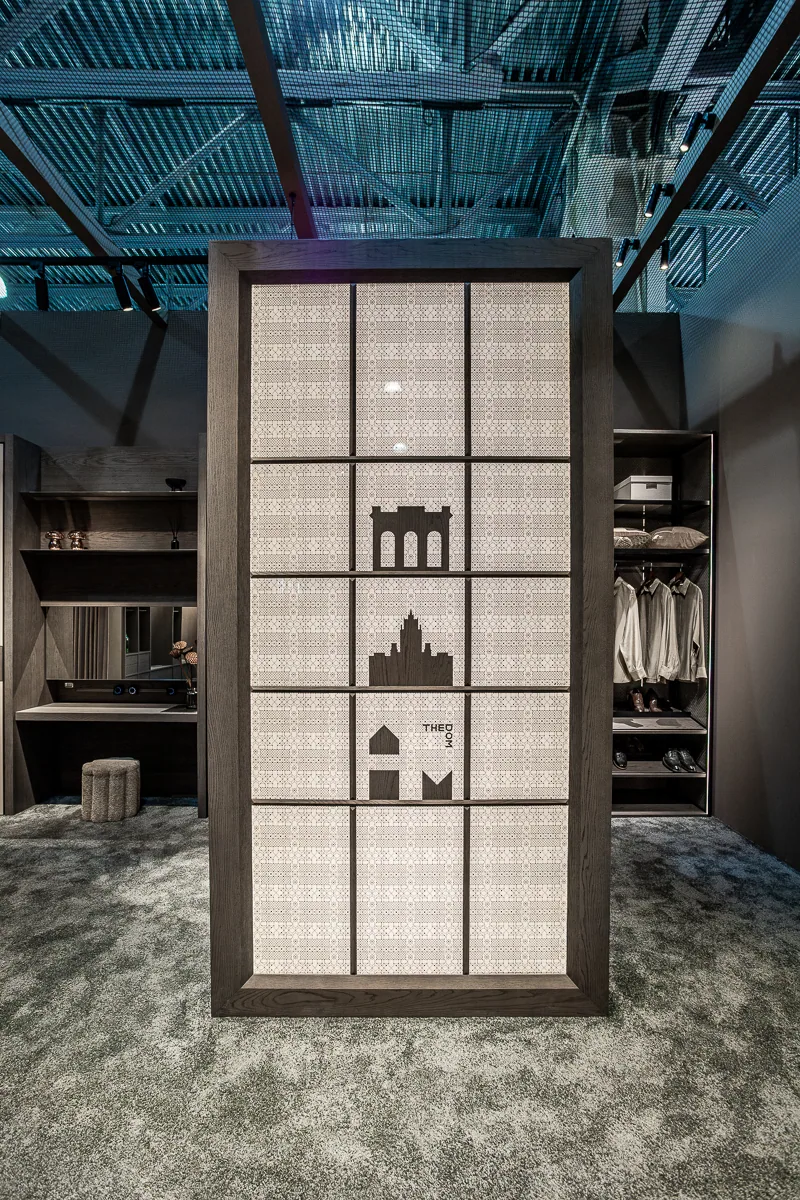
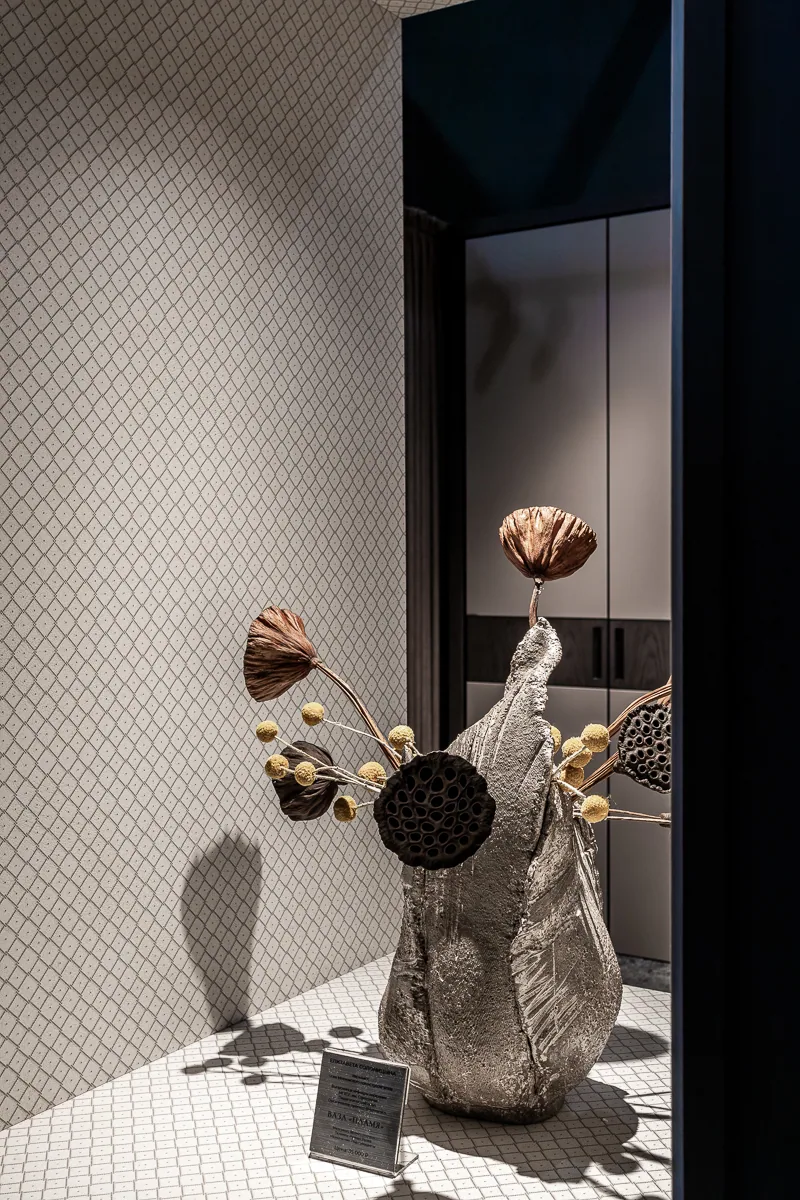
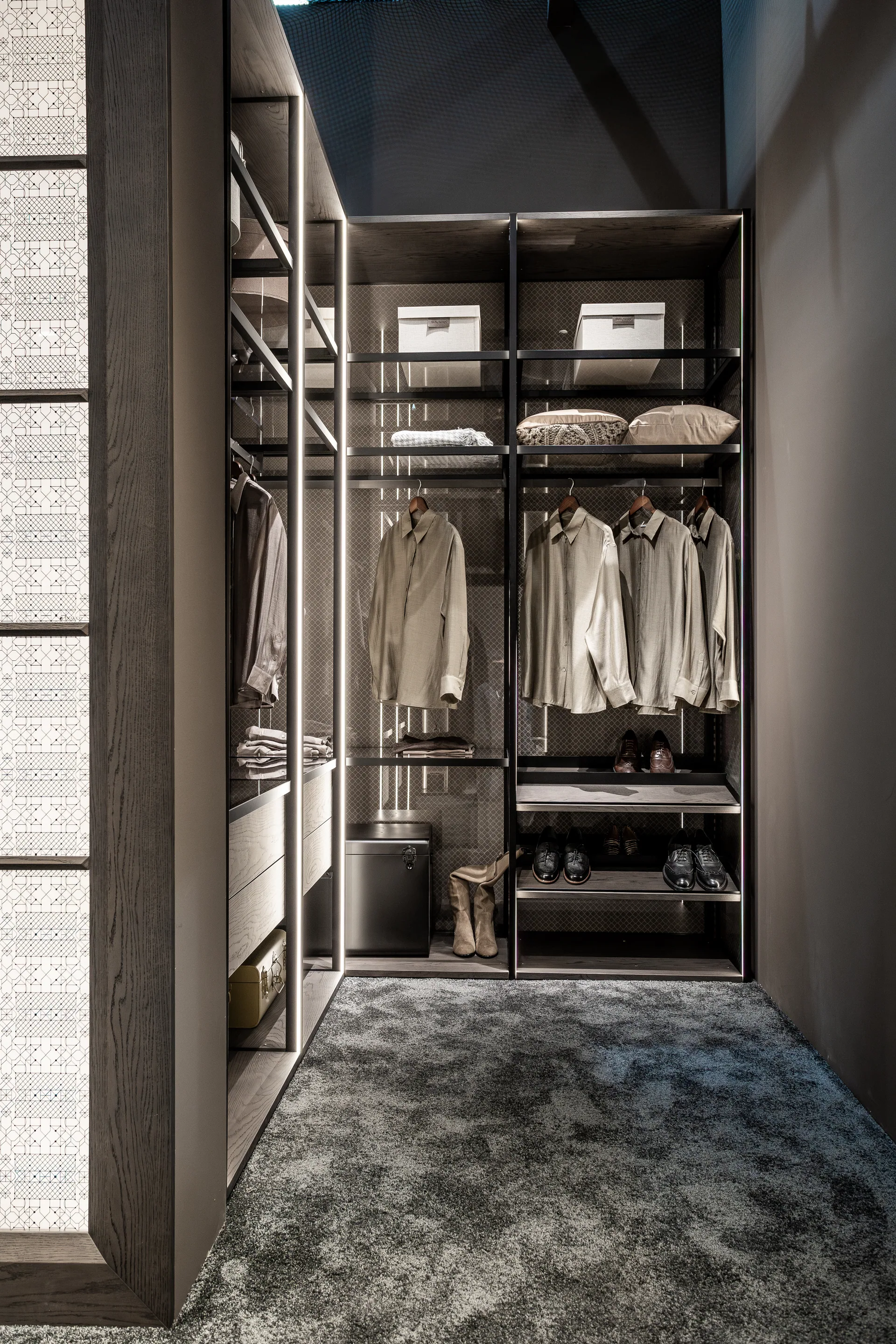
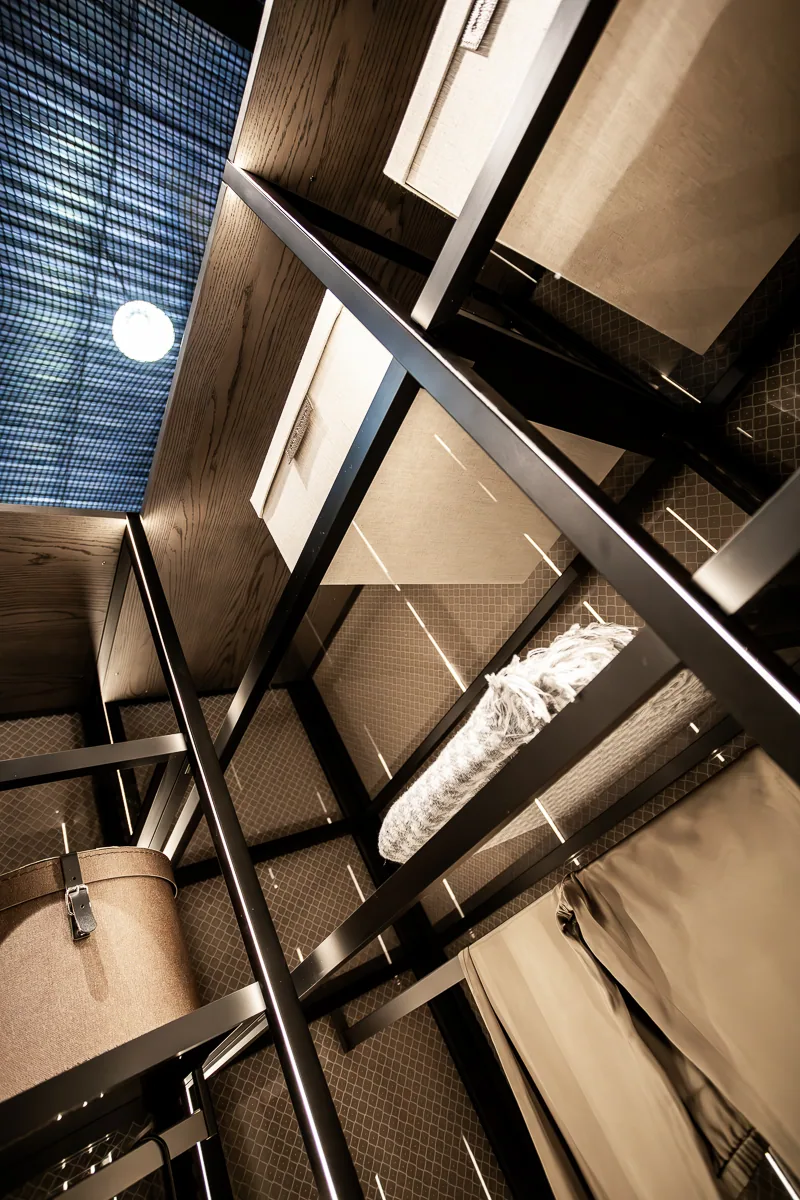
Image 1 of 7
Corner Sanctum
The left side of the “Nika” kitchen includes open tall units lined internally in metal, and a passage into a concealed room through a pivot door.
The monolithic outer corner is built as a single continuous plane. Within it, a pivot door is concealed between two metal niches: the boundary is not emphasised, but dissolved.
The passage leads into a private bar-and-cigar lounge, reinforcing the stand’s “inner layer” idea.
Pivot doors are in high demand in today’s furniture industry, but here we used a hinge borrowed from an adjacent field. We brought it to the factory during one of the meetings as an alternative to standard furniture mechanisms.
Transferring solutions from neighbouring industries often leads to more interesting results.
This hinge is virtually invisible when open, doesn’t restrict the opening direction, and provides positive locking at the end positions.
The private block reads as a separate room within the stand: a wine-and-cigar setting, organised storage, and an intimate atmosphere.
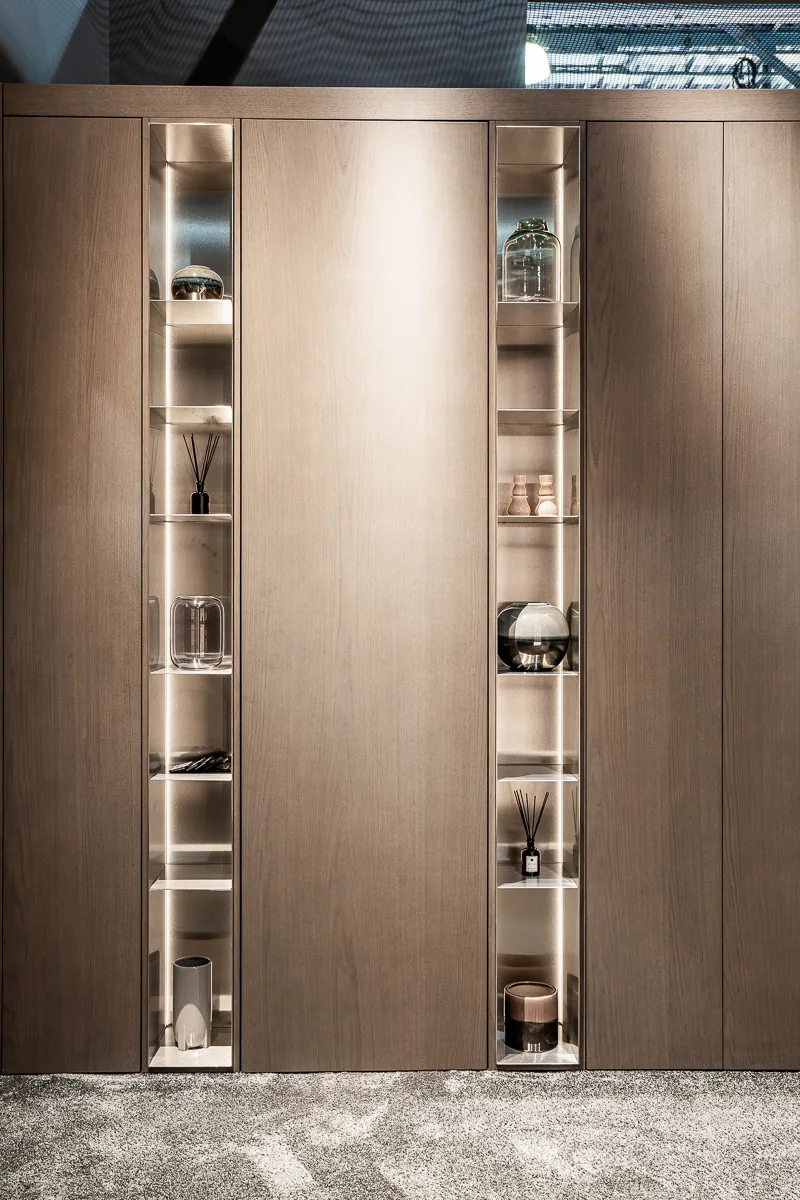
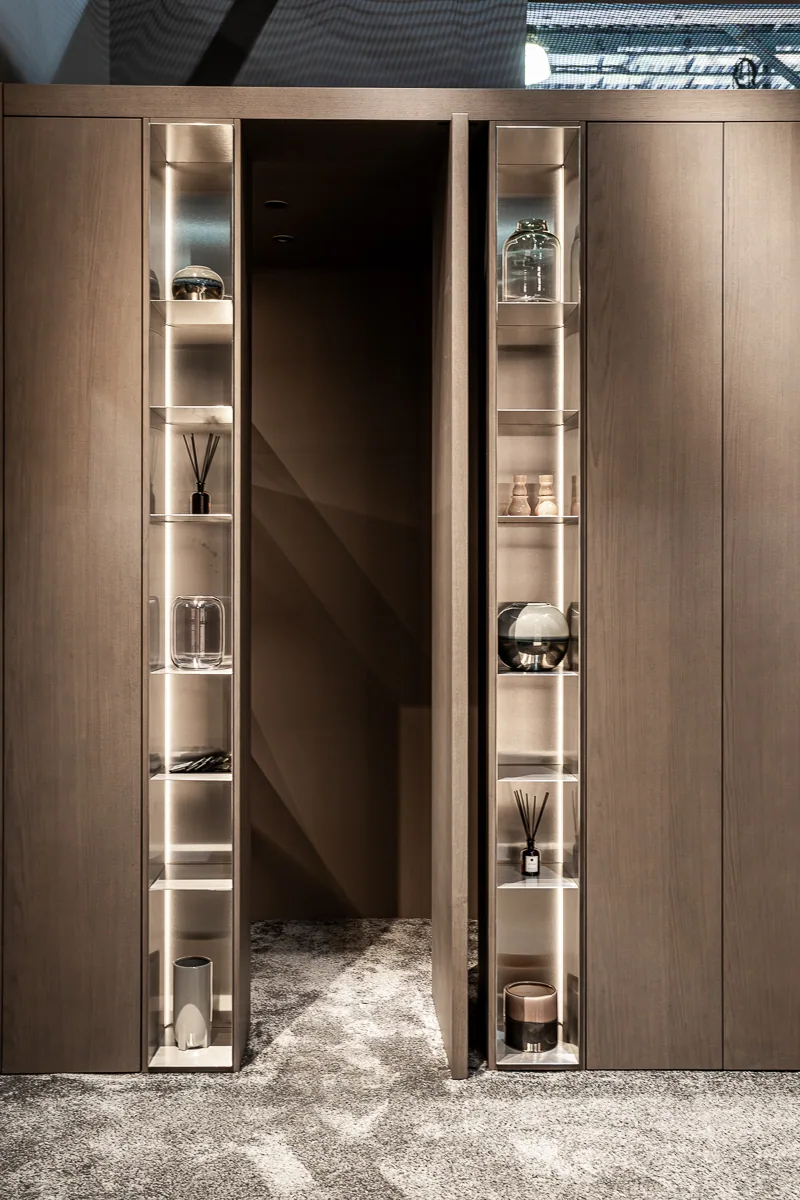
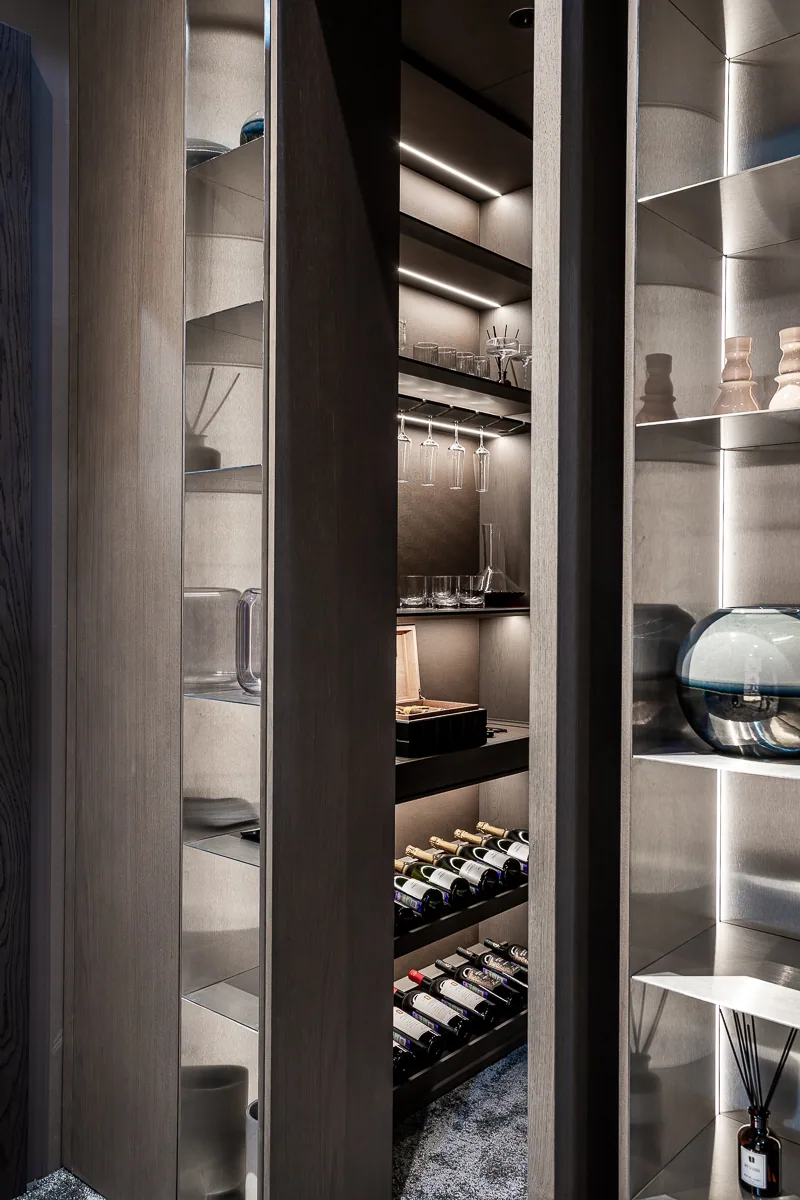
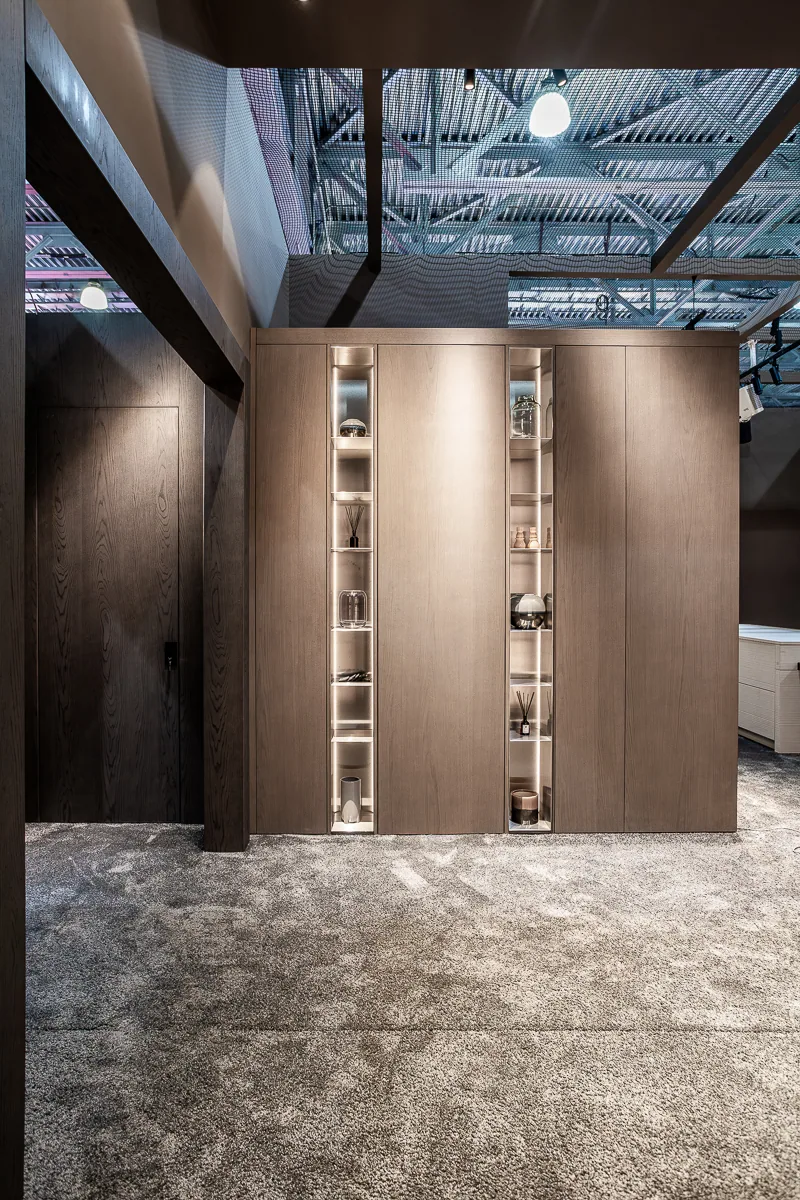
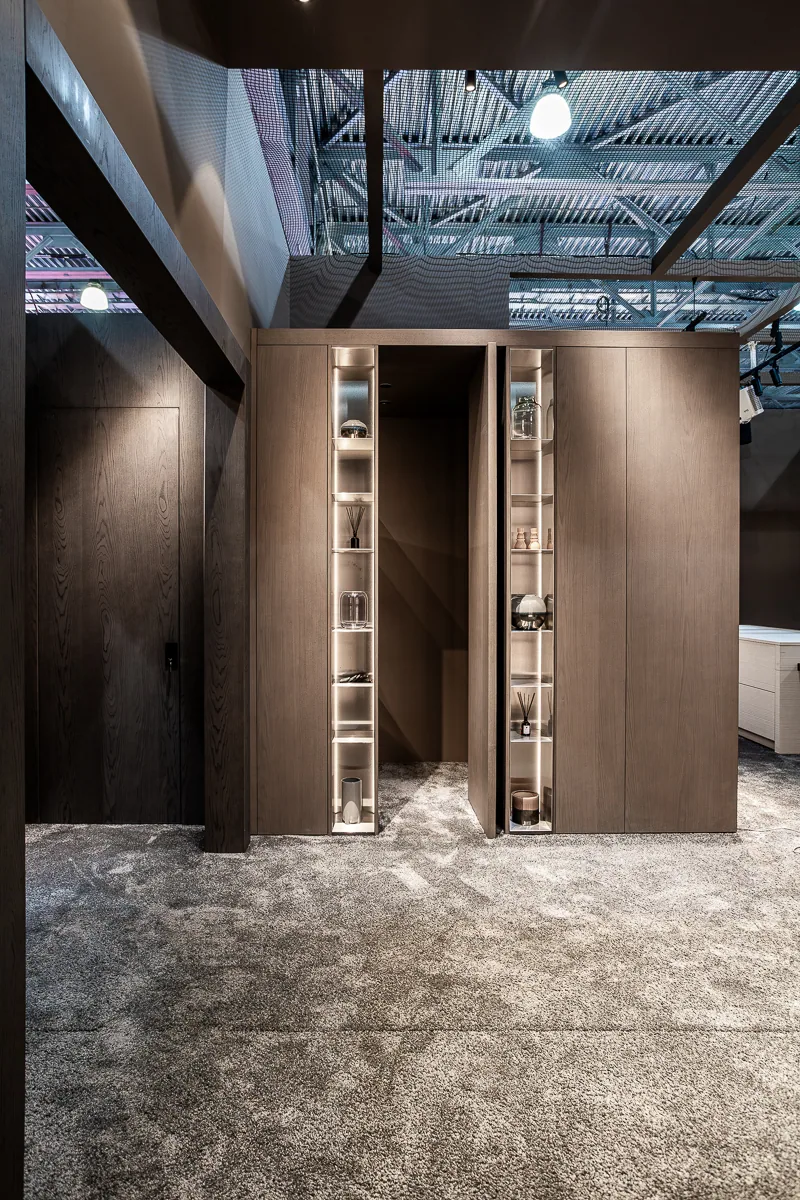
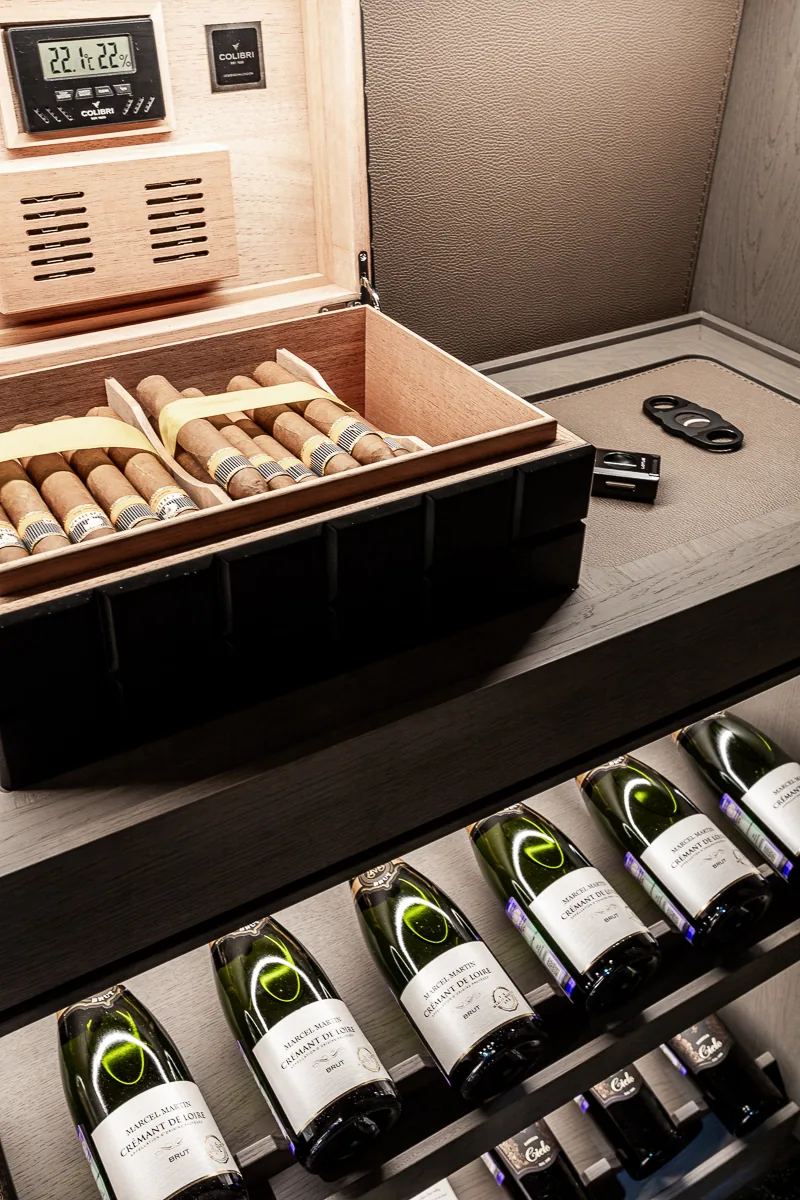
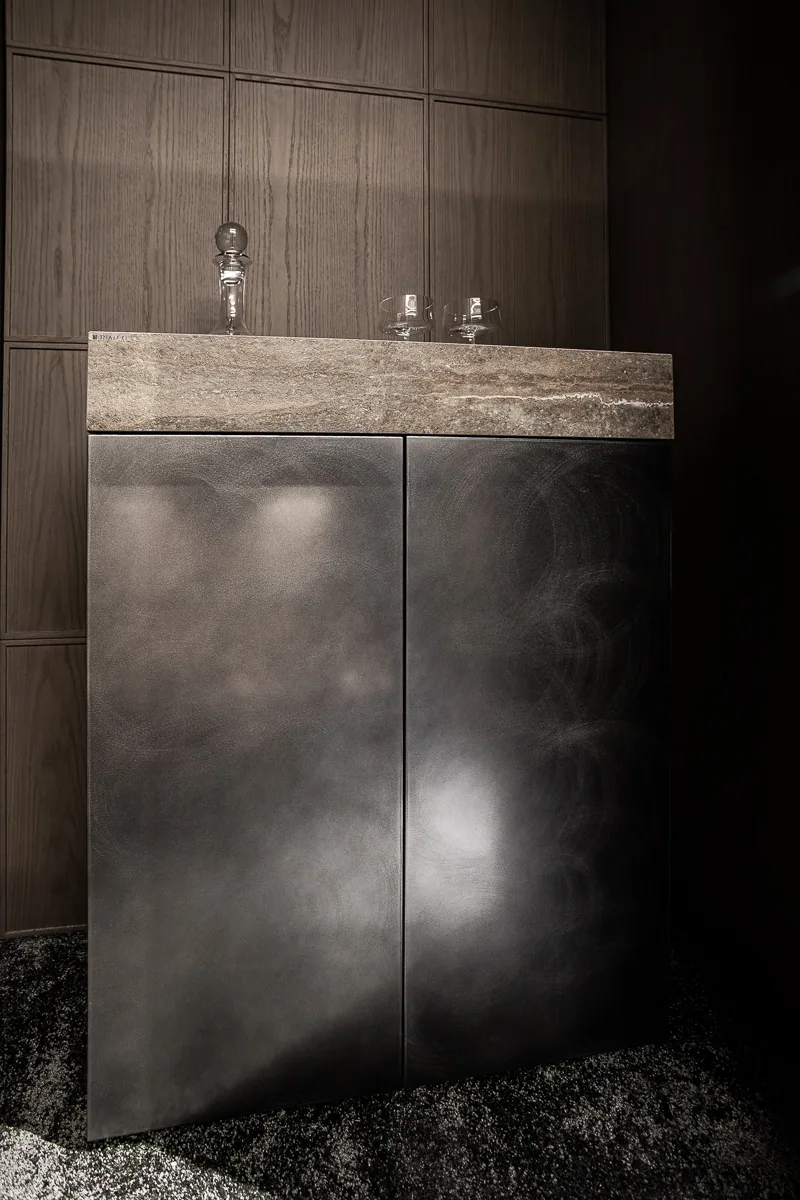
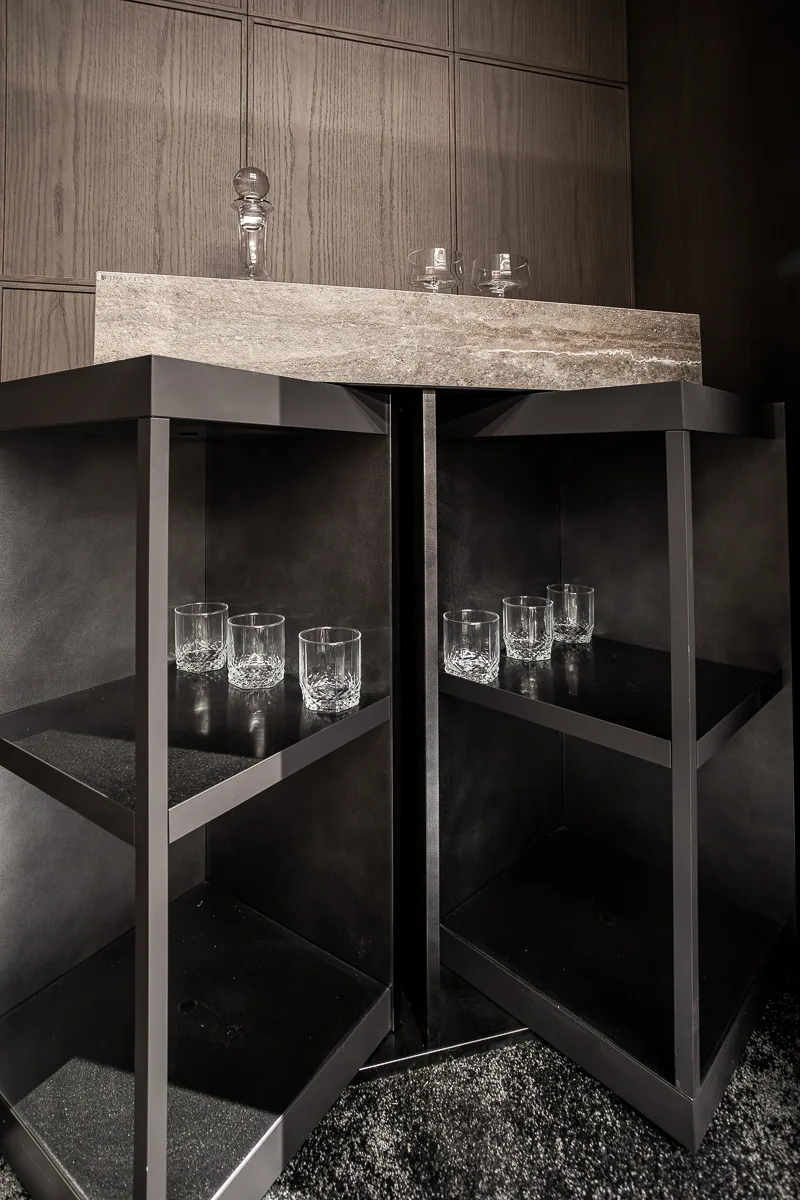
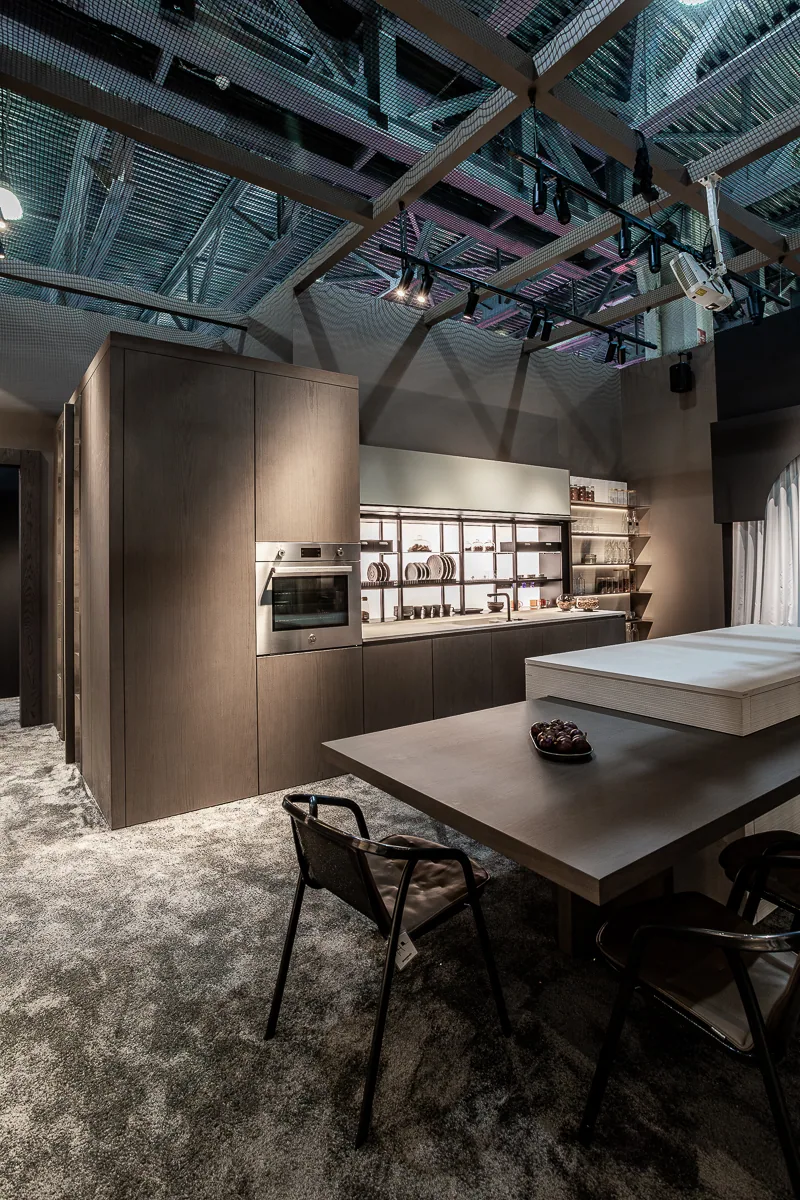
Image 1 of 9
Park-side Façade
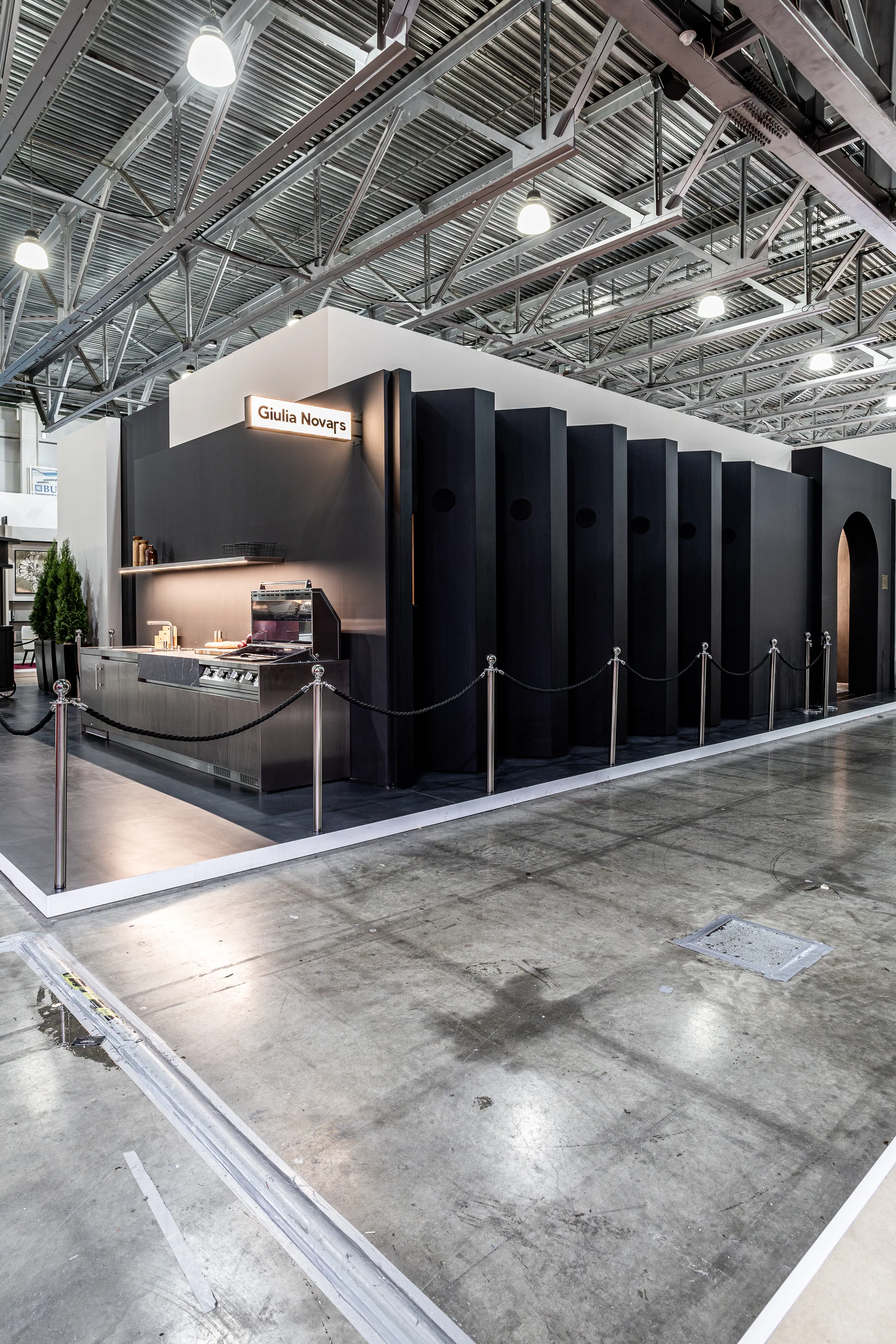
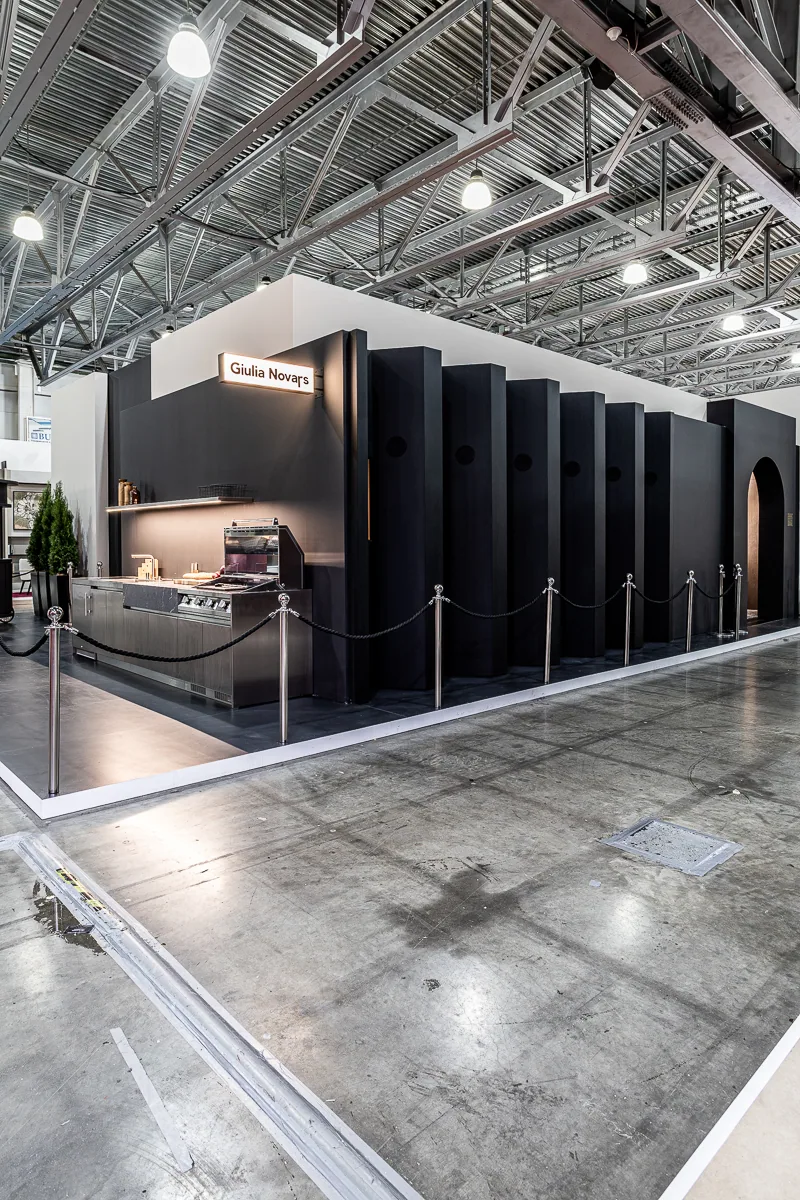
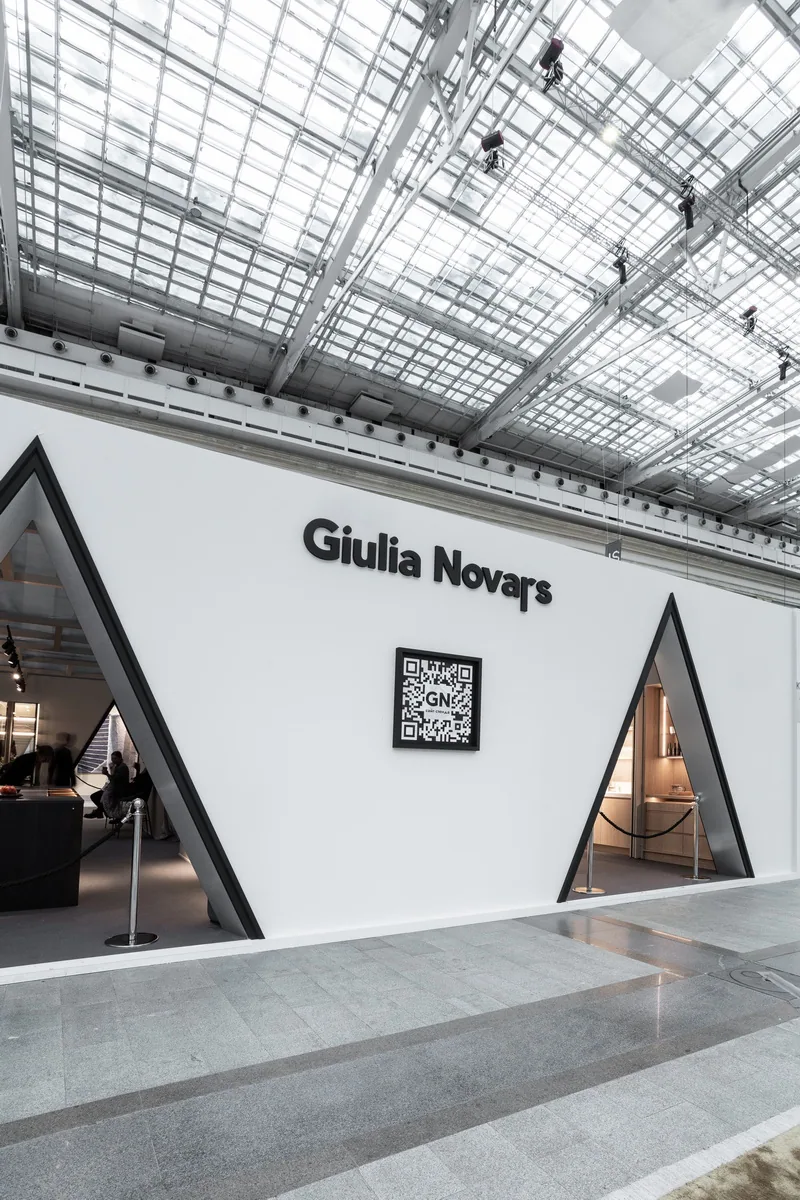
The façade acts as an “entry point without an entrance”: here, the entire outline of the stand is legible—dark volumes, the outdoor line, and the touchpoint object.
In the foreground is the Brand Cart, featuring the signature pretzel logos and material samples.
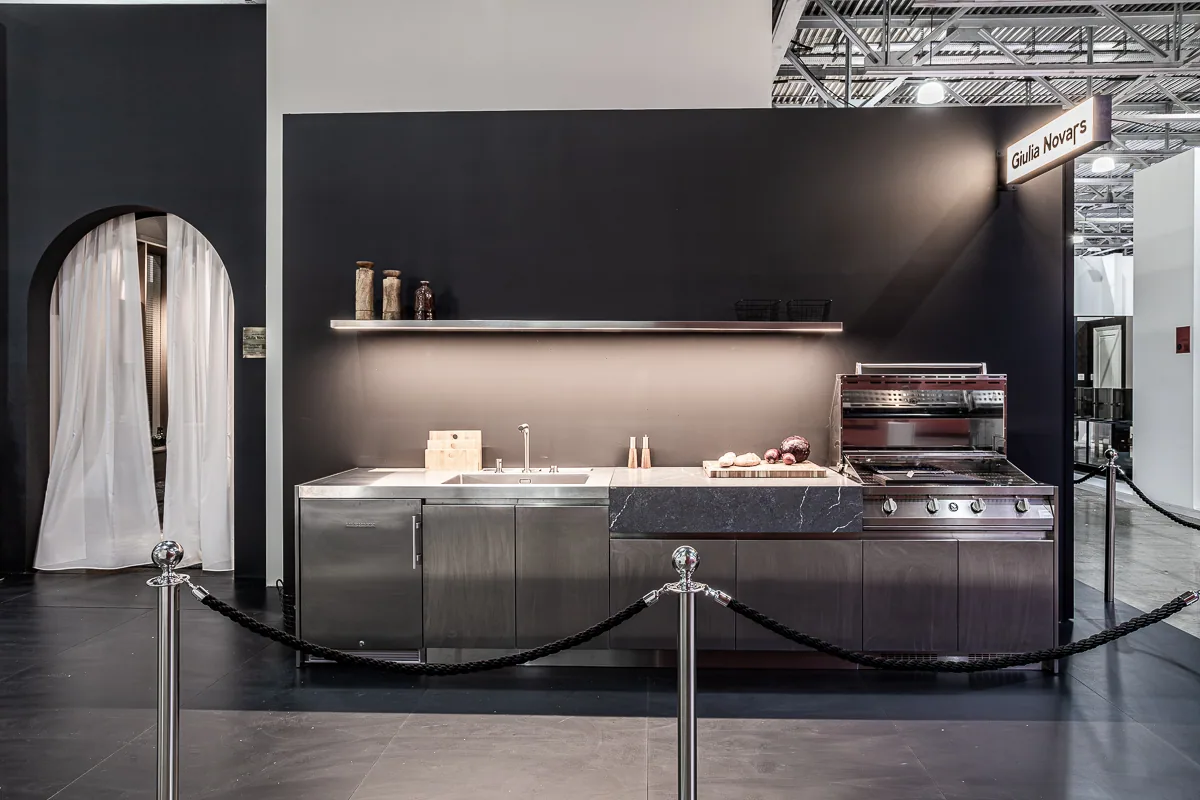
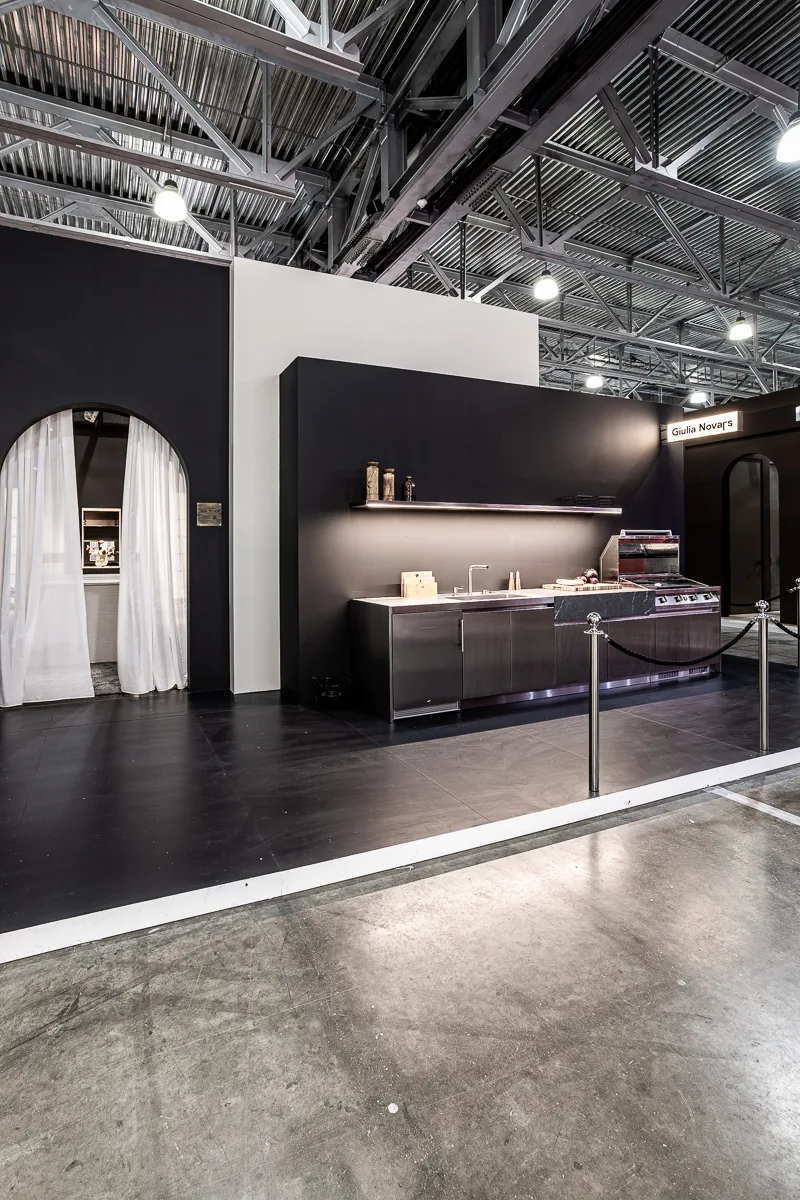
Nearby, the Austenite Kitchen is integrated—an outdoor kitchen as a separate product line, embedded in the overall architectural language.
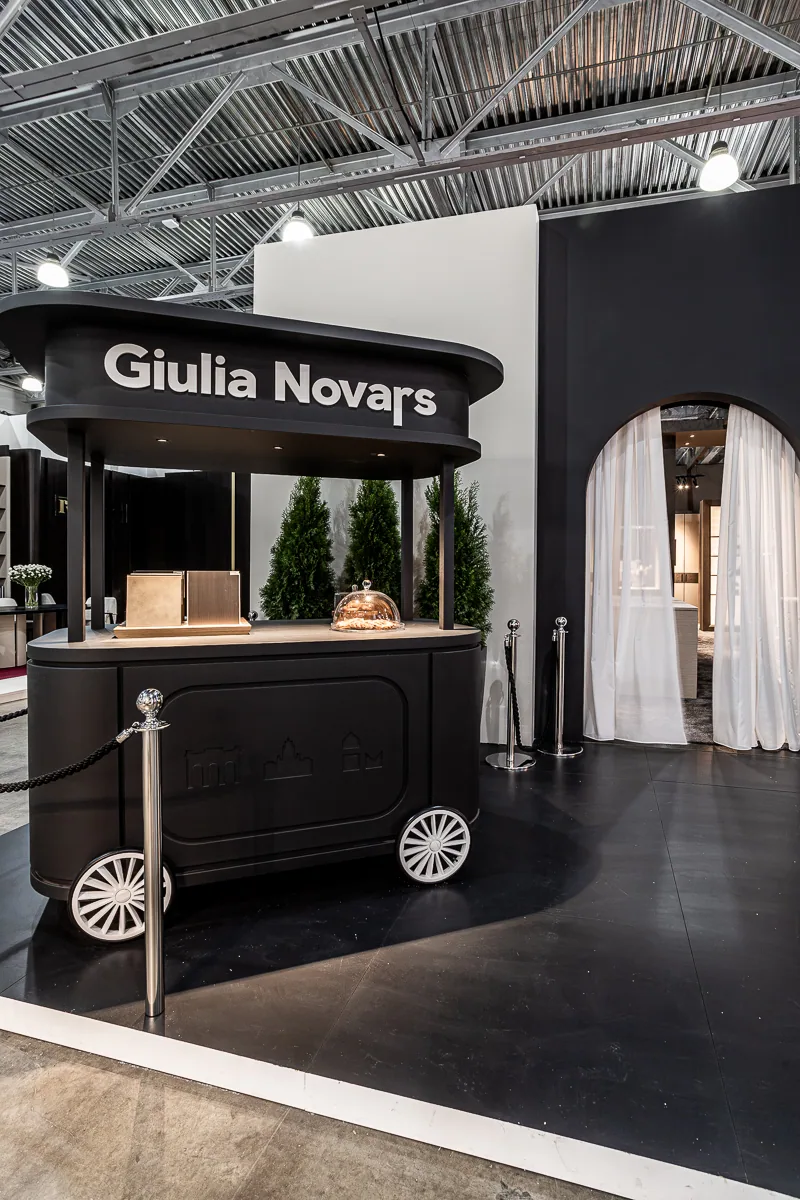
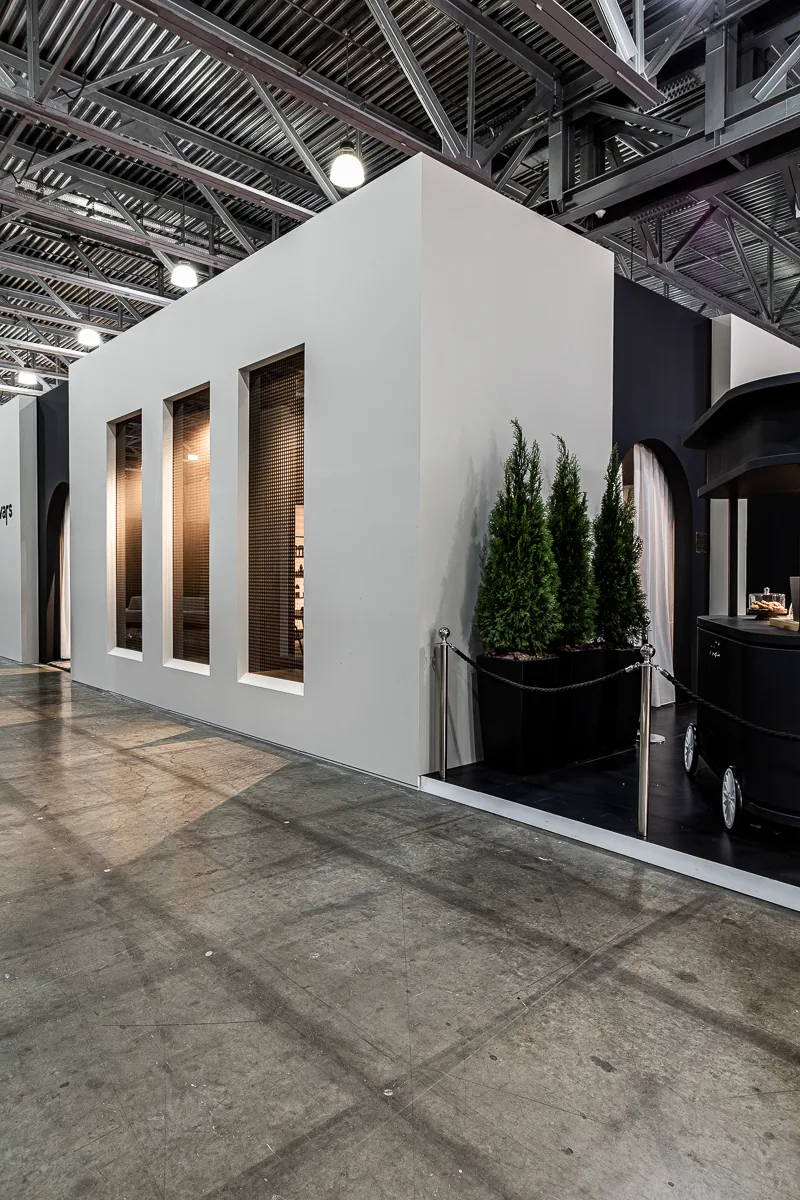
Image 1 of 2
“Austenite” Outdoor Line
The stainless-steel outdoor kitchen presents a distinct product line of the brand in the same minimalist code. The material was chosen for weather resistance and its honest industrial character.
Paired with the lounge, it reads as an “Italian courtyard”.
The outdoor kitchen is built in stainless steel with a textured “Satinato” finish and internal structural reinforcement behind the fronts.
This construction provides strength, dimensional stability, and reliable performance outdoors.
The line also includes other steel textures—“Rustico”, “Incrocio”, “Circolare”—as variations within the same industrial aesthetic.
Domus Originis
The central volume reads as a monument grown out of the Italian architectural tradition.
The façade and interior are anchored by INALCO MDi glass-ceramic panels with a pattern developed by the project authors for Giulia Novars.
The portals reinforce the “Layers of Craft” theme: matte and gloss layers add depth without decorative noise.
Atrium Novum + “Time Windows”
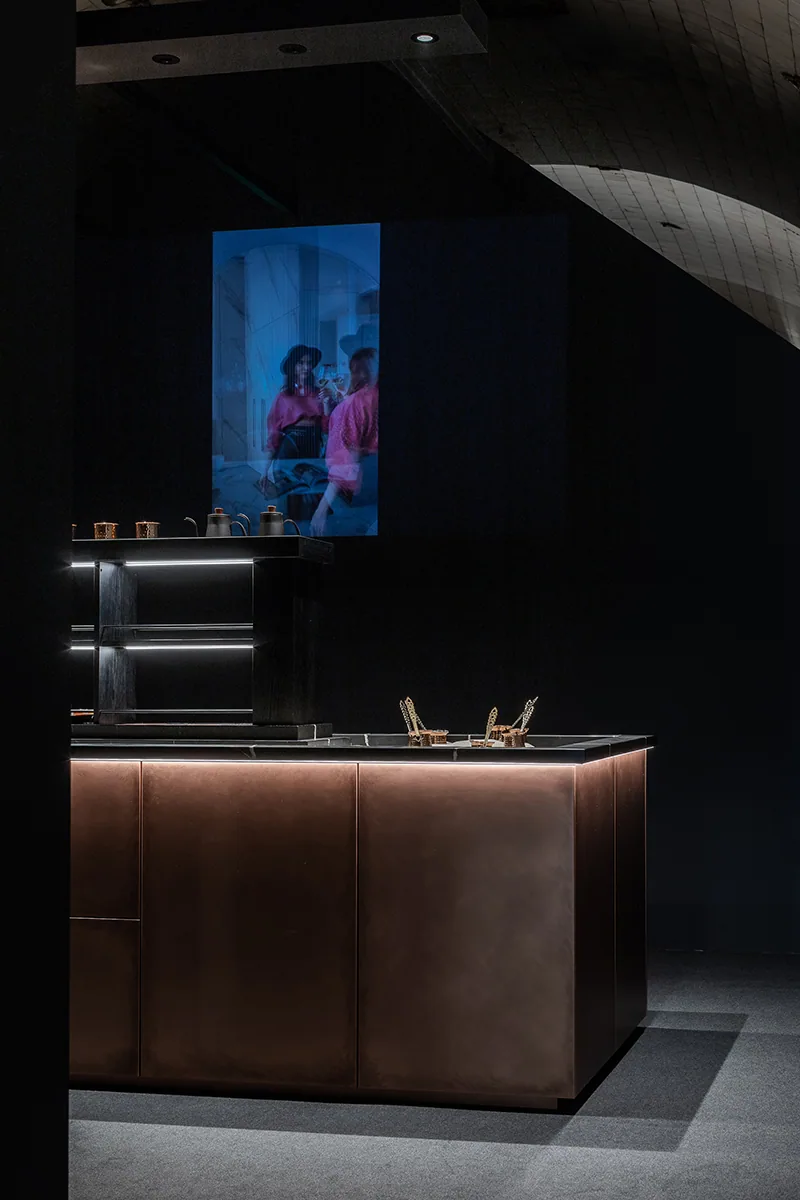
A dark veneer-clad volume forms the stand’s outer “contemporary layer”, creating a more intimate atmosphere. The Time Windows are integrated into the façade plane—vertical apertures that reveal the Cabinet of Shadows without entering inside.
A discreet rope barrier on stanchions runs along the perimeter: it guides the route and doesn’t compete with the architecture.
Time Capsule
A sealed dark room with no entrance, accessible only to the eye through the Time Windows.
Inside, two elements remain constant: the kitchen on the far wall and a table filled with wax—the wax fixes the presence of time.
Only the kitchen’s state changes: the projection-mapping show presents the object’s evolution as a sequence of acts.
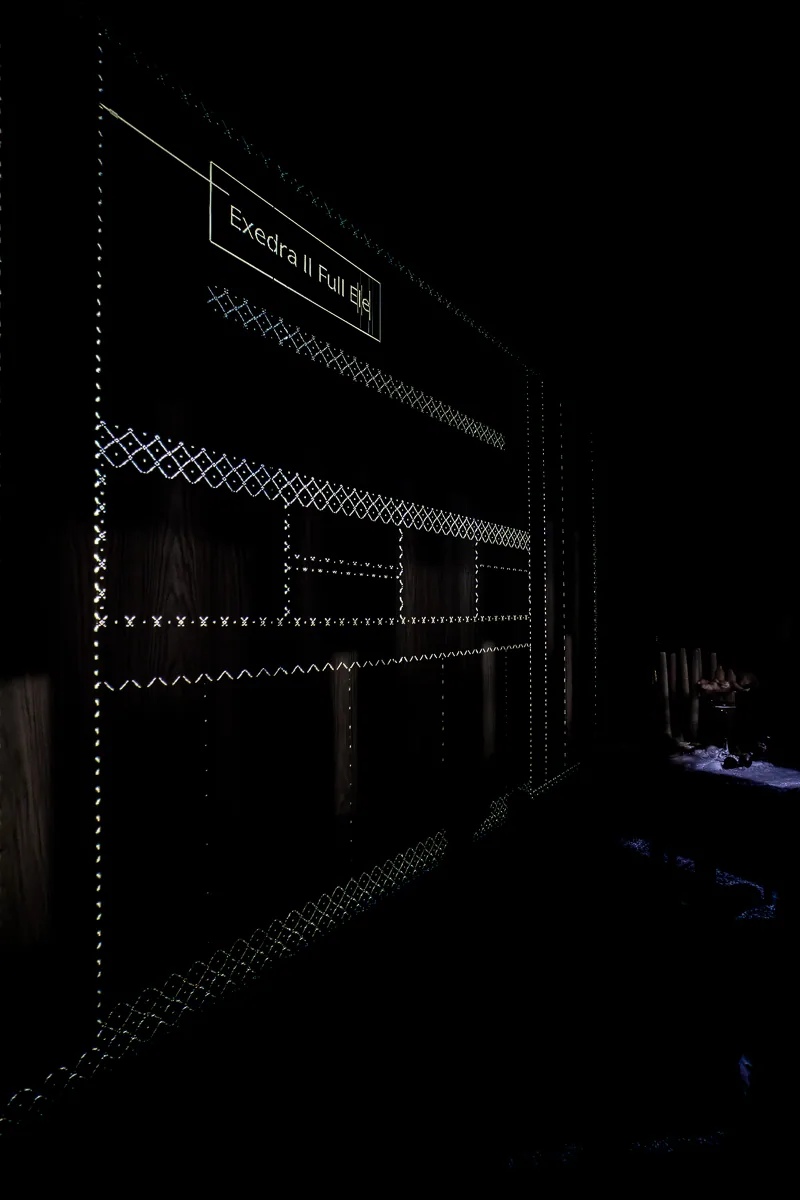
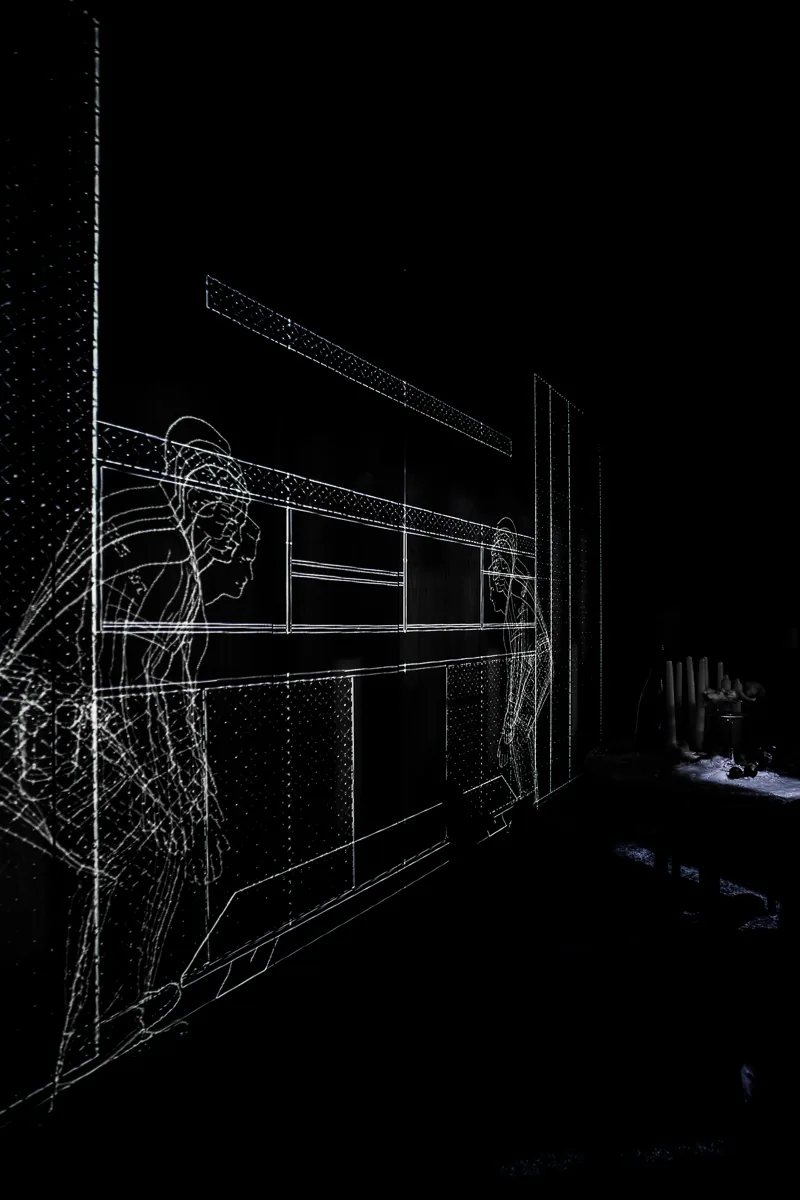
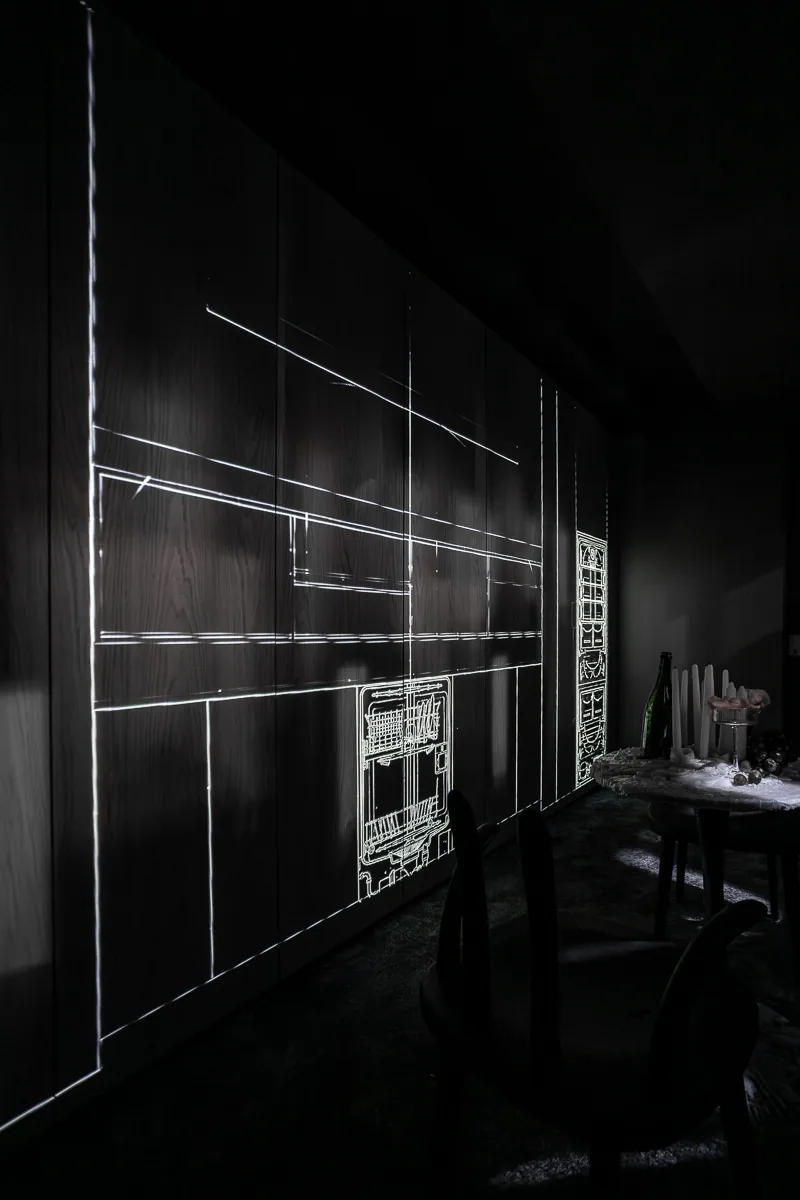
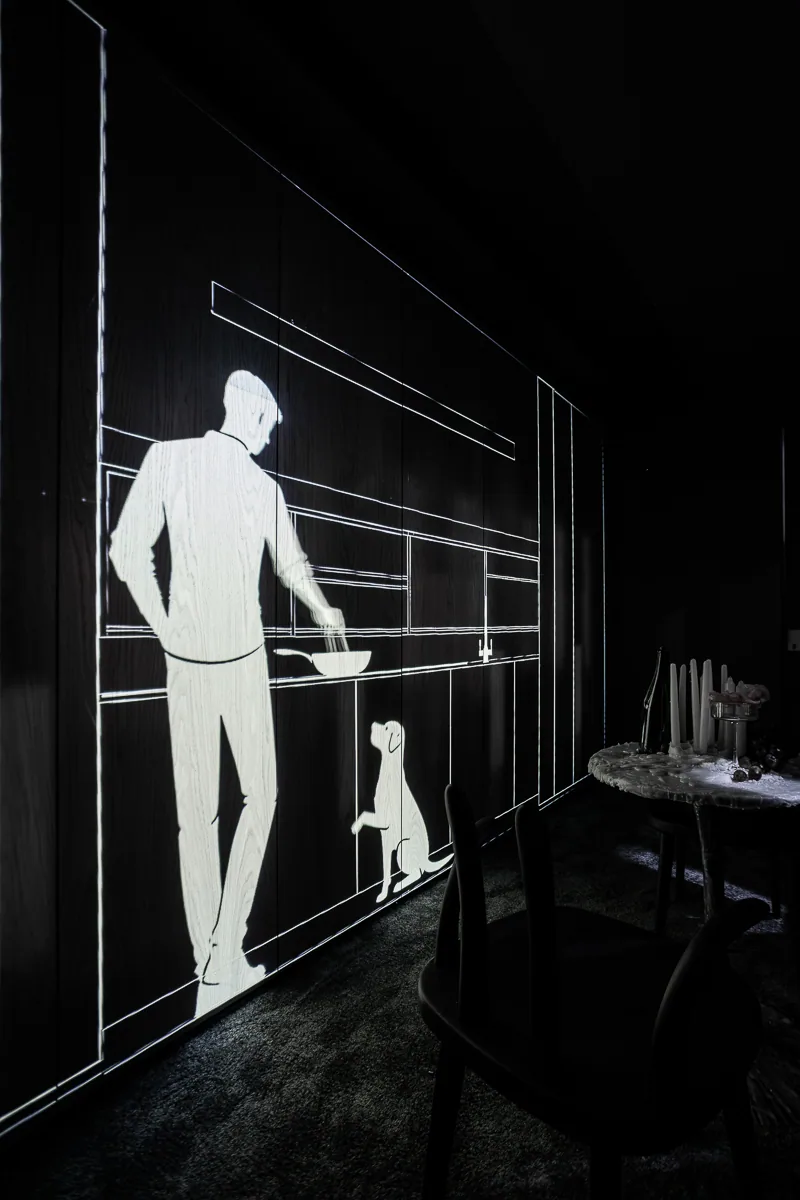
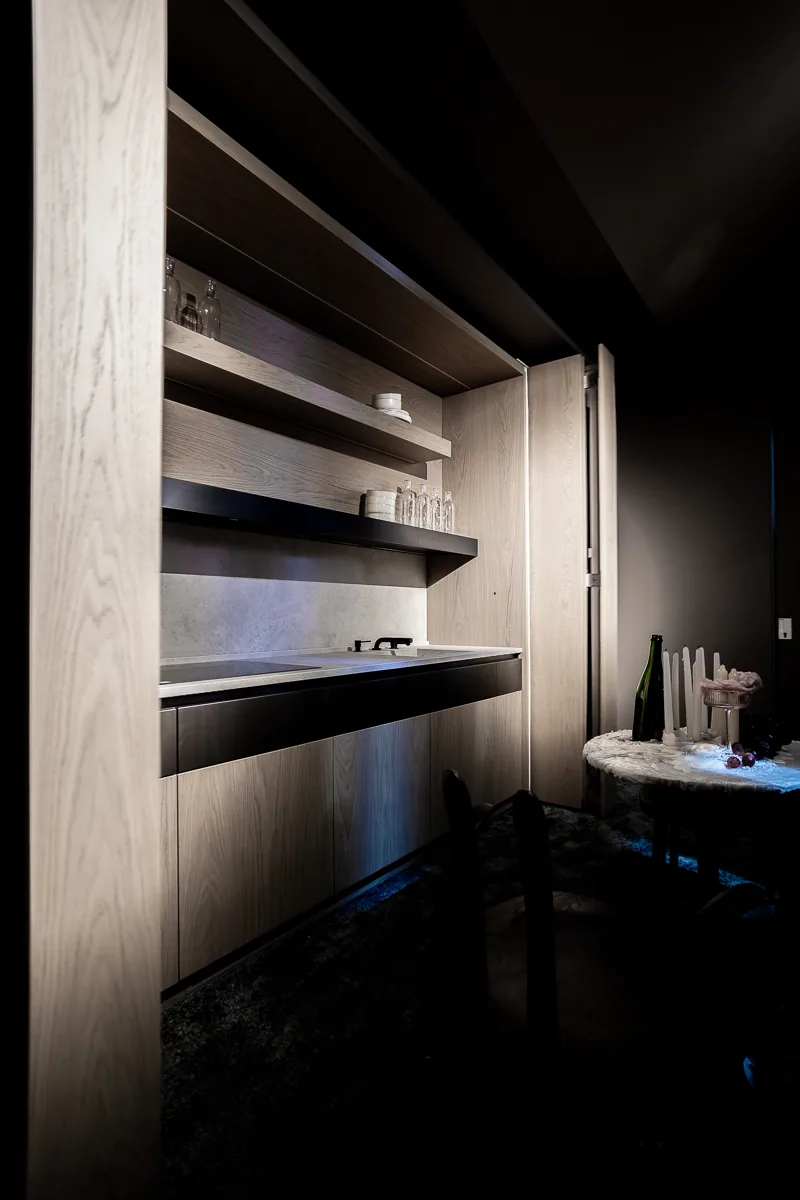
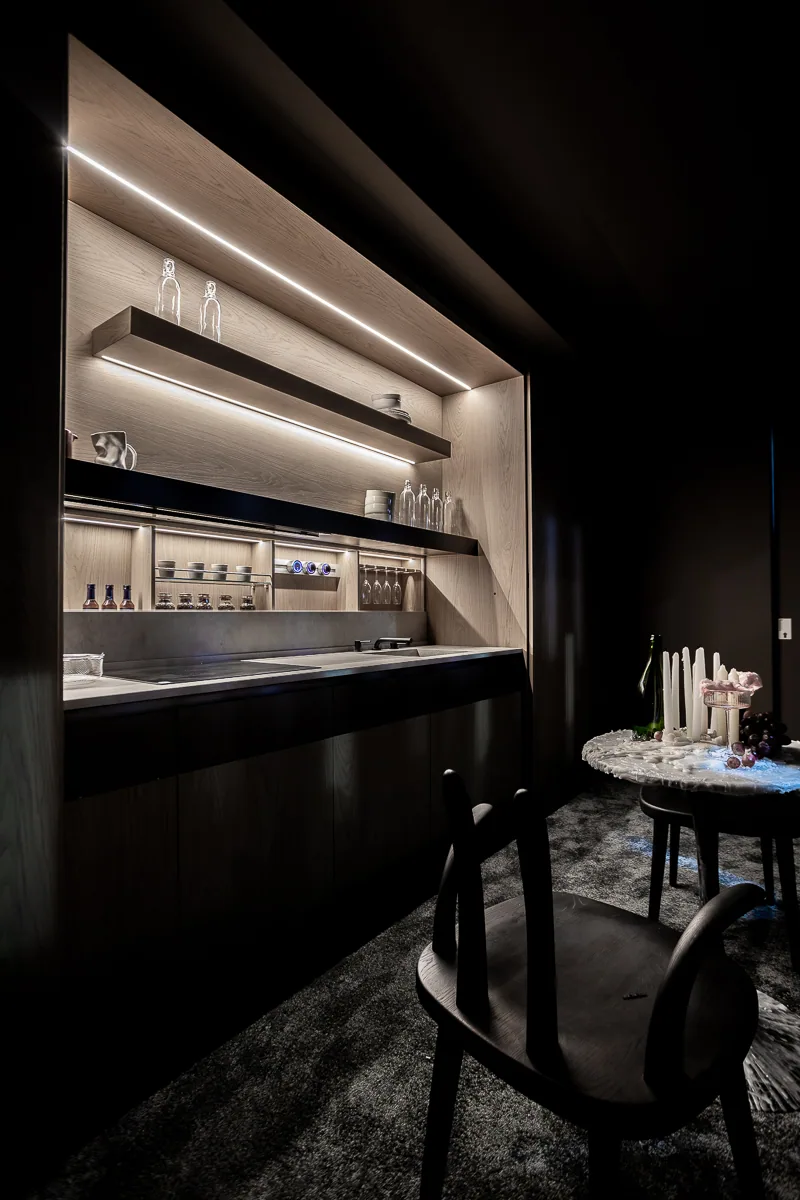
Image 1 of 6
Monolithic Screen
An outer veneer façade plane, around 3 metres high, forms a monumental screen. It supports the idea of Atrium Novum as a dark external contour. Viewing windows for the show are integrated into this surface—function is concealed inside strict architecture.
Kinetic Kitchen
Fronts and actuators are synchronised with the light-and-sound script and projection.
Here, kinetics are not a “trick”, but a way to show the kitchen’s changing modes. The movement reads as mechanical quality: start, travel, and lock-in.
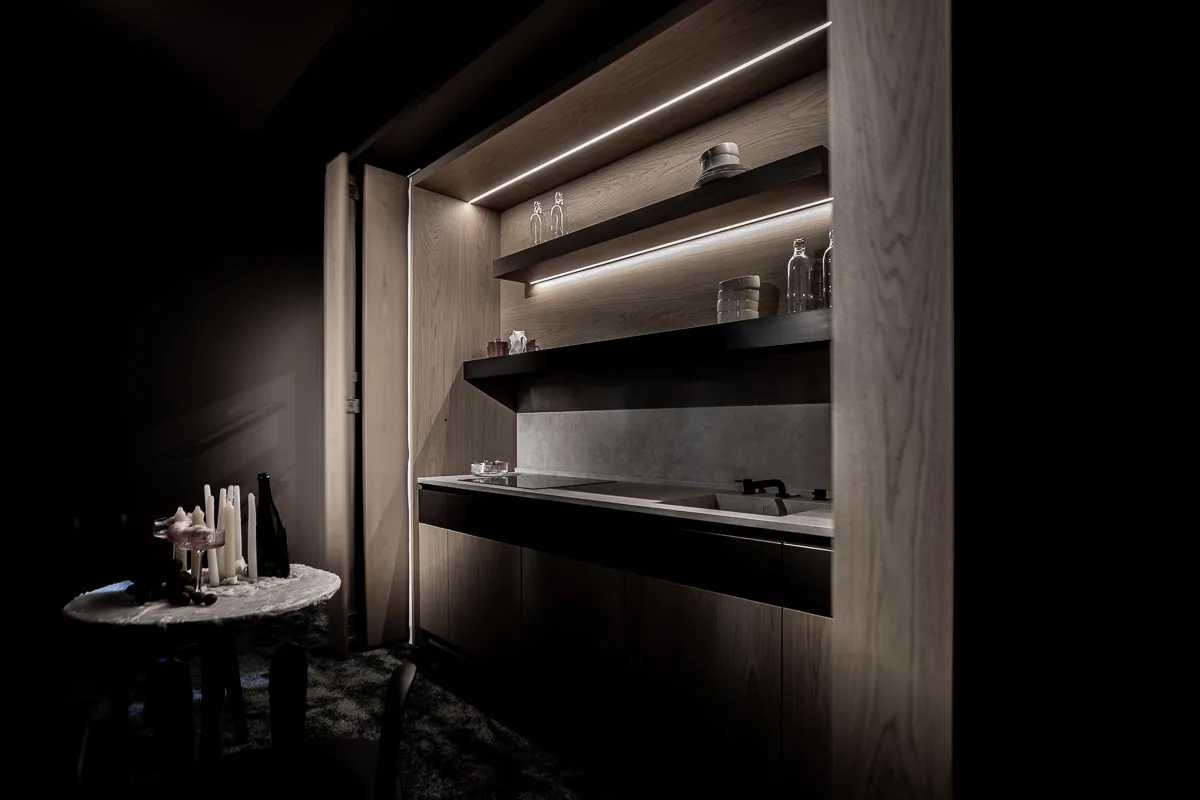
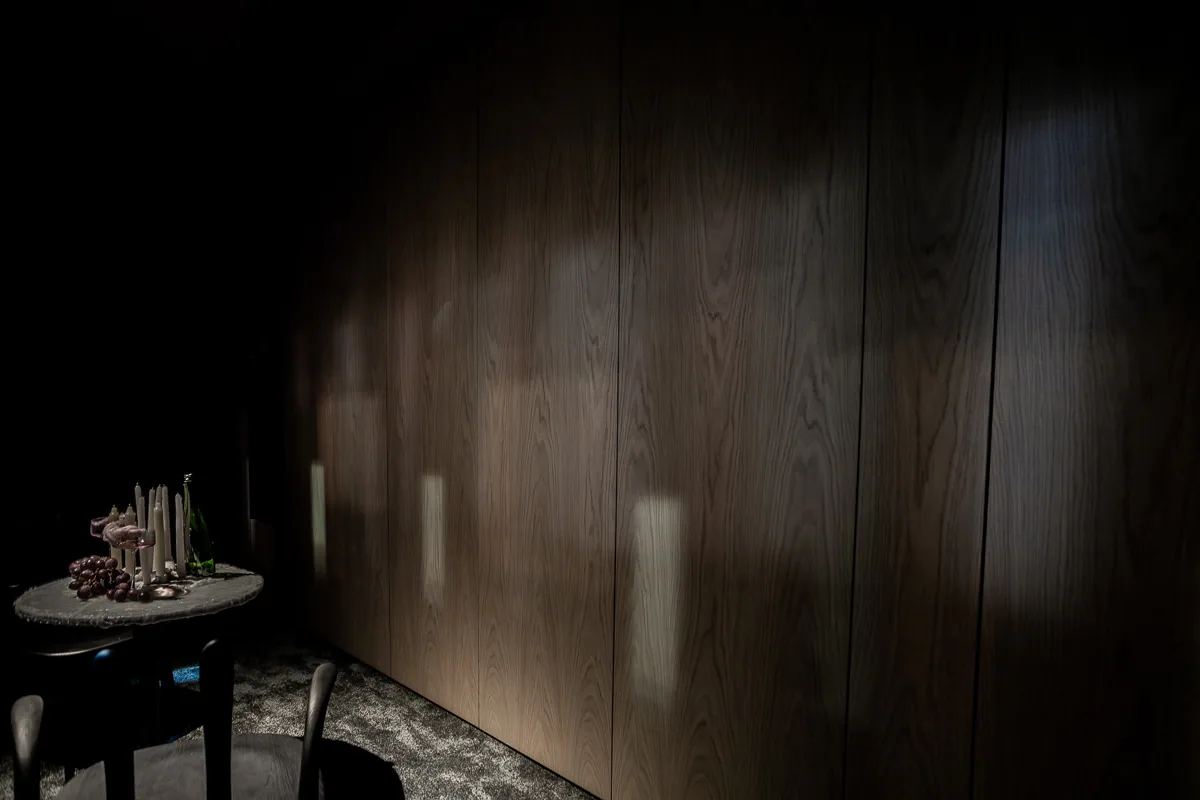
Image 1 of 4
Brand Beacons
Two illuminated panels act as calm wayfinding cues within the stand. Built on aluminium profiles, they deliver an even, soft glow.
The graphics use the NOVARS NODES pattern: the motif reads like a diagram of connections. The frames are finished in “Vintage Grey” oak veneer, while the key layer is INALCO MDi bronze glass carrying the same pattern. The composition also integrates symbols of the partner showrooms, produced from sketches by the project authors.
Warm light pulls the atmosphere together and maintains a premium tempo.
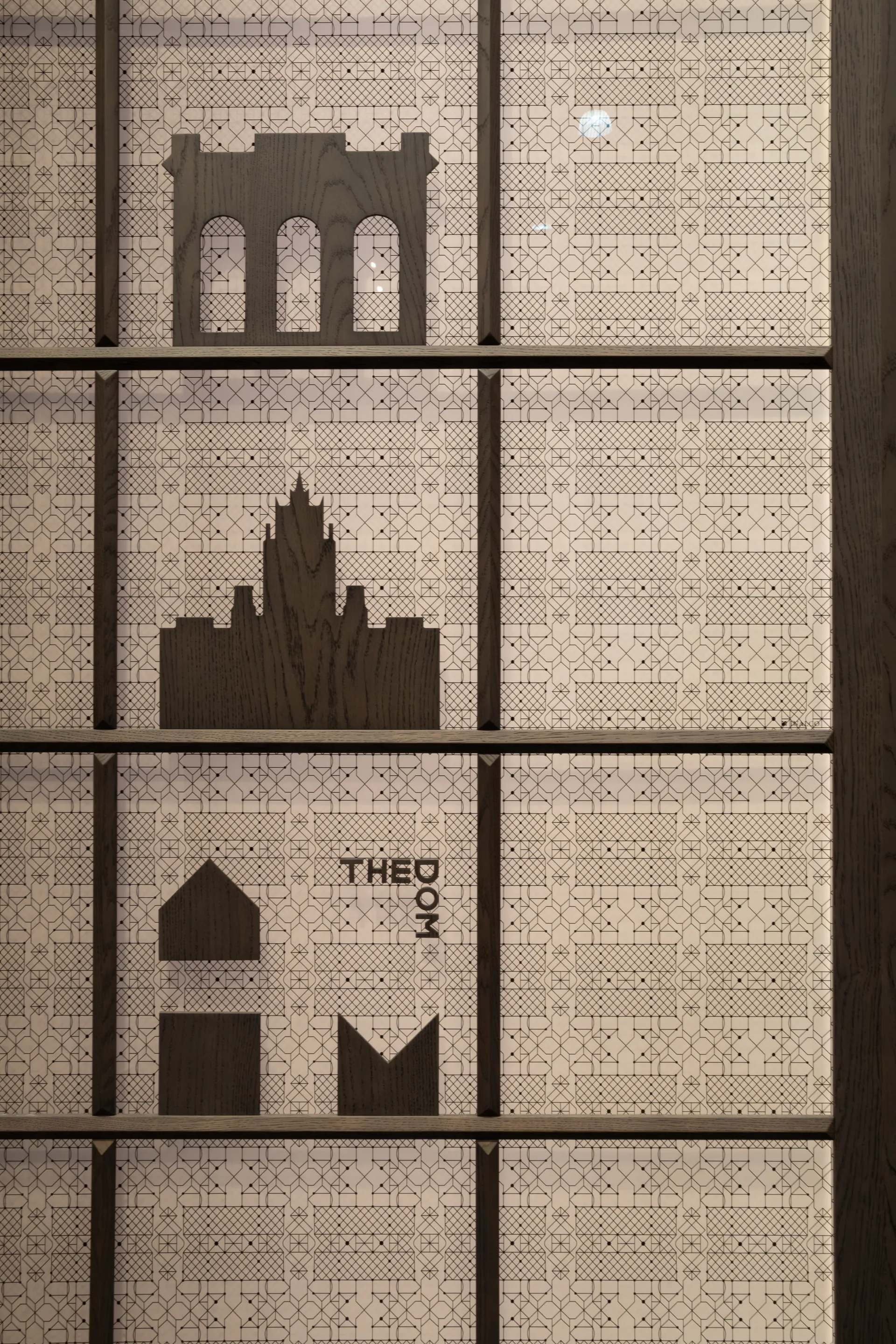
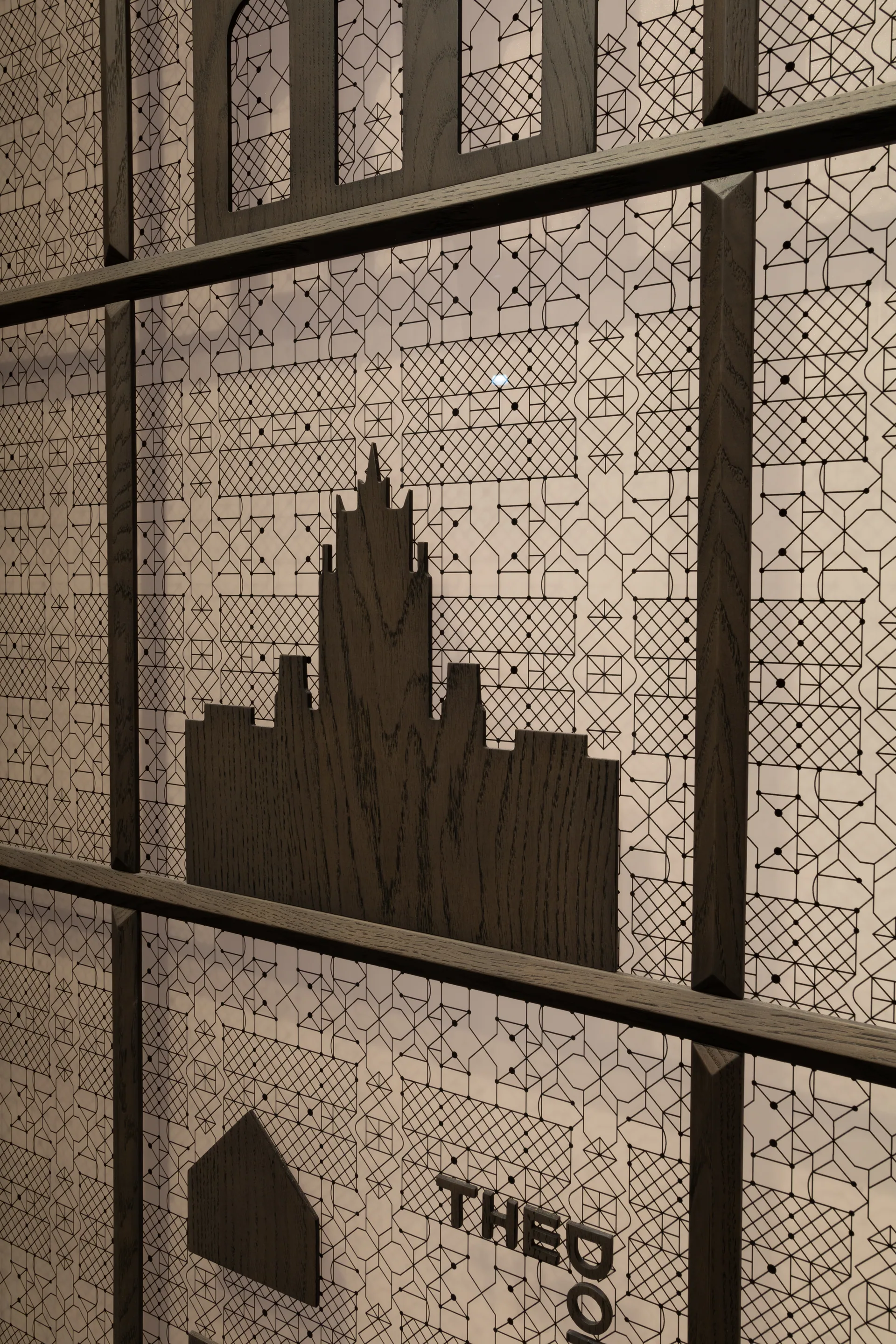
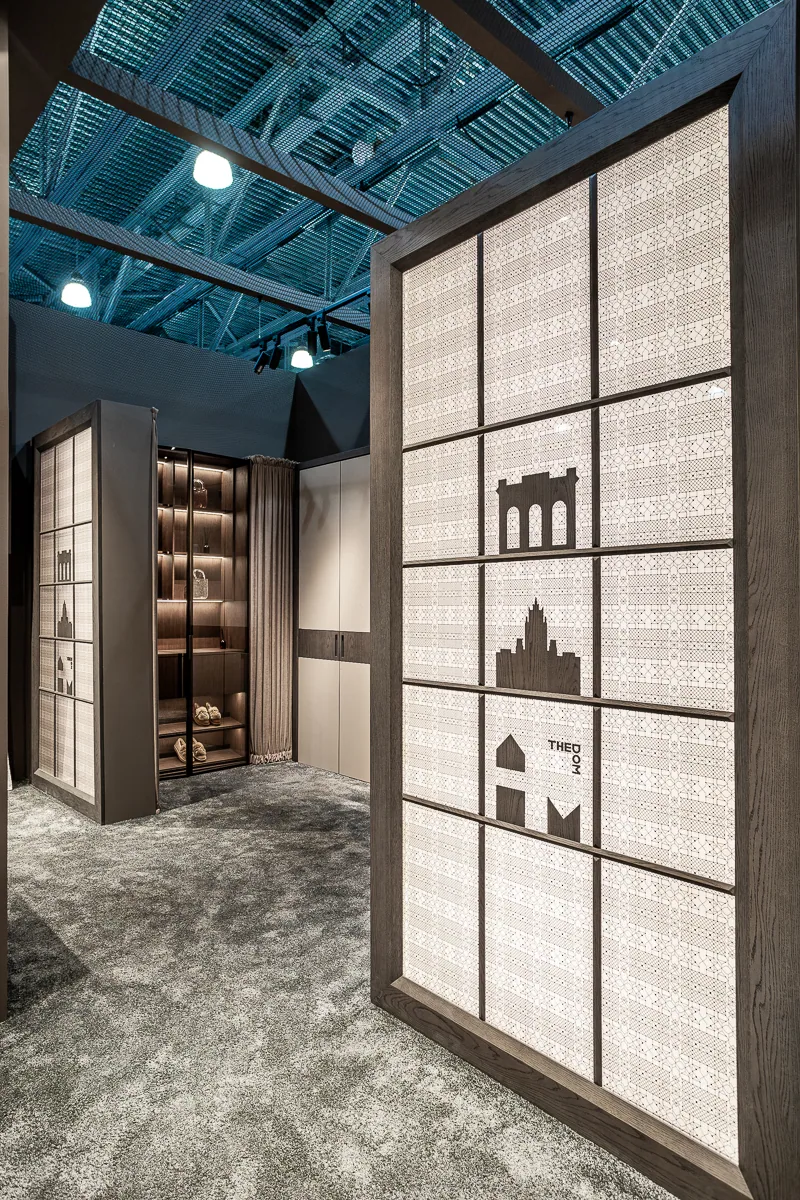
Image 1 of 4
Aperture Niche
A structural column is composed as an architectural “diaphragm”.
Inside the niche: INALCO cladding with NOVARS MATRIX and a delicate glass object. The node sits at the intersection of axes and guides the gaze along the route—from the entry point to the key zones.
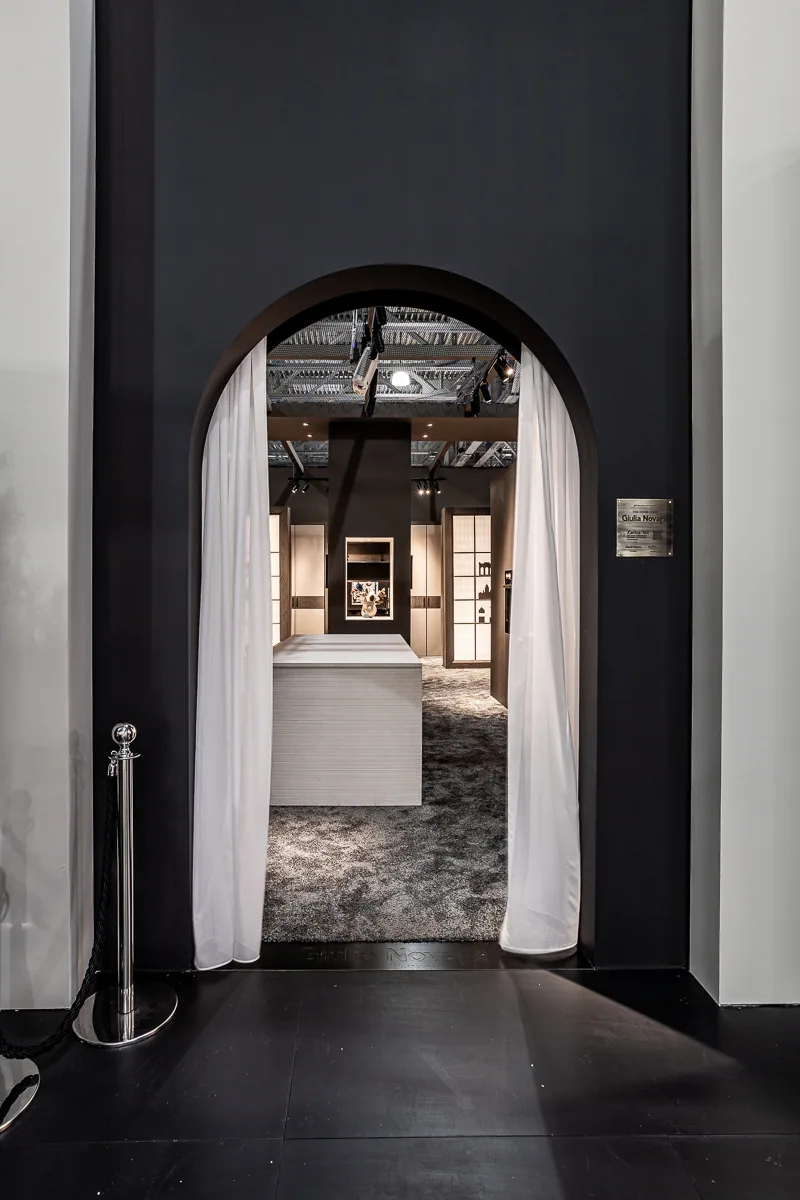
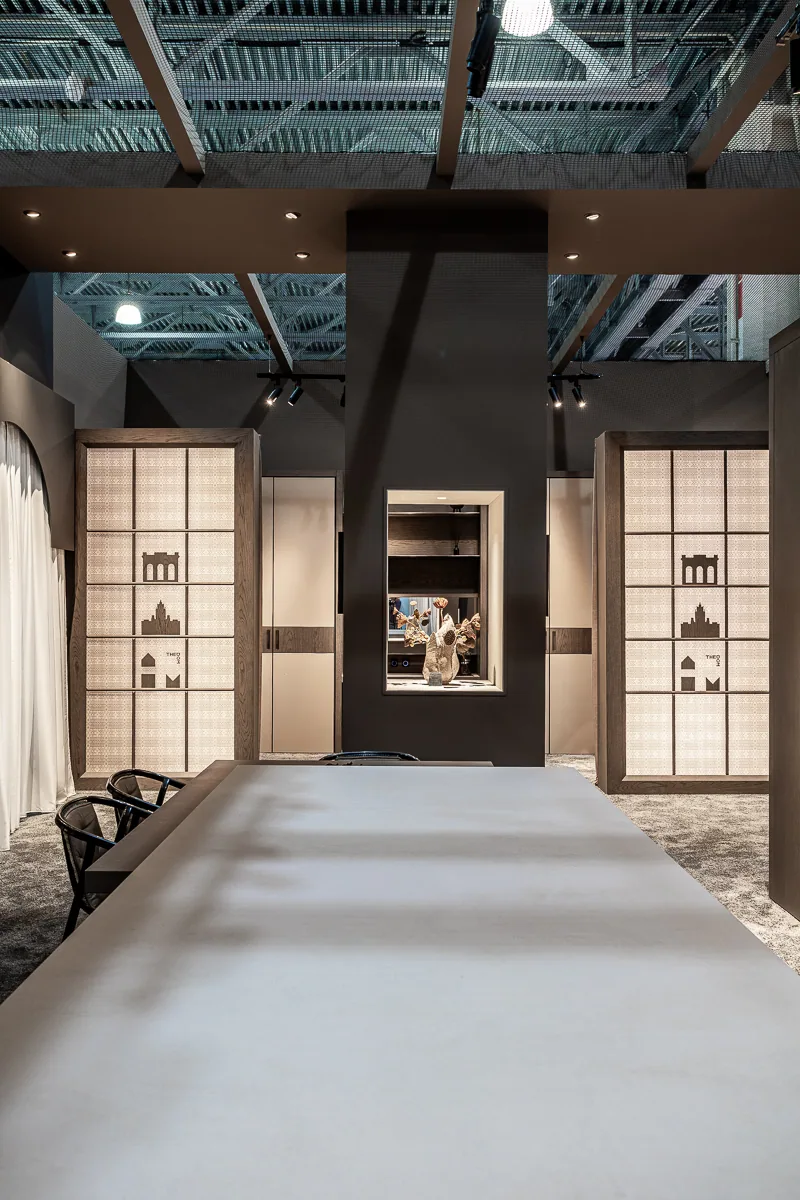
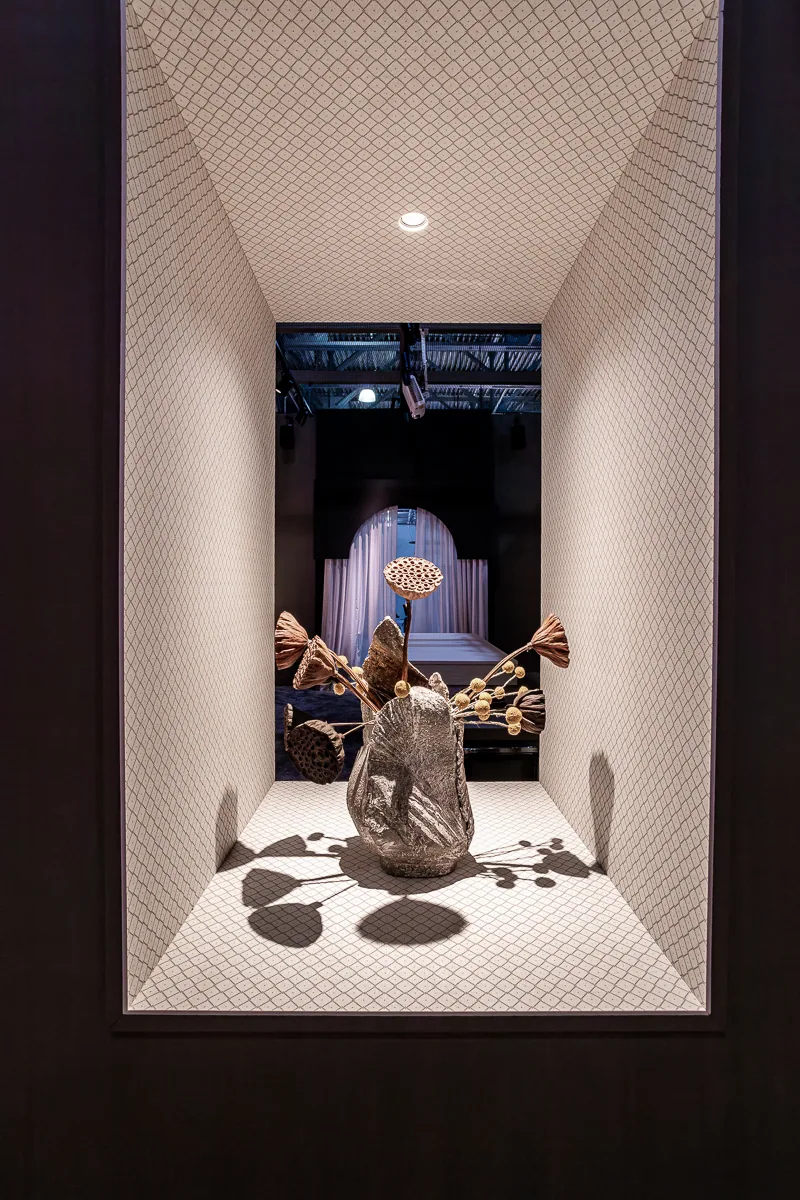
Image 1 of 4
Nika Air Line
Another interior ensemble is built around the “Nika” model in a special “Air Line” version.
In “Nika Air Line”, an updated version of the active cabinet in the backsplash zone is presented. A dual-front system is used: the lower section drops down, the upper lifts up—opening full access to a large storage area.
Inside: glass shelves, oak containers, trays, and an integrated track power outlet; backlit rear panels provide an even glow across the entire surface.
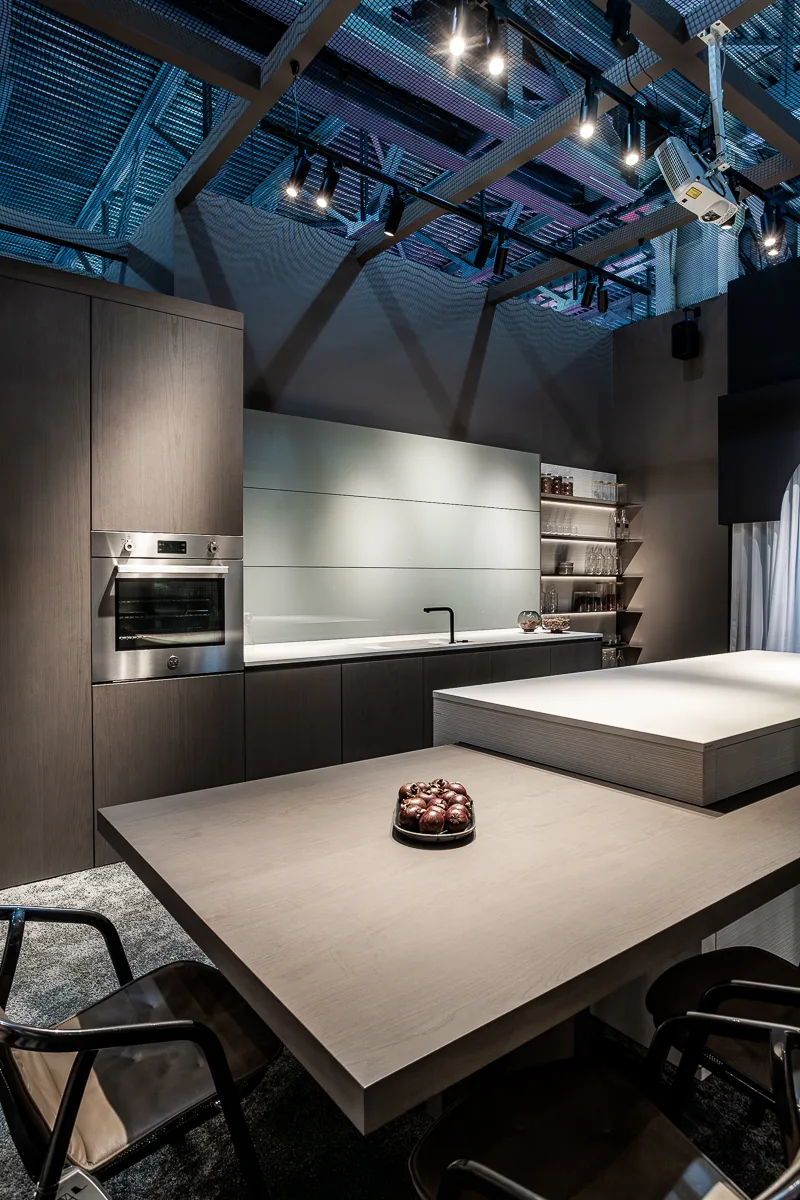
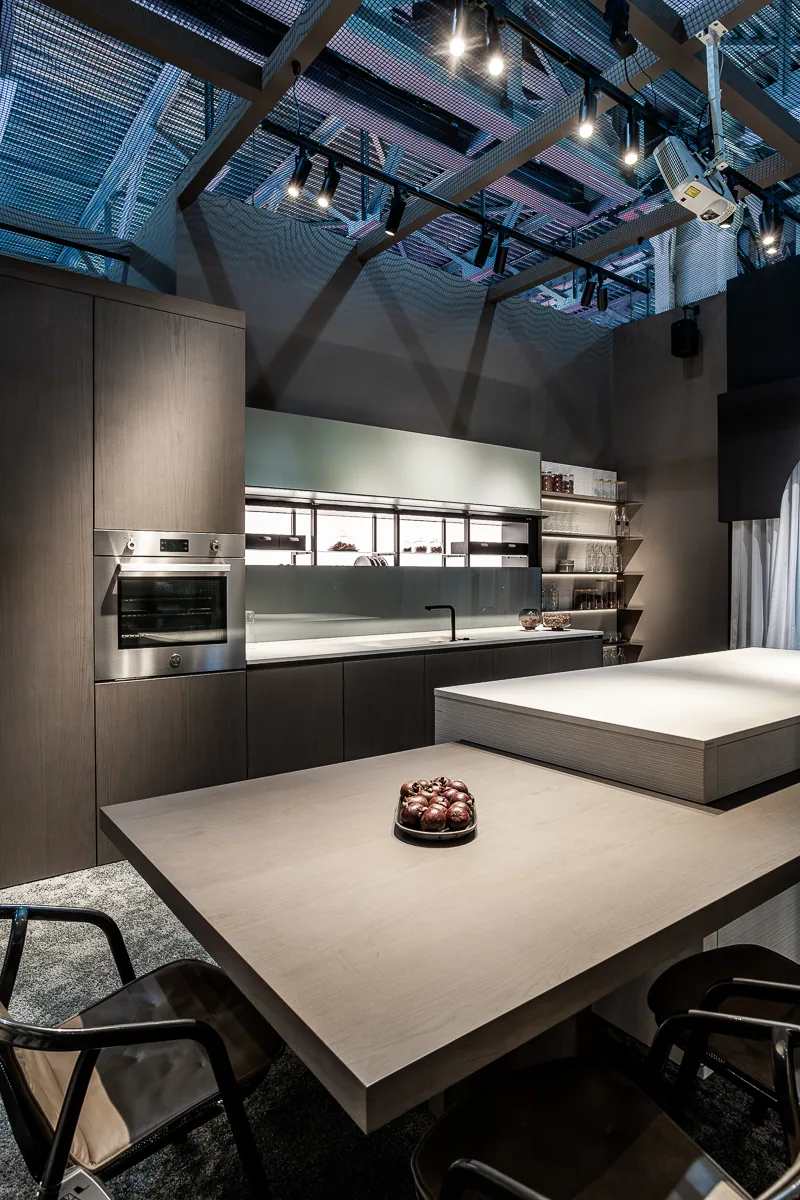
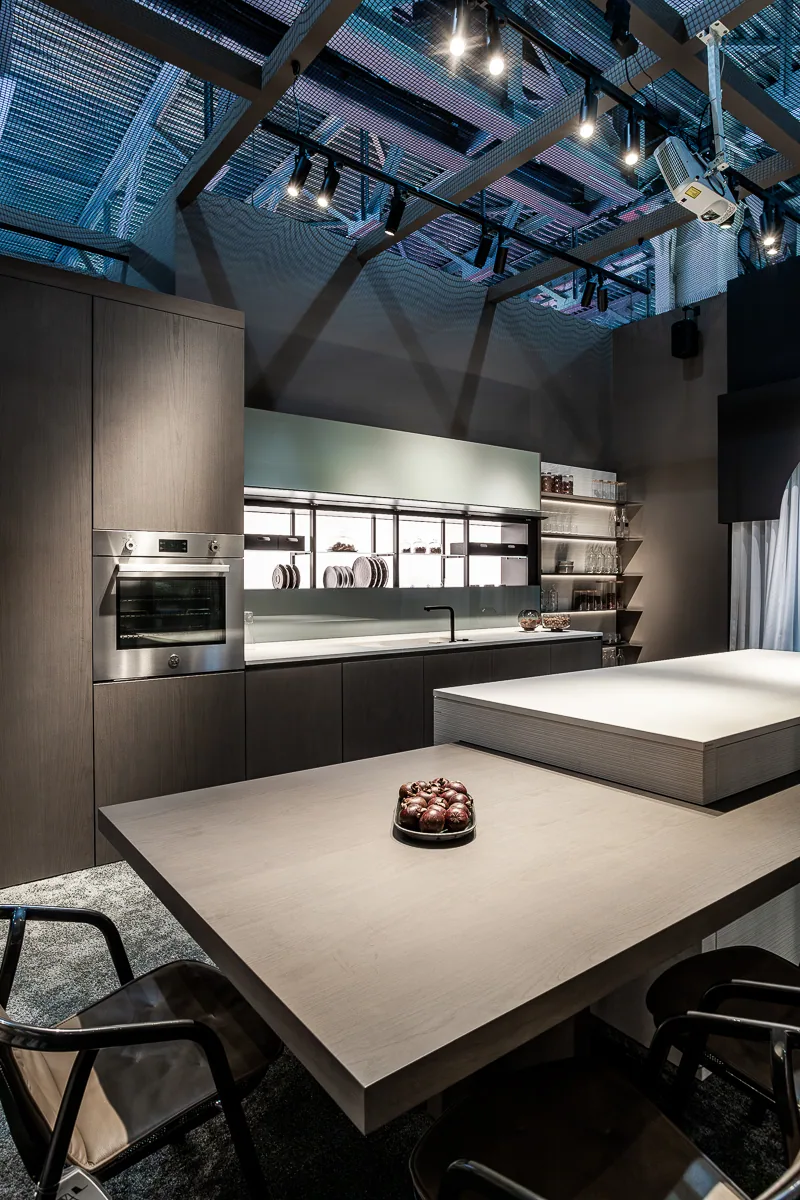
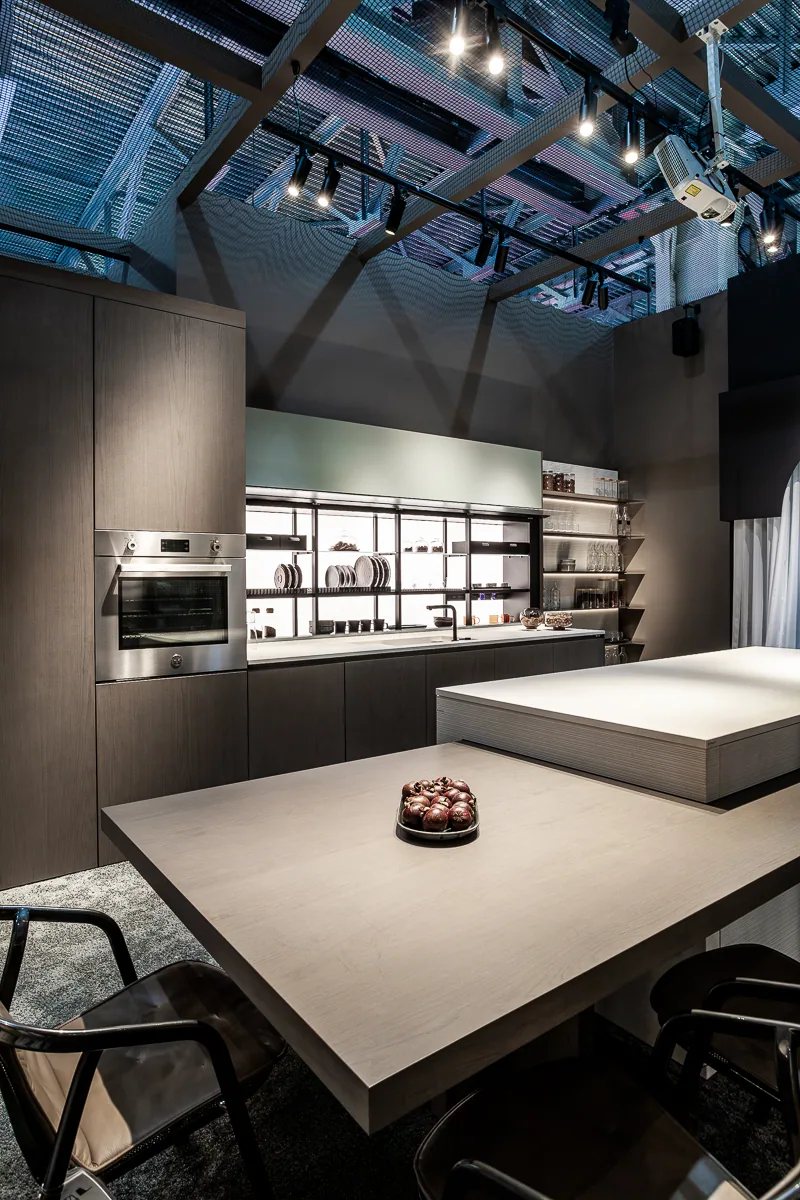
Image 1 of 4
“Relief” Shelving Unit
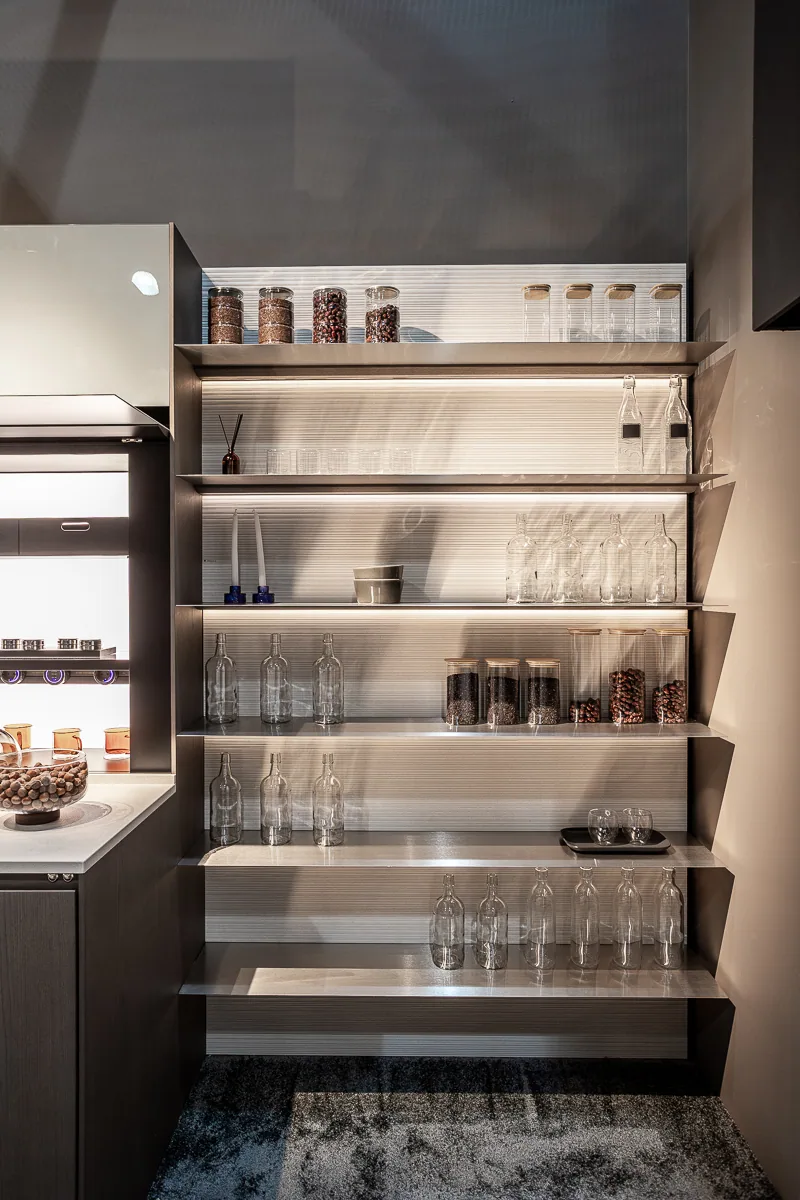
The “Wall Space” shelving unit is built on the contrast of metal and stone. The open shelves are stainless steel, while the back panels are INALCO MDi slabs with a horizontal texture.
This graphic continues on the island: the lines wrap the volume around the perimeter, and the corners are resolved in a crisp 45-degree mitre.
Monolithic Island
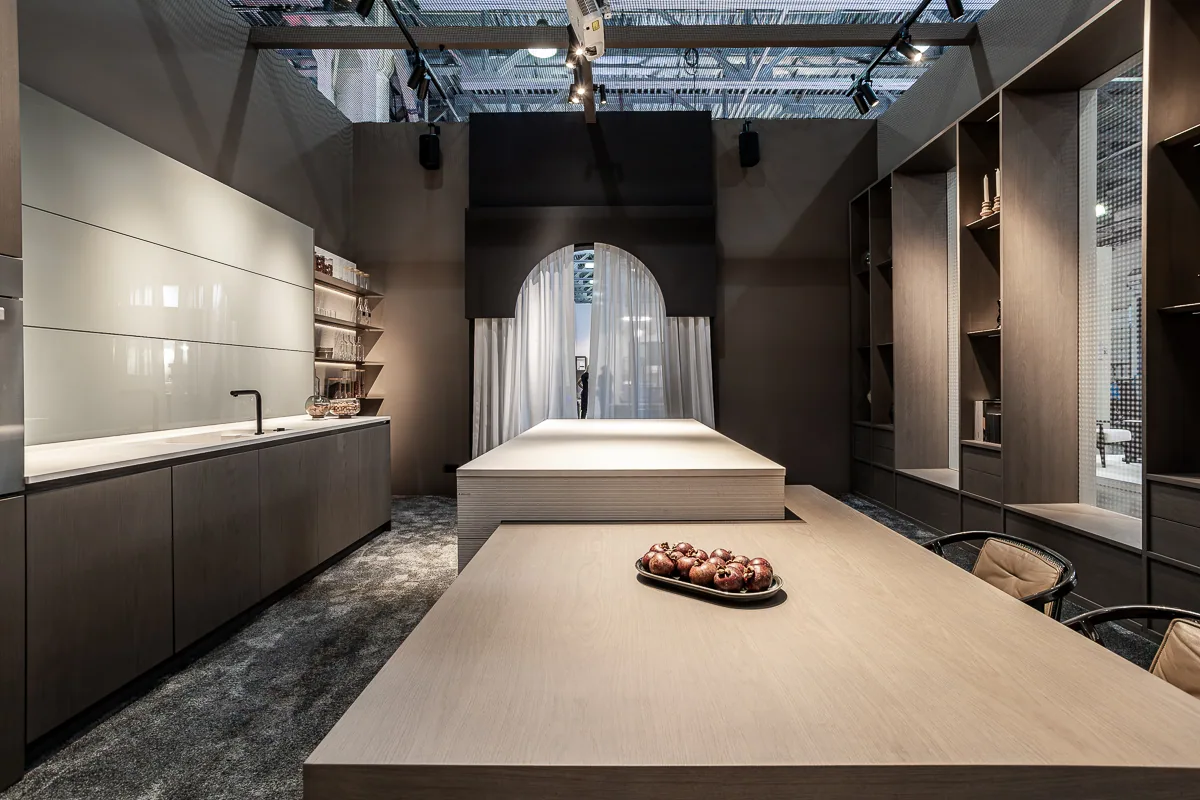
A stone monoblock with fine horizontal grooves reads as a single, continuous piece.
The island uses the INALCO MDi Induction surface, allowing induction to be integrated beneath the worktop so the top remains monolithic. This is exactly the kind of technology that supports the stand’s narrative: function stays inside, while the exterior remains calm and cohesive.
The DUAL SURFACE projection piece works as a discreet interface: it reveals the logic of the heating zones and disappears when it’s no longer needed.
Porta Dualis
The living room as an extension of the kitchen’s architecture. One plane works in two modes at once: outside—as a showcase; inside—as the living room’s back wall. This duality reinforces the stand’s core idea: the kitchen as the heart of the home.
In the living room, as in the kitchen, the fronts and carcasses are finished in oak veneer with a “Tabacco” stain, so the interior reads as one continuous whole.
Open sections use metal back panels, adding depth and a controlled reflection. The decorative filter role is taken by INALCO MDi glass with the NOVARS CORE pattern: the interior is not seen directly, but as if through the prism of the concept—adding an optical layer and making the graphics part of the space.
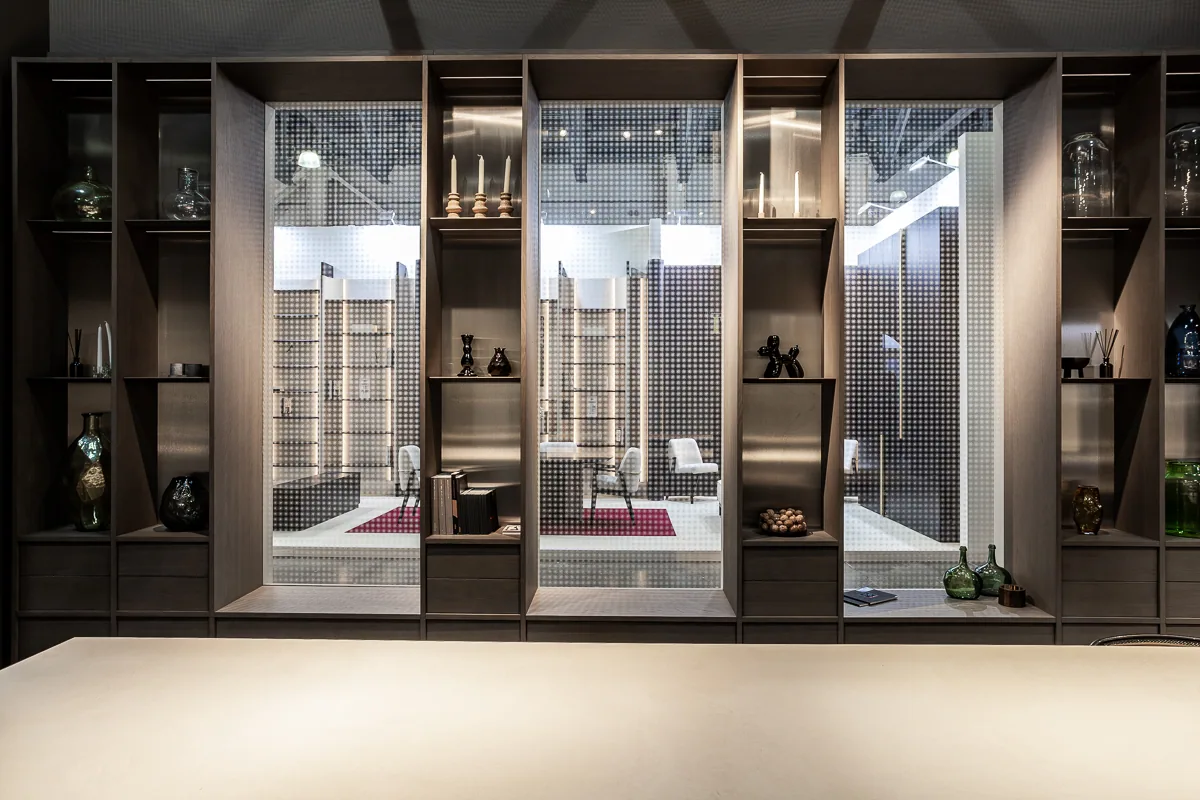
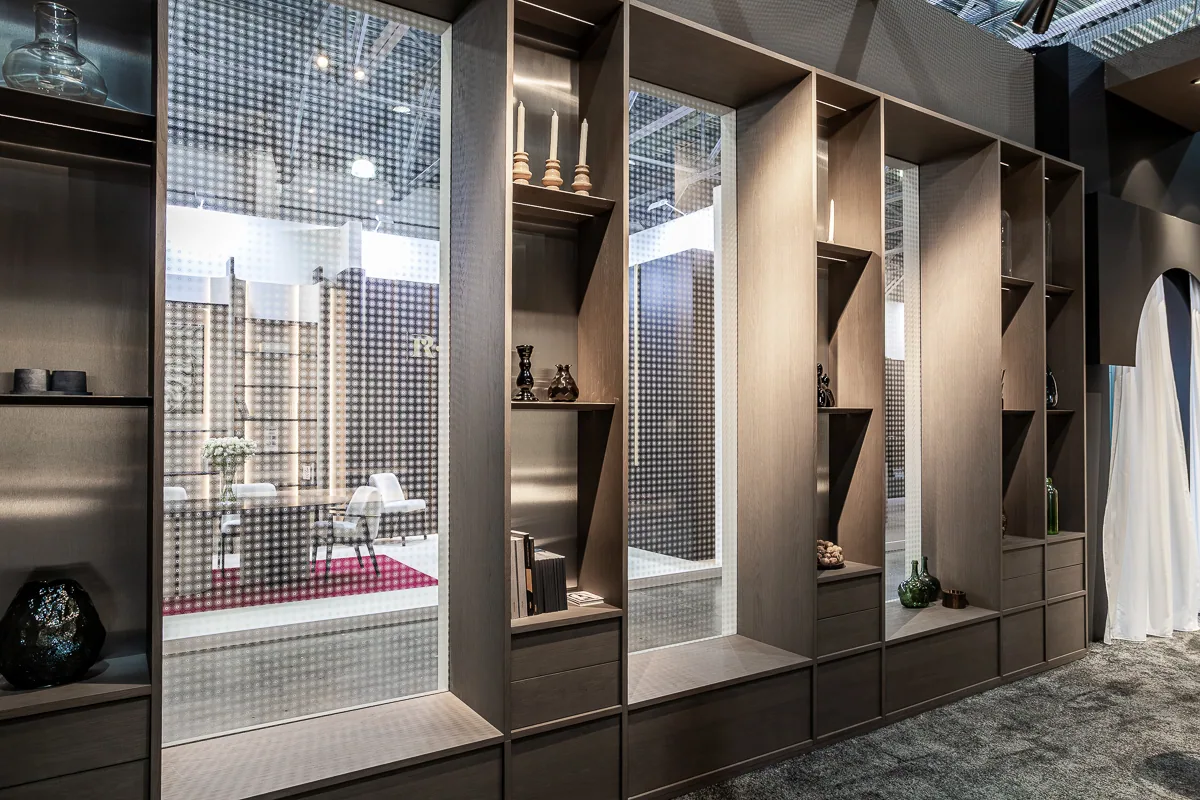
Image 1 of 2
Digital Veil
A glass wardrobe with the “NOVARS MATRIX” pattern, read in transmitted light.
The digital structure reduces unwanted reflections and stabilises perception.
With backlighting, the pattern “prints” onto the painted wall, adding a subtle decorative rhythm without additional finishes.
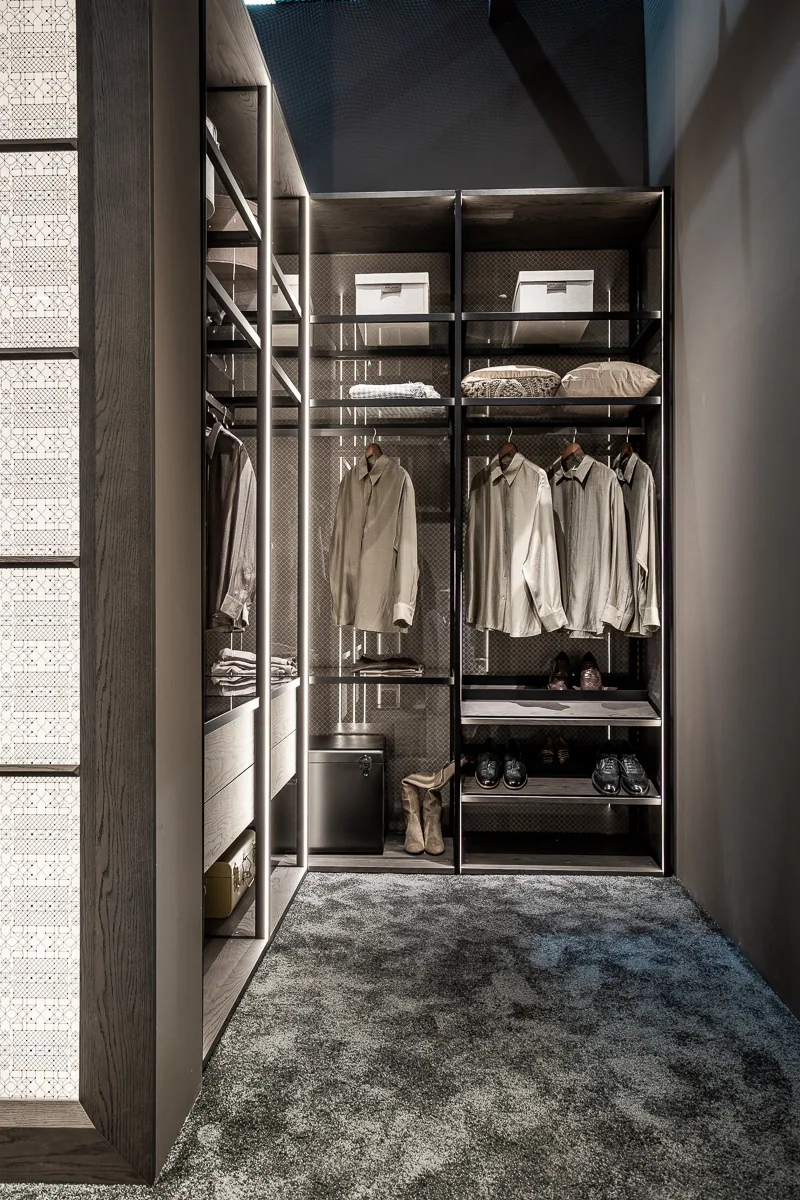
Image 1 of 2
Wardrobe Zones and Vanity
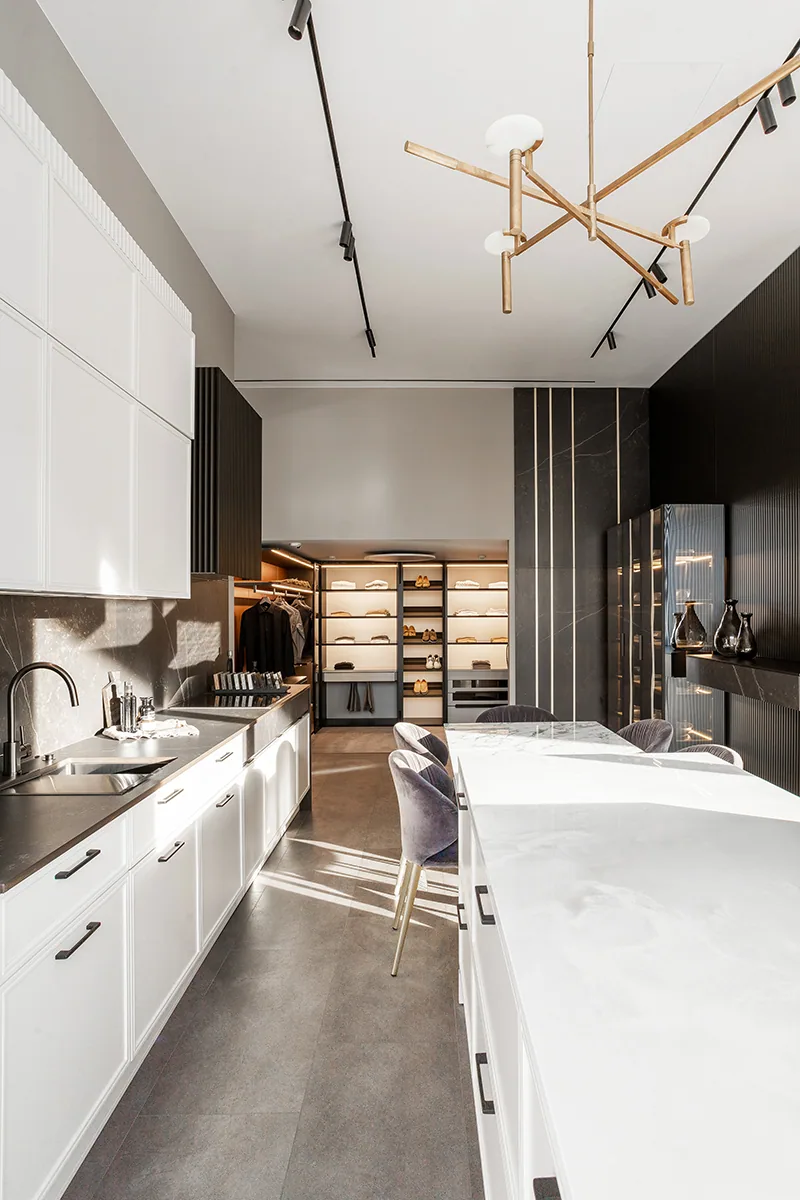
The wardrobe block is composed as a fully private stage: symmetry, monolithic clarity, and precise lighting.
In the vanity zone, the mirror is integrated as a functional element with a lift mechanism, with concealed shelves and storage behind it. This element was developed by the factory; the project authors selected the finishing materials and replaced the fronts with INALCO “skin-like” panels.
A stone insert is integrated into the worktop for hot tools—a practical detail without overt display. Inside: bespoke leather trays, glass shelves, and discreet lighting.
Secure, Concealed Storage Zone
A separate cabinet is designed as a high-privacy block: concealed panels, organised storage for watches and jewellery, and closed access without exposing mechanisms externally.
In addition, we proposed an integrated, visually concealed safe behind a sliding panel.
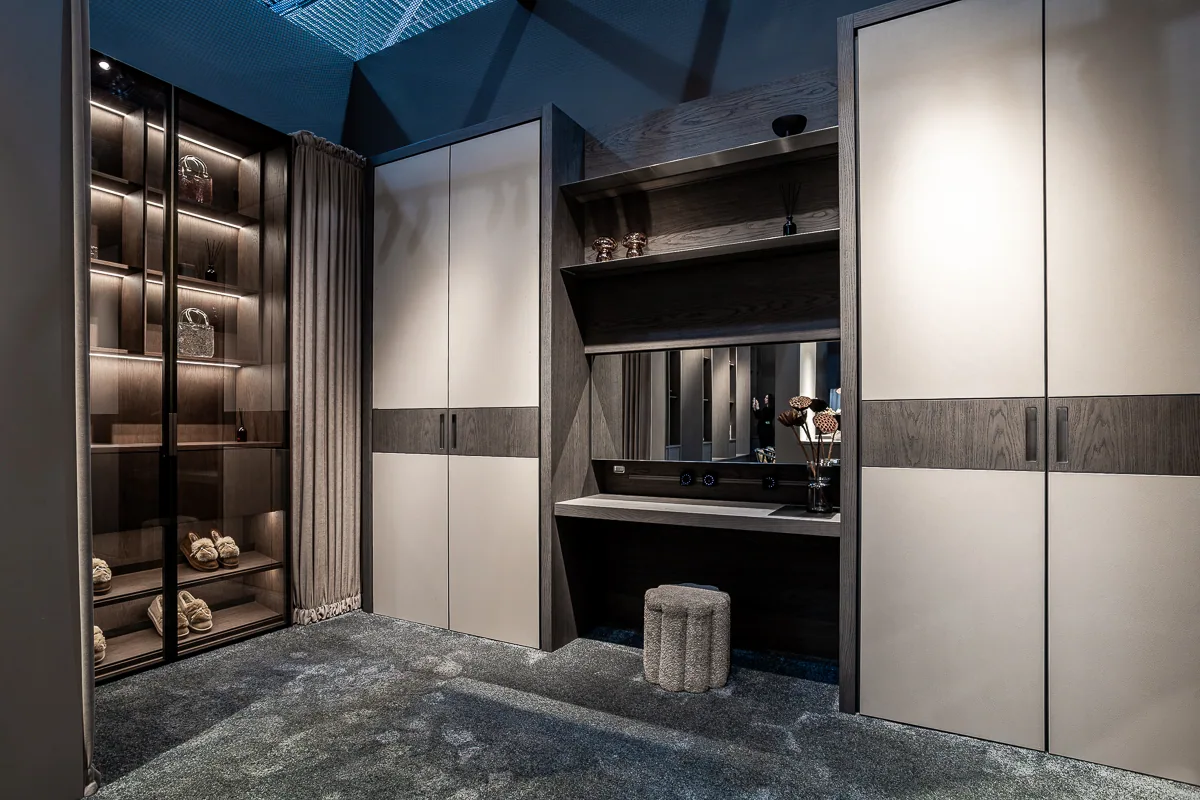
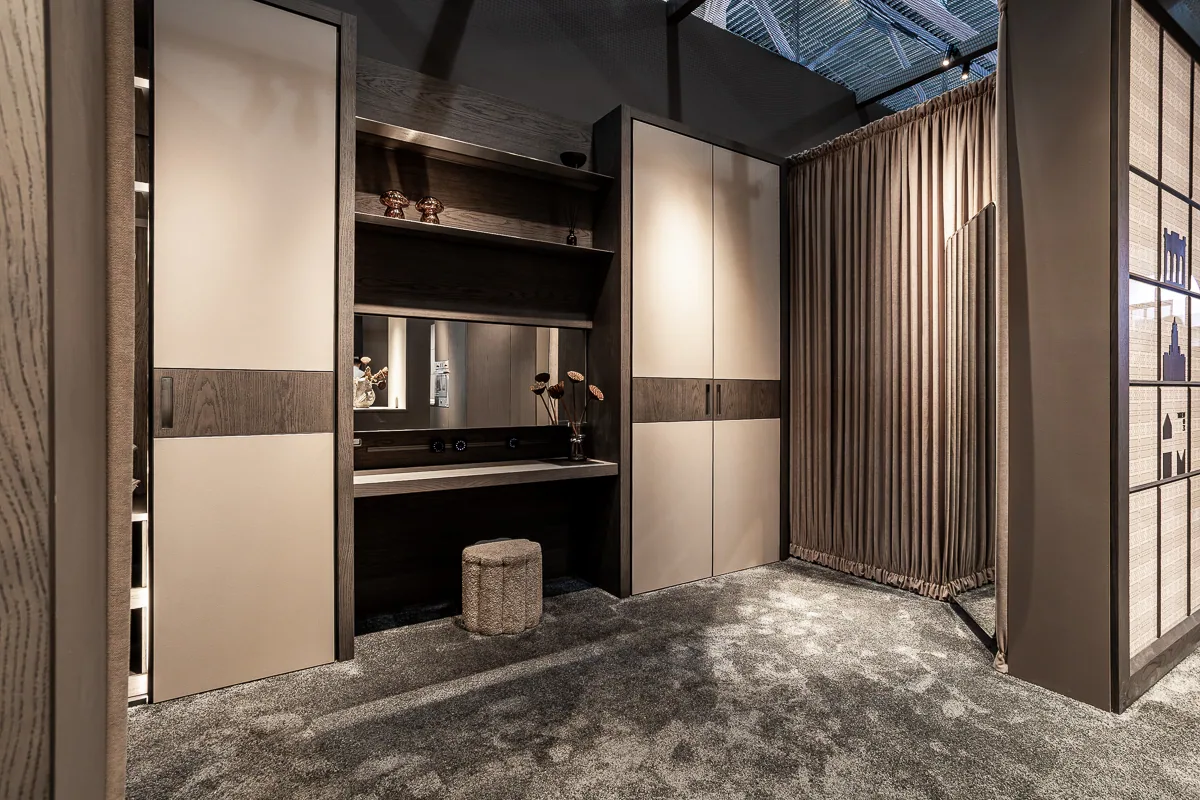
Image 1 of 2
Stand Project
Through a joint team effort and under careful design supervision, the solutions were implemented with high precision. Below are several key views of the stand design.
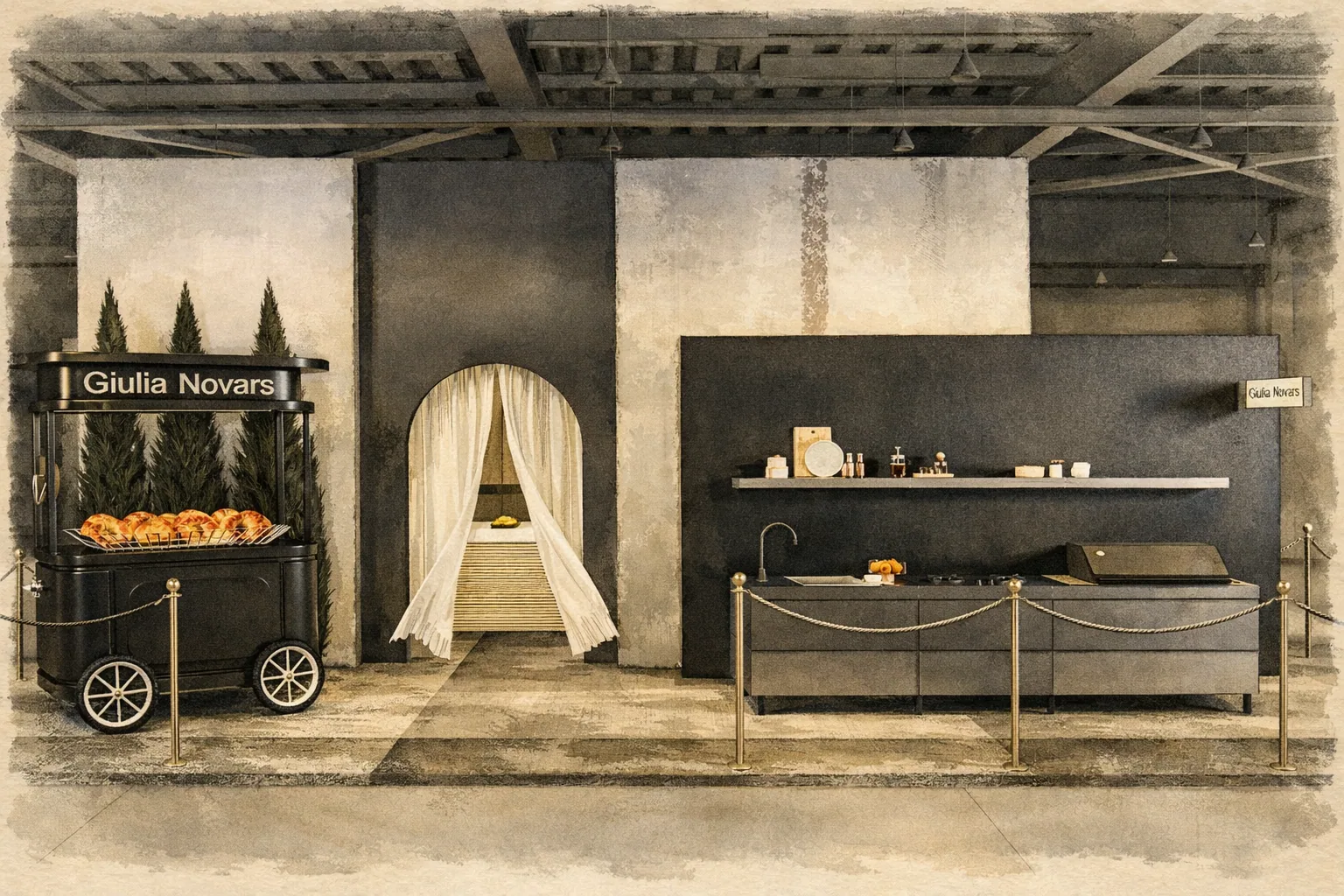
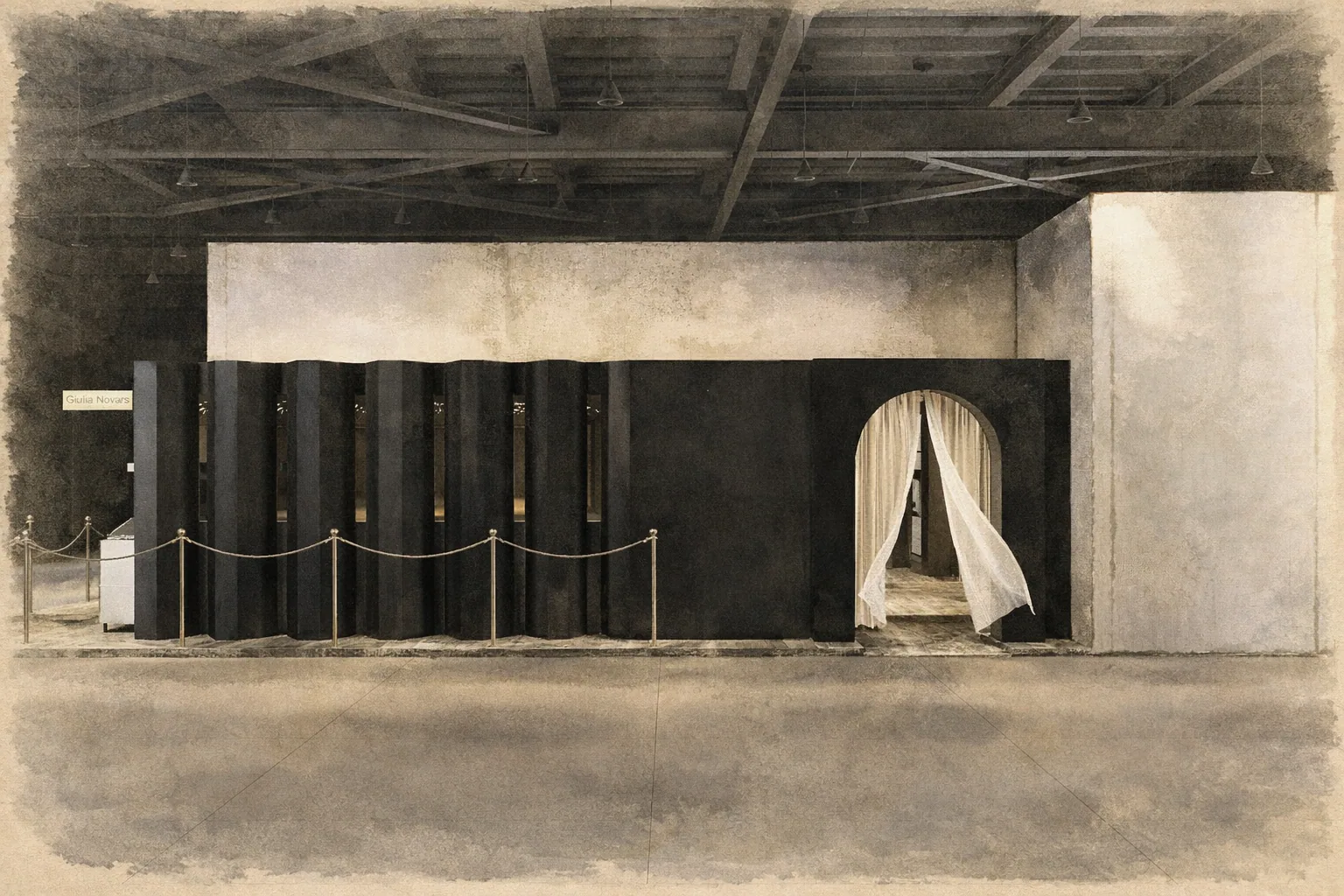
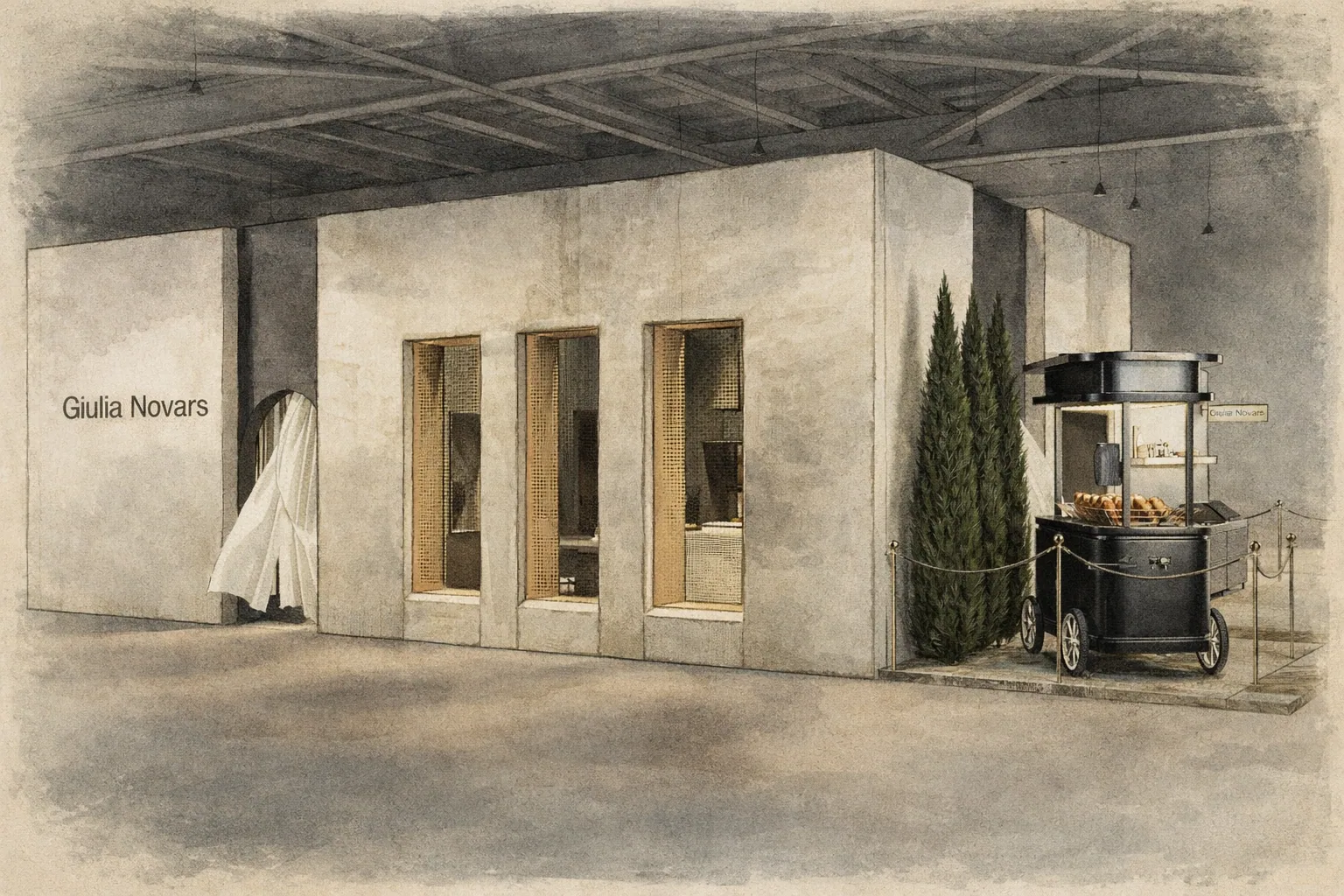
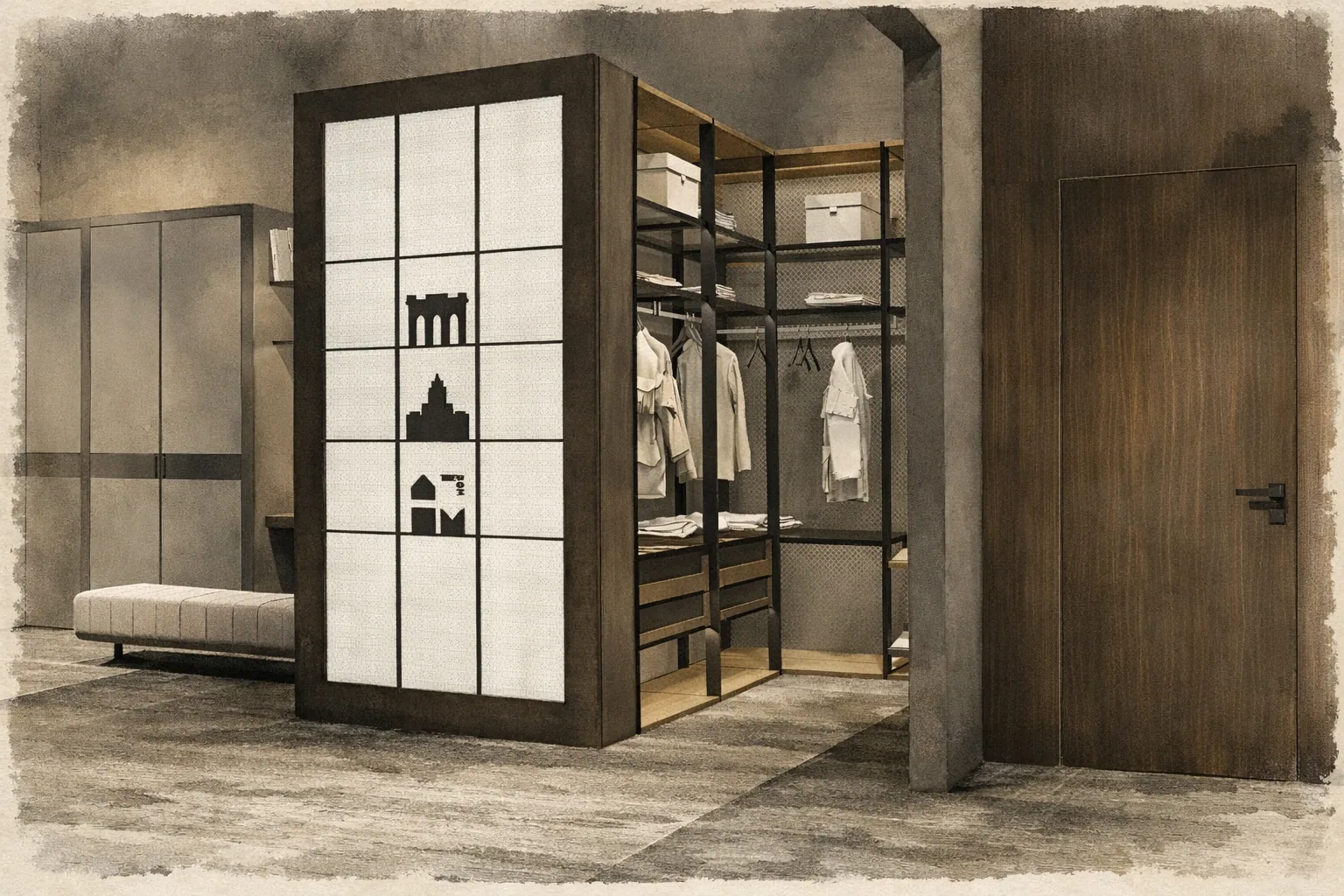
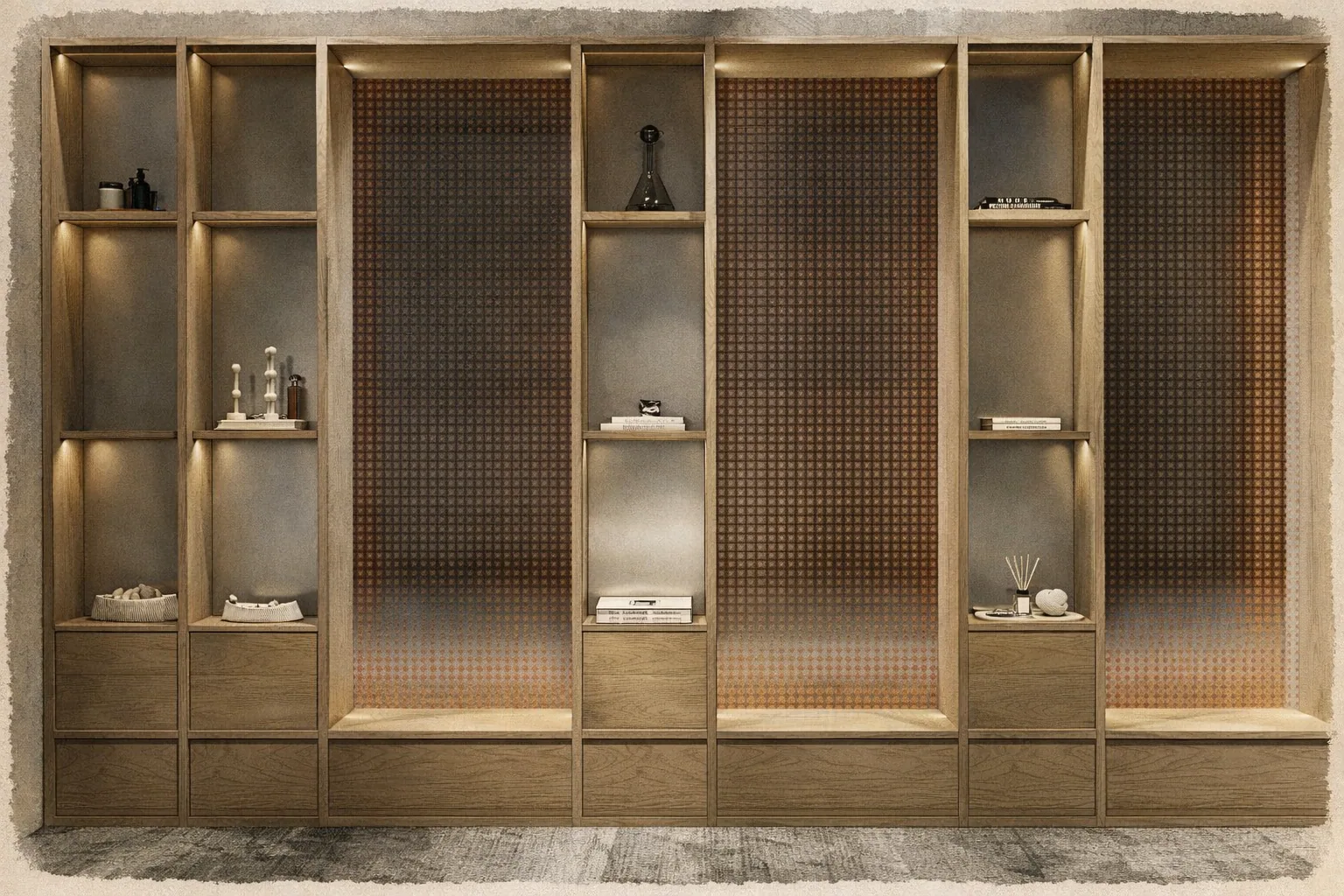
Image 1 of 5
Final result
THE INNER CODE emerged as a calm yet distinctive architectural exhibition. We maintained a premium tempo throughout.
Giulia Novars furniture was perceived not as standalone samples, but as part of a coherent interior—governed by the same rules of light, acoustics, and privacy as a real home.
The dual logic of Porta Dualis worked especially well: it connected the external visitor flow with inner intimacy.
Cabinet of Shadows and the kitchen’s kinetics added an explanatory layer: visitors could see the shift between states and the engineering at work.
After the exhibition, the project drew sustained attention from both visitors and professionals—interest was in the product and in how it was presented. The exhibition microsite launched in sync with the opening and became a single access point for photo, video, and text materials for partners and the press.
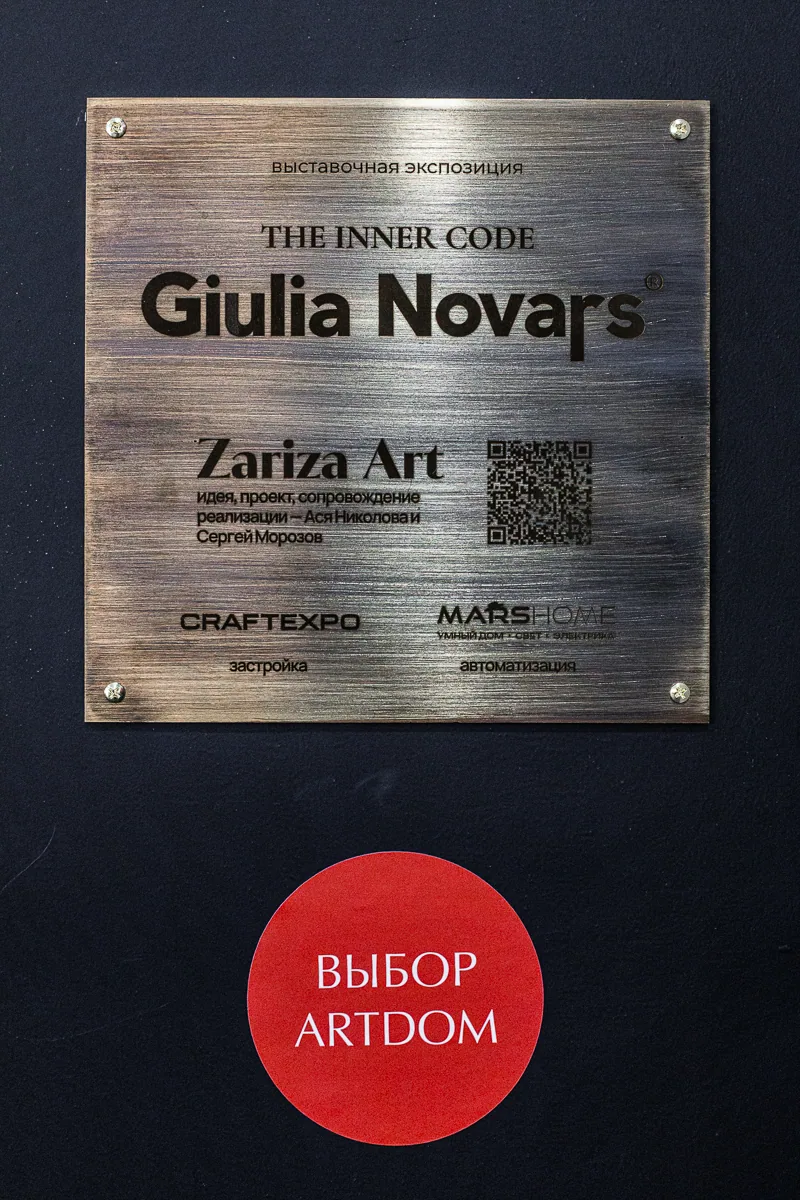
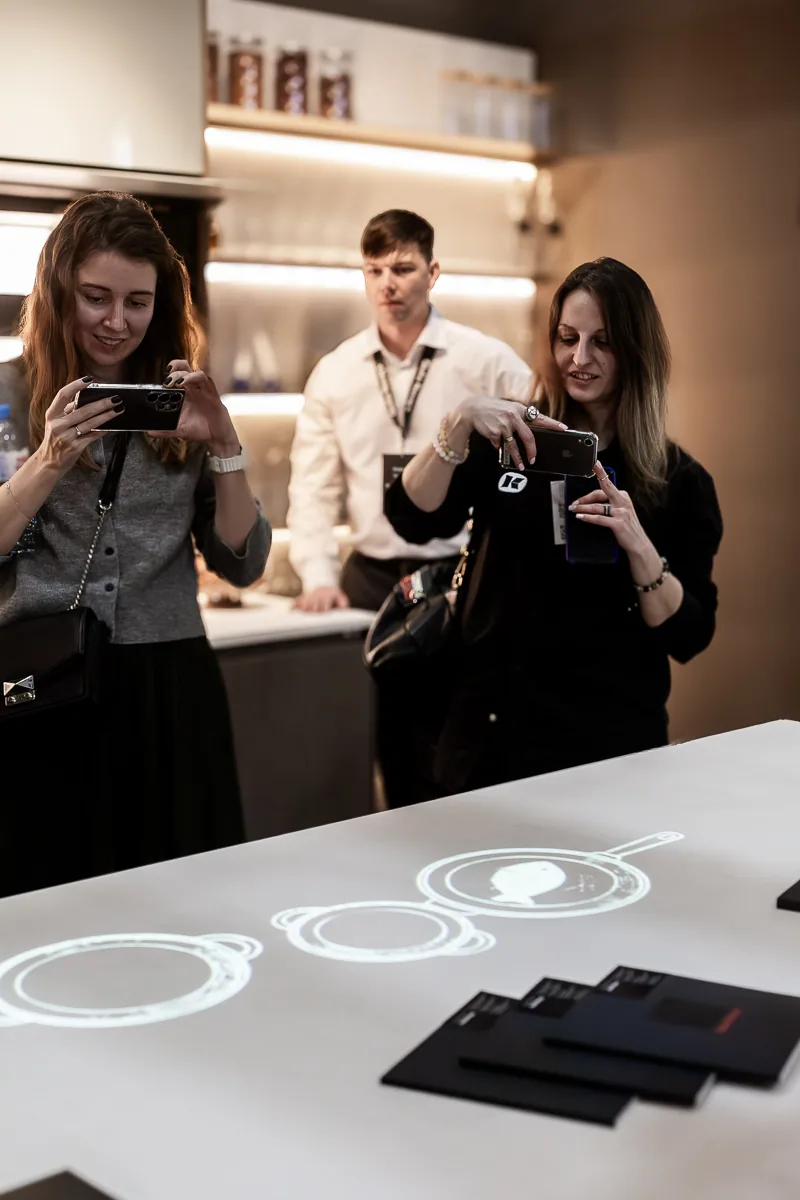
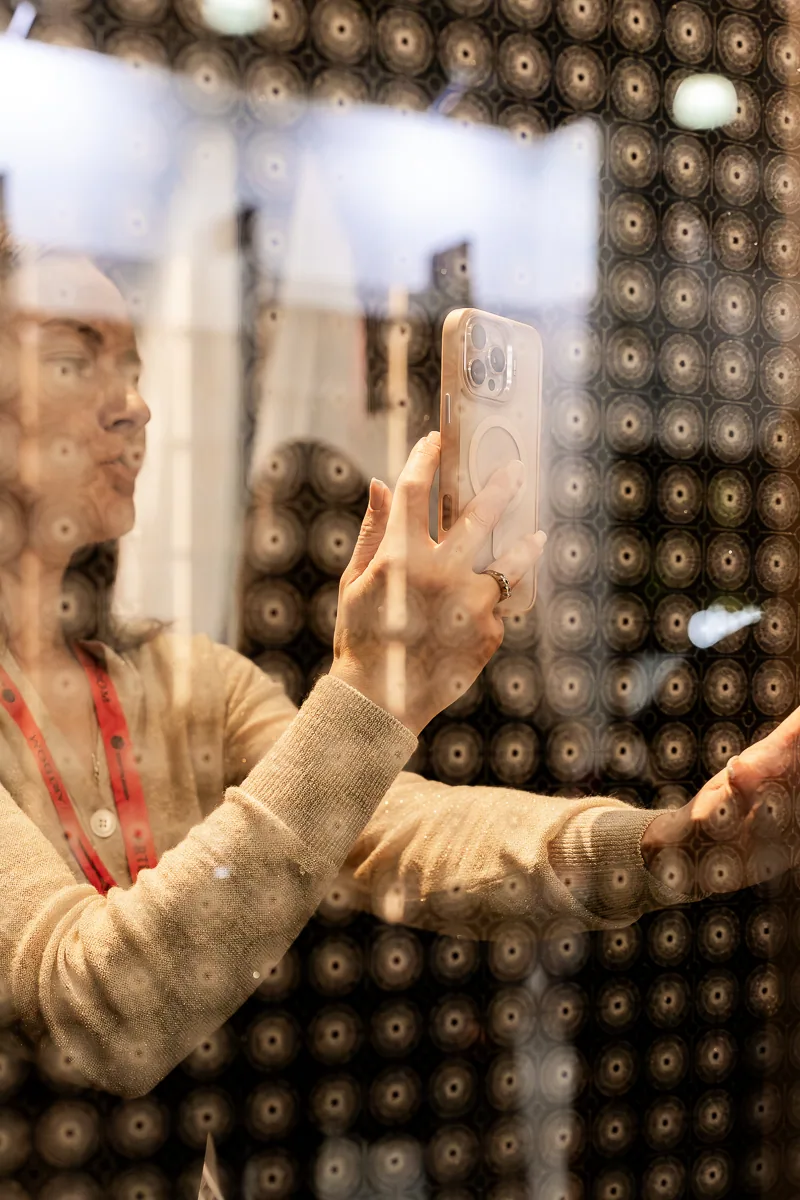
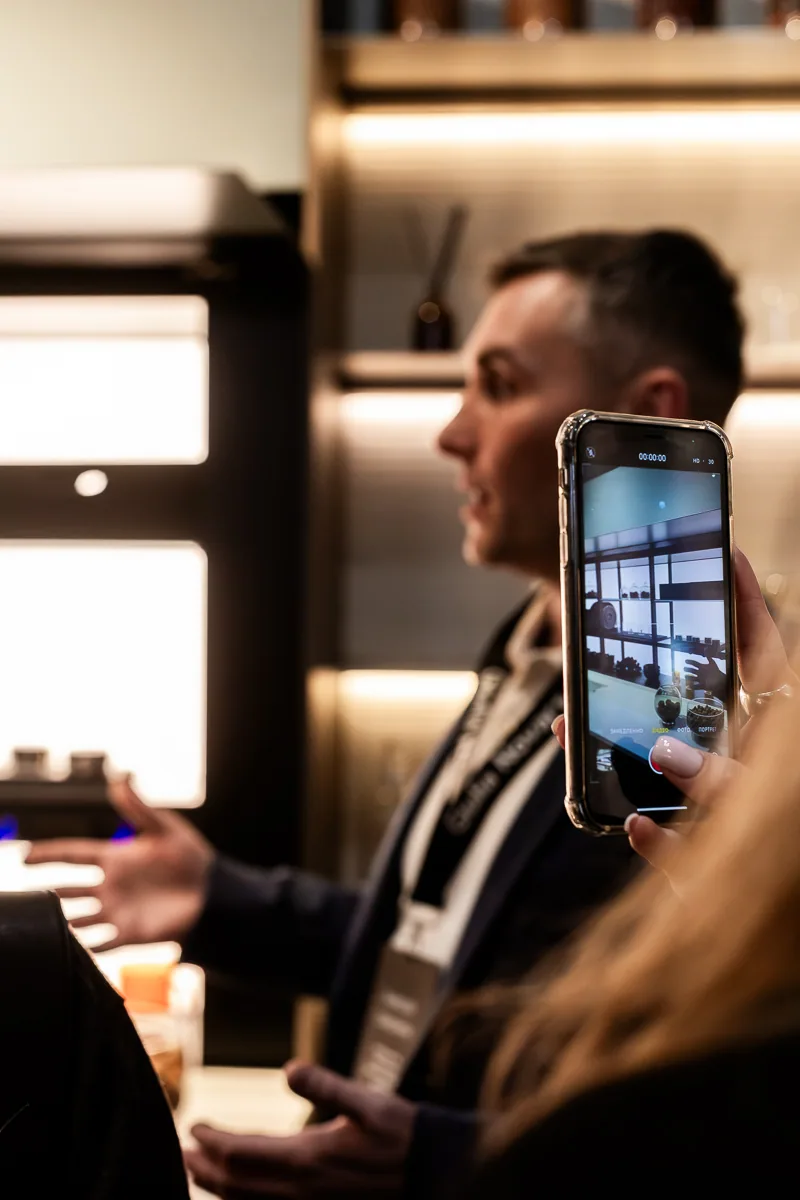
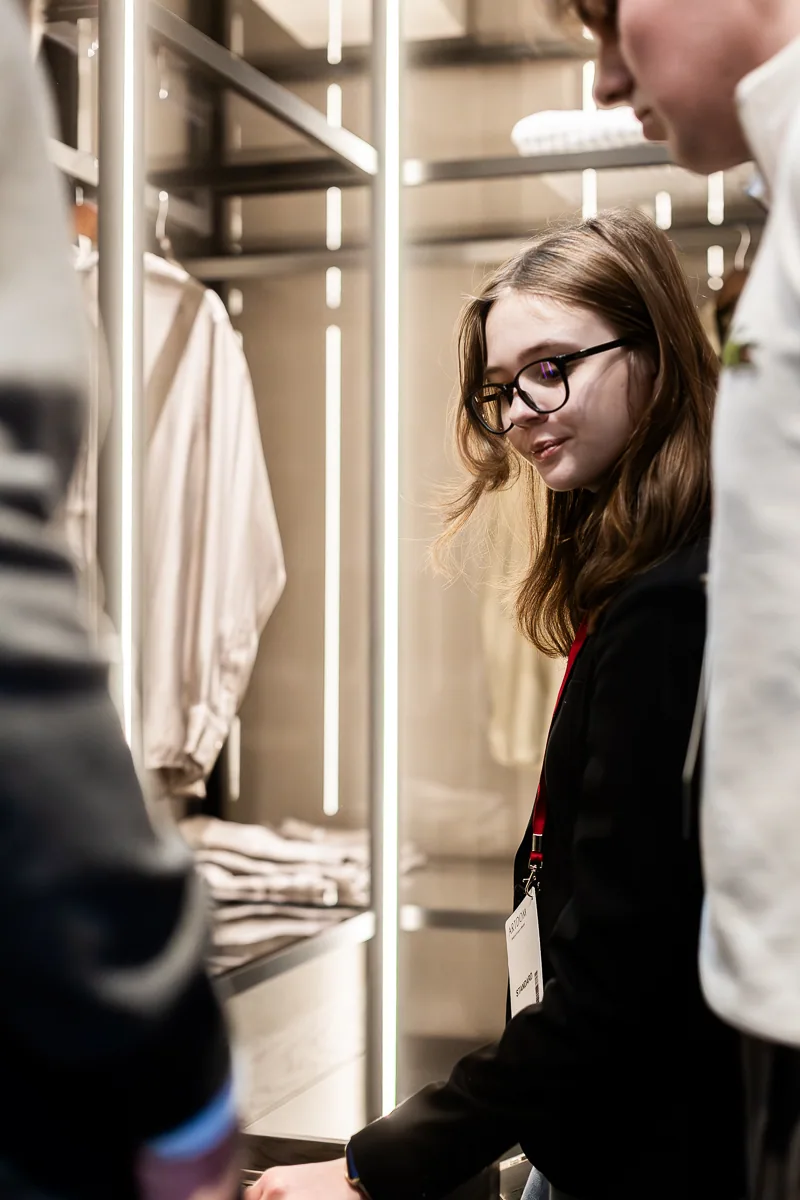
Image 1 of 7
The History of Giulia Novars Stands at ARTDOM
In 2022, at ARTDOM in the Winzavod Centre for Contemporary Art, the project “Brass and Flame” was realised. The 150 m² stand was set within the arch of a former wine storage vault.
In 2024, at ARTDOM in Gostiny Dvor, the project “Russian Seasons” was presented. The exhibition, located in the historic centre of Moscow, brought together cultural context and contemporary technology.
Project Client and Partners

Project client and premium-segment furniture manufacturer.

Manufacturer of high-performance MDi surfaces for interiors and architecture.

German furniture hardware: hinges, runners, and sliding systems.

German kitchen storage systems and interior organisation.

Engineering integration of smart home, climate, and control systems for stand operation and show scenarios.

Projection infrastructure partner for the project.

Exhibition Stand Construction
Partner showrooms

Giulia Novars showroom on Smolenka, Moscow

Giulia Novars showroom in Taganka, Moscow
Giulia Novars showroom at The Dom, Moscow