 РУ
РУ EN
EN
Name of the project
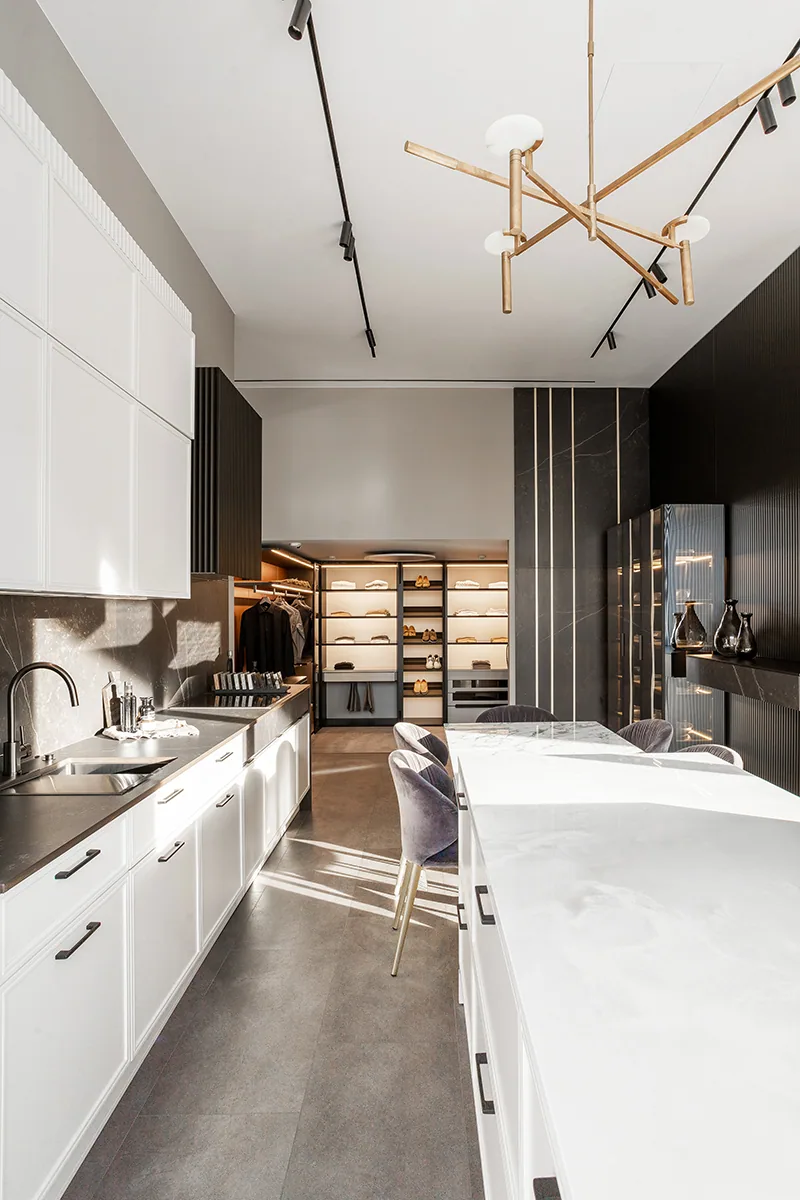
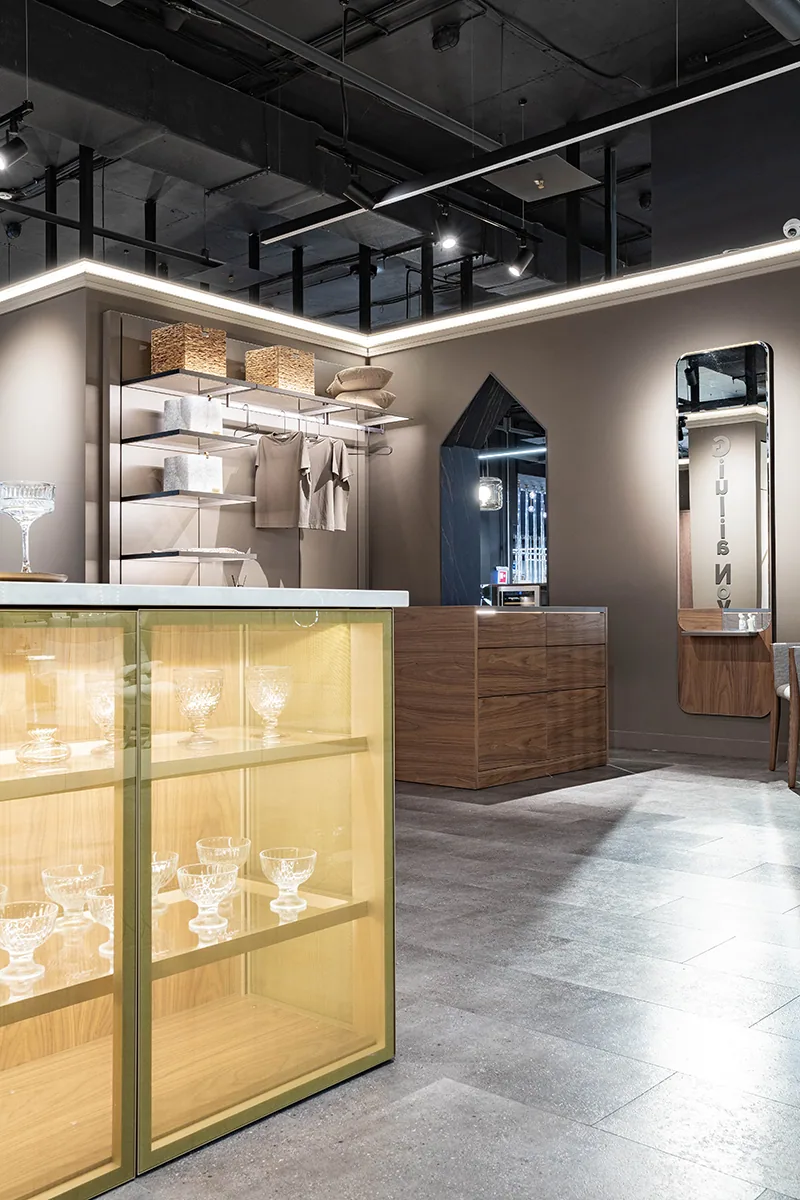
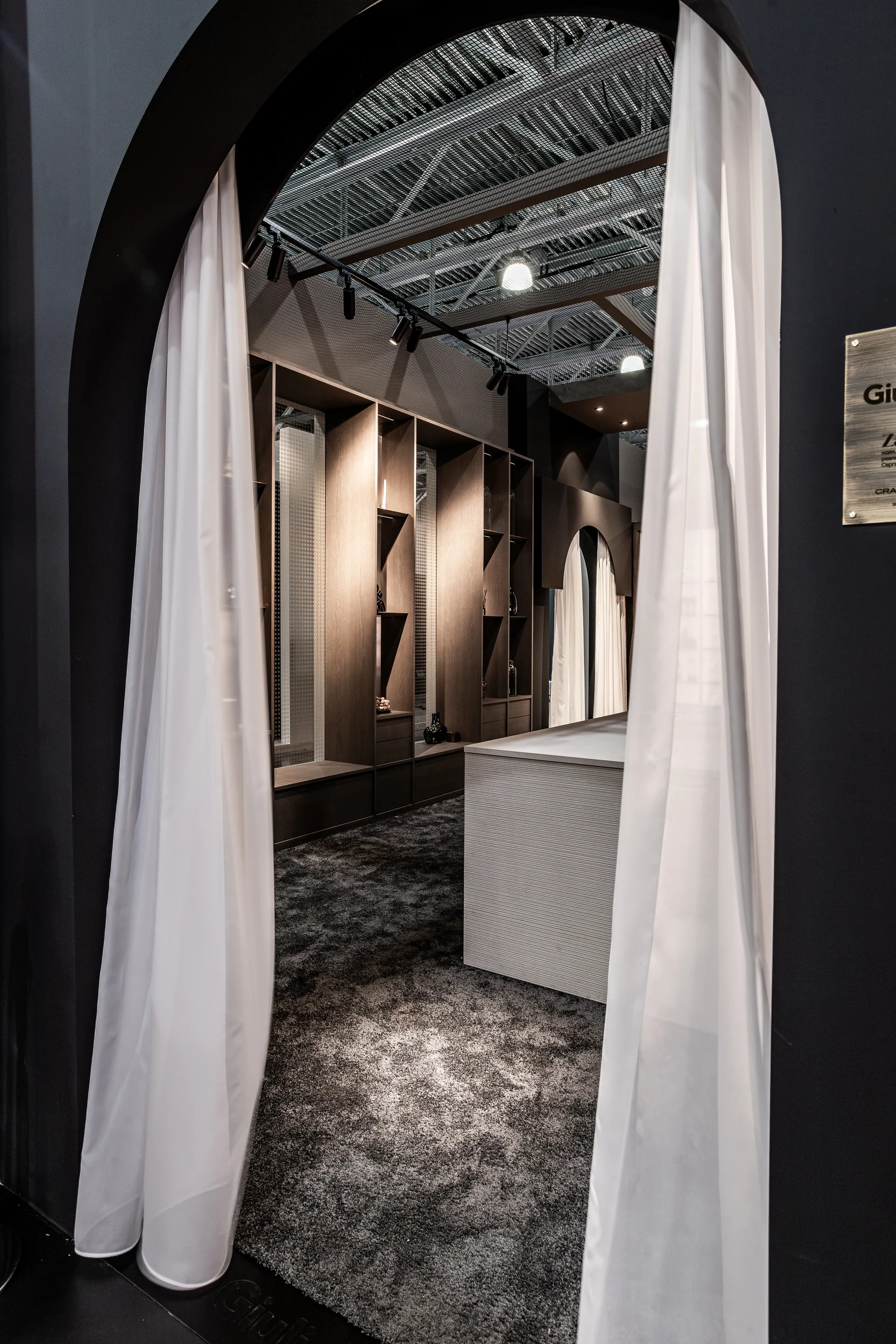
Showroom for Giulia Novars on Smolenskaya Embankment
Main character
Giulia Novars — a Russian manufacturer of premium furniture, offering a wide range of products that blend technology, individuality, and visual culture.
Setting
Moscow, Smolenskaya Embankment. A space with panoramic views of the Moscow River, the Borodinsky Bridge, Kievsky Railway Station, and the architectural façades of the city centre.
“Smolenka Frame” showroom for Giulia Novars
Objective
To create an atmospheric showroom where interior aesthetics engage in dialogue with the surrounding cityscape. The goal was to highlight the character of the location, integrate new product lines, and update the display based on technical upgrades and user experience.
Conceptual scenario
The large panoramic window became a portal through which the urban architecture flows inward — the sandy tones of façades dissolve into the interior’s palette. Furniture is arranged in a unified composition, where each zone supports the overarching idea: lightness, precision, modernity. Terminal ventilation elements were replaced, ceiling structures revised, and painting and flooring works completed. Lighting was selected to match the modest ceiling height — balanced in temperature and output.
Client’s role in the project
The project was carried out in close collaboration with Irina Stepanova, head of the Giulia Novars studio, with whom the custom furniture pieces were co-developed.


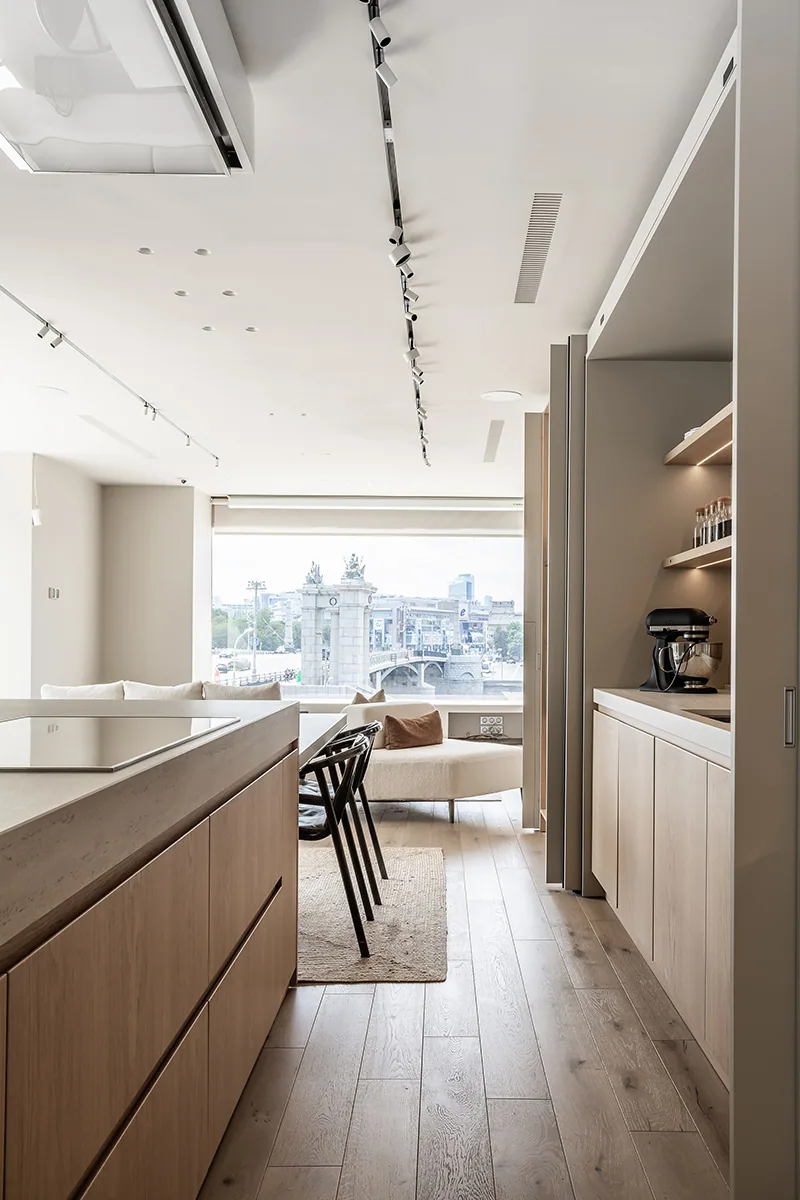
Image 1 of 11
Architecture of the idea
At the heart of the composition is the interplay between landscape and interior. The showroom appears to continue beyond the glass. Furniture pieces are not merely display samples, but functional scenes showcasing design and utility. Special attention was given to materials, texture pairings, and the integration of technical systems.
On site
A full reconstruction was undertaken: final finishes were replaced, new lighting systems installed, and custom furniture elements mounted. The display was completely renewed.
Details and meanings
- The exhibition features new items developed to custom specifications, including textile-fronted façades and stainless steel shelving
- Furniture is arranged in a cohesive ensemble, emphasising the space and geometry of the room
- The layout invites visitors to linger — over coffee, in conversation, or simply watching the play of light


Image 1 of 7
Final result
The Smolenskaya showroom became a point of attraction not only due to its location, but because of the refined spatial work within. This is a place where furniture doesn’t merely display — it lives. Where the city view is not a backdrop but a co-author. And where every element speaks the brand’s language: calm, precise, expressive.