 РУ
РУ EN
EN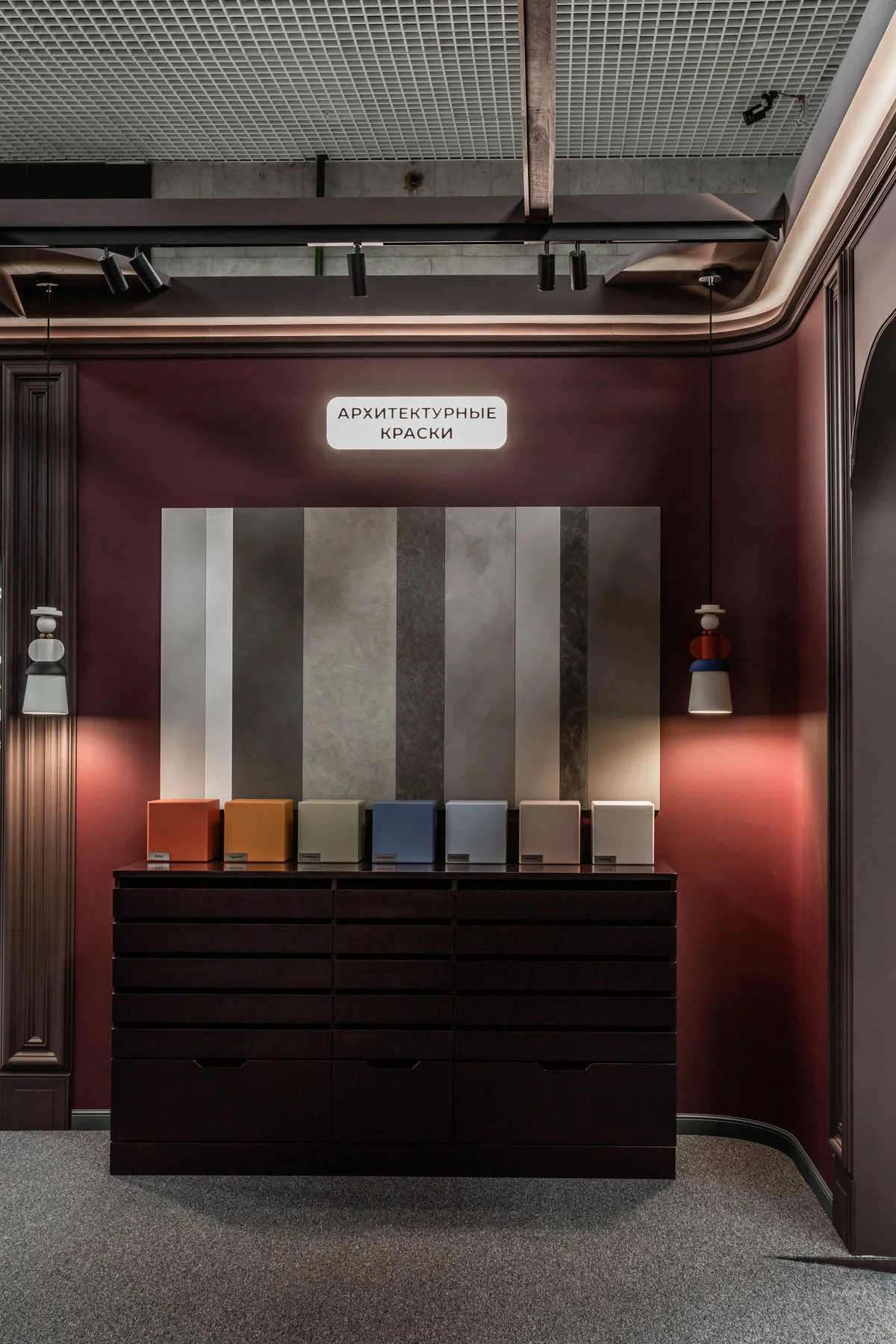
Name of the project
LANORS Fuse — Uniting the Visible and the Hidden
Main character
LANORS — a manufacturer of high-grade smooth interior paints, decorative finishes, and curated, small-batch wallpaper collections.
Setting
Moscow, Interior Design Centre “ExpoStroy” on Nakhimovsky Prospekt. Exposition No. 247 (a permanent display hall for materials and solutions).
LANORS Fuse
Objective
A new hall from scratch under an open brief: the footprint and product categories were given; everything else is authorial design. The goal is a memorable display that reads instantly from the aisles and draws visitors in.
Conceptual scenario
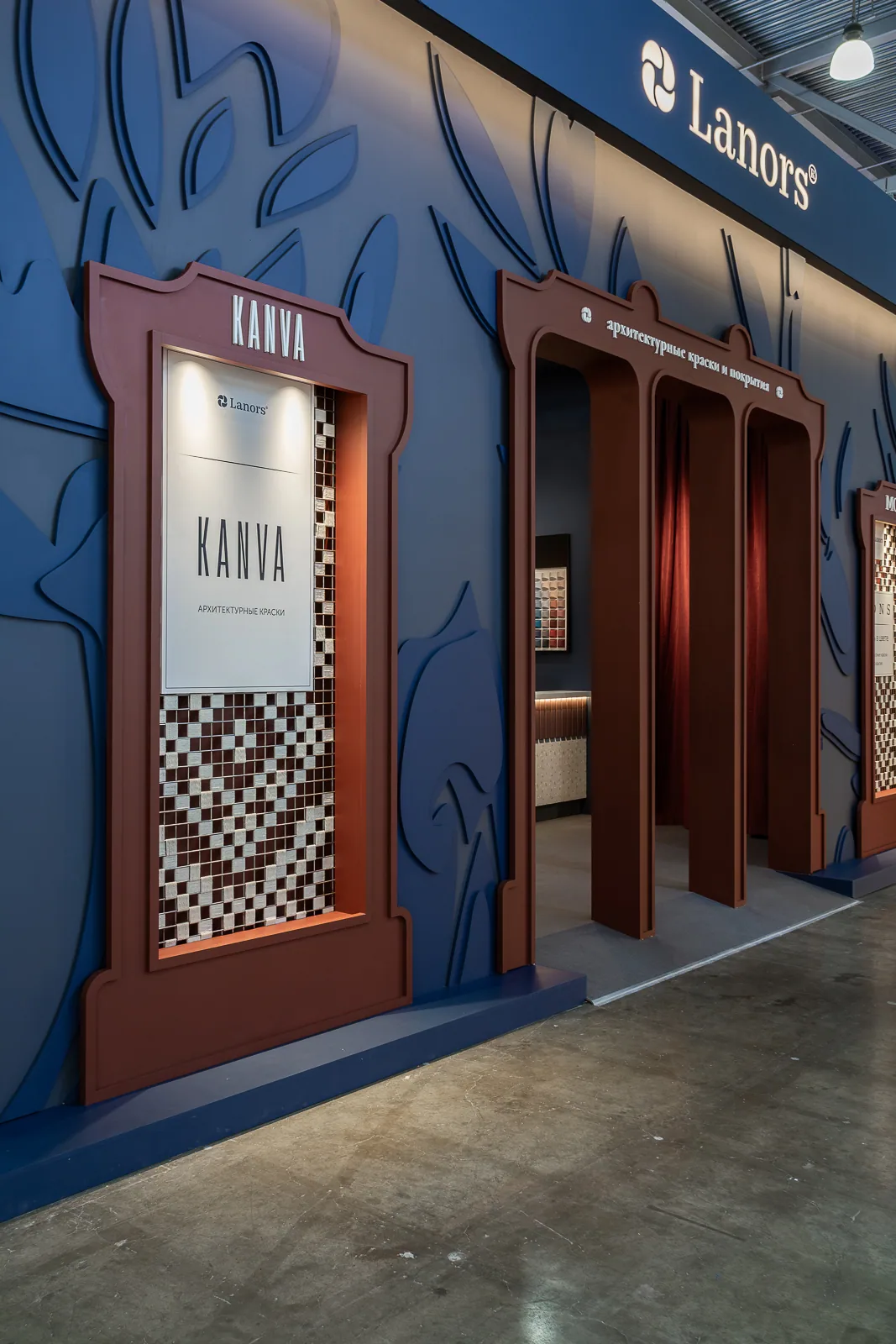
The route moves from façade to content: the eye catches the outer contour; inside, light axes and focal points take over. Signage is discreet—architecture, lighting rhythm, and repeated joints do the work.


Image 1 of 9
Client’s role in the project
A client with a strong product line and fast communication. Key decisions were approved promptly; we led the project end-to-end—from concept and documentation to light tuning and handover.
Architecture of the idea
The Fuse principle treats “packaging” and “product” as equals. The outer contour acts as packaging, setting expectations; the interior confirms them through quality and a clear logic of display.
The perimeter forms a single “body”; inside, distinct zones by category: smooth paints, decorative finishes, and select wallpaper lines. Fixture materials and optics merge the whole into one coherent image.
On site
All structures were prefabricated off site by partner contractors (about two months): podium, walls, ceiling beams, mounting joints, and display carriers.
Installation at ExpoStroy took around two weeks: geometry assembly, painting and finishes, lighting installation and calibration with the authors. Doing the bulk off site sharply reduced downtime for the rented floor.
Details and meanings
- Body and chime. Rounded corners read as the can’s chime, setting a soft cylindrical plasticity.
- Frieze joint. The upper frieze alludes to the lid-seating joint: the edge turns into a rim, forming a characteristic seam-lock (double-seam) motif.
- Tamper seal with logotype. Above the entrances, a seal-like plaque with the LANORS logotype echoes the element removed at first opening.
- Opening as sightline. Portals are set on key view axes: the gaze doesn’t “shoot through” but lands on designated focal centres. Interior zoning.
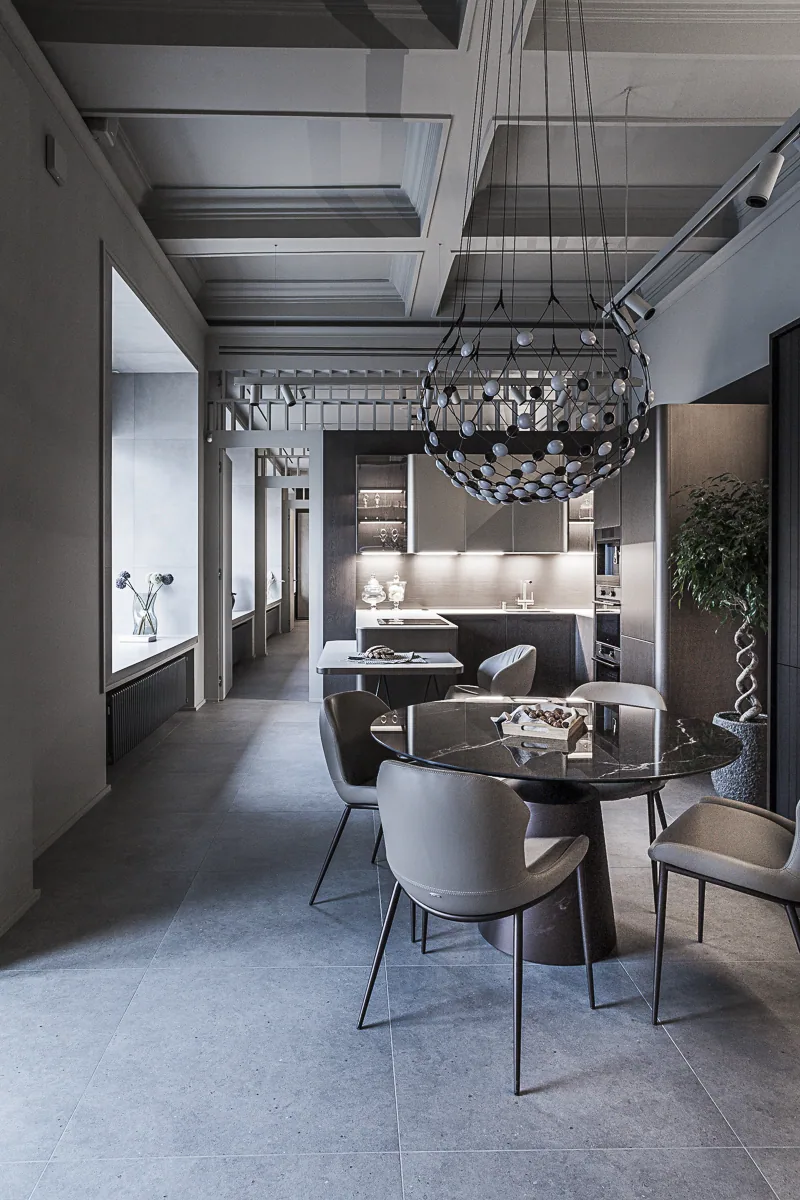
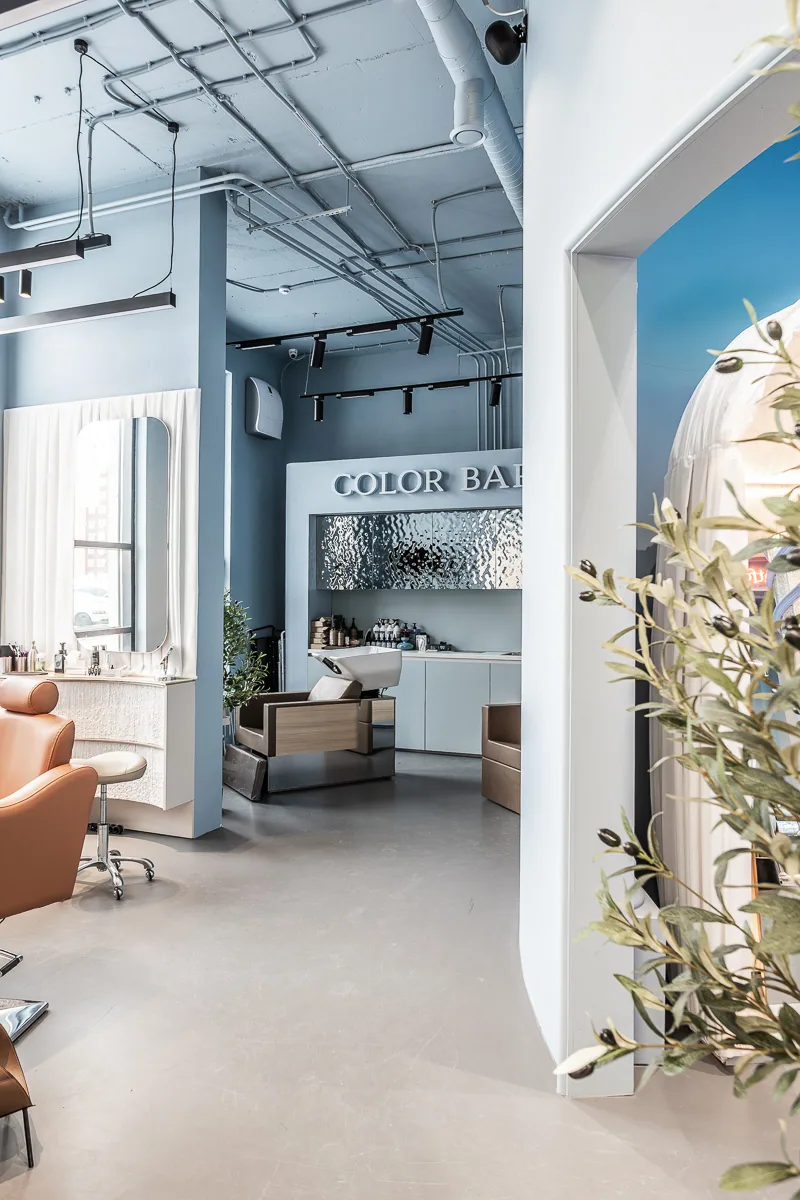
- Categories are clearly separated; signage is measured—architecture and light carry the load instead of excessive labels.
- Materials and light. Fixtures are neutral and tactile; lighting reveals textures and planes of colour.


Image 1 of 6
Final result
Amid many neighbouring displays, the LANORS space stands out with a crisp silhouette and clear logic. The façade captures attention instantly; inside, lucid scenarios let the product speak for itself.
A coherent, disciplined solution that underscores the brand’s aesthetics and strengthens recognition.